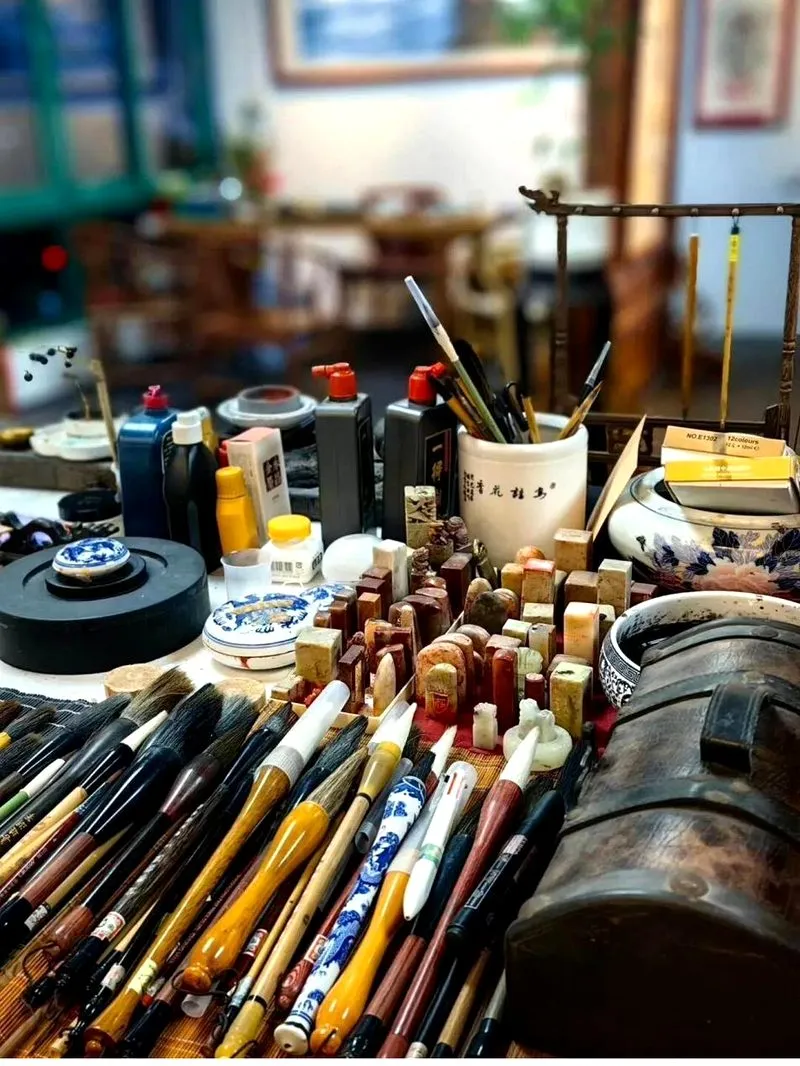
For a Friend
Chinese characters for the friend whose home, year, or new chapter you want to bless.
Recommended characters
乐 (Lè) — Joy
For the friend whose year you want to be specifically glad rather than simply good. 乐 names the felt quality of a time, not its outcomes — what it is like to live through, not what it produces. Most birthday and New Year wishes name something external; 乐 names something internal. Given to a friend, it is the closer wish.
美 (Měi) — Beauty
For the friend whose quality you have been noticing for years without quite finding the word for it. 美 names what long attention eventually lands on: not goodness in the abstract, but character that has grown into something complete and particular. A recognition, not a compliment.
平安喜乐 (Píng Ān Xǐ Lè) — Peace · Safety · Joy · Gladness
For the friend you want to wish both things: that the year keeps them safe and undisturbed (平安) and that it holds genuine gladness (喜乐). Most blessings name one quality; 平安喜乐 covers both sides of what a good year actually feels like — not disrupted, and genuinely glad. A more personal choice than 万事如意, which wishes for outcomes; this one names experience.
雅 (Yǎ) — Elegance
For the friend whose particular quality of taste you have been trusting for years — the one whose eye you defer to, whose choices you have come to rely on. 雅 is the recognition gift that can only be given honestly by someone who has been paying close attention. It does not wish for elegance; it acknowledges that it is already there.
明 (Míng) — Clarity
For the friend whose perception you have come to rely on — not their enthusiasm or their loyalty (those are separate qualities) but their ability to see what is actually happening. 明 names the quality of a friend who is not swayed by your preferred version of events: who sees your situation clearly and says so. Given on a birthday, it recognizes a form of care that is rarer and more specific than warmth.
丰 (Fēng) — Abundance
For the friend whose New Year you want to be specifically full — not just auspicious or glad, but genuinely abundant in what the year holds. Where 福 names all good conditions together and 乐 names the year’s felt quality of gladness, 丰 names the material and experiential fullness of what the year actually produces. The New Year choice for the friend when the wish is that the measure overflows.
祥和 (Xiáng Hé) — Auspiciousness and Harmony
For the friend whose New Year you want to name completely — not just good outcomes (万事如意) or the year’s texture of gladness (乐) or its material fullness (丰), but the complete atmospheric condition: a year in which the world is favorably inclined and they are in the kind of accord that makes favorable conditions count. Where 吉祥 names a lucky omen and 家和 names domestic harmony, 祥和 names the compound state — both at once.
福乐 (Fú Lè) — Blessing and Joy
For the friend whose birthday or New Year you want to wish both the conditions and the experience of a good year. 福乐 names them together — 福 (the fortune the year needs: health, sufficiency, the foundations) and 乐 (the gladness of living through it). Where 乐 alone names the texture of a year and 福 alone names the conditions, 福乐 gives both at once. More specific than 万事如意 and more compact than 平安喜乐, it is the complete wish for the friend for whom you want neither half left implicit.
才华 (Cái Huá) — Talent and Brilliance
For the friend whose particular quality you have been noticing for years — the thing their work has that others’ does not, the angle they find that no one else found. 才华 is different from recognizing their effort (恒) or their clear-sightedness (明): it names the specific natural endowment that arrived with them and that shows in everything they do. Given on a birthday, it is the most personal of the recognition gifts — the one that requires having been paying close enough attention to say honestly that the quality is there.
坚强 (Jiān Qiáng) — Resilient Strength
For the friend whose difficult years have demonstrated 坚强 rather than just either quality separately — who went through it held (坚) and came through it still able to act (强). 坚强 as a gift for a friend requires knowing the record well enough to say both things honestly: that the difficulty was real, and that neither quality gave way. It is less often a forward wish than a retrospective recognition — less “I hope you have this” than “I see that you do.” The most specific of the recognition gifts for the friend whose hard year is the occasion to name what you observed in them.
前程似锦 (Qián Chéng Sì Jǐn) — A Brilliant Road Ahead
For the friend at a graduation or career threshold — the gift that describes the terrain ahead rather than cataloguing what the friend has become. 前程似锦 names what is in front of them: luminous, complex, detailed as brocade, and earned. Where 才华 names the particular quality their work has always had and 坚强 names the resilience the hard years demonstrated, 前程似锦 is forward-facing: the phrase for the friend you want to tell is standing at the beginning of something brilliant.
五福临门 (Wǔ Fú Lín Mén) — The Five Blessings Arrive at the Threshold
For the friend at Chinese New Year or the housewarming of a new home — the gift that names every condition of a complete life at once rather than selecting one. 五福临门 is not the friend-specific recognition gift (that is 才华 or 坚强 or 明), nor the seasonal gladness gift (乐 or 福乐); it is the comprehensive threshold blessing — the one that names all five: longevity, sufficiency, health and inner peace, a genuine disposition toward virtue, and a good end. Most apt when the occasion is a threshold (a new year, a new home) and the wish is for the whole of what the life inside holds.
步步高升 (Bù Bù Gāo Shēng) — Step by Step, Rising Higher
For the friend at a graduation or New Year when the gift is about their career’s direction rather than their particular quality (才华) or the conditions the year needs (五福临门). 步步高升 is the career-motion gift: the phrase that says the habit of upward movement is already in place and the year should continue it. Most specific to the friend who is actively ascending — the colleague just promoted, the graduate just credentialed, the person for whom the New Year is a step in a clear upward sequence.
润 (Rùn) — Quiet Nourishment
For the friend whose company quietly leaves you better without any visible effort on their part — the one whose presence, over years, has 润色 your life the way a good editor moistens the color of a draft. Where 乐 names the gladness of a year and 才华 names a talent you have noticed, 润 names something subtler: the soaking, nourishing influence of a friend you measure only in what they have left smoother and more alive in you. The recognition for the friend whose good is felt long before it is named.
泰 (Tài) — Grand, Settled Peace
For the friend you wish not excitement but stability — a wide, settled peace as one chapter closes and another opens. 泰 names the grand calm of things running freely and well, the composure of 泰然自若, the person nothing can rattle. Where 前程似锦 wishes them a brilliant road ahead and 步步高升 names upward motion, 泰 wishes the opposite of motion: ground that holds, a year that flows without snagging, the security that needs no display. The gift for the friend whose life you hope simply settles into something good.
朗 (Lǎng) — Brightness and Open Spirit
For the friend who changes the weather of a room just by walking into it — the 开朗, 爽朗 one whose frankness and steady good cheer have made things lighter for everyone around them. Where 乐 names the gladness of a year and 明 names the perception you rely on, 朗 names a quality of disposition: open, clear, with no haze and nothing hidden. A recognition gift for the friend whose company, year after year, has been like a clear day — one you can see to the edges of.
盛 (Shèng) — Flourishing
For the friend whose new year you want to be vigorous rather than merely good — full of growth and on the rise. 盛 names thriving in motion: a year that teems and climbs toward its height, every undertaking 兴盛. Where 丰 names the year’s material fullness (the measure overflowing) and 泰 wishes the grand calm of things settled, 盛 wishes the opposite of rest — the upward energy of a year still flourishing. The New Year choice for the friend you want to see thrive, not just hold steady.
太平 (Tài Píng) — Great Peace
For the friend whose coming year you hope is simply uneventful in the best sense — no upheaval, nothing erupting, the ground holding steady beneath whatever they attempt. 太平 names the largest, quietest wish: not the safe passage of 平安 or the personal composure of 泰, but the peace of the whole world around them, 天下太平, an age at rest in which an ordinary year can just unfold. The gift for the friend you want to wish not excitement or ascent but the rarer thing — peaceful times, and the settled ground that lets everything else become possible.
富足 (Fù Zú) — Abundance · Well-Provided
For the friend whose household you want to see simply provided for — comfortable, stocked, never anxious about the basics. Where 丰 names the year’s overflowing measure (the bumper harvest, the table that runs over) and 盛 names a fortune on the rise, 富足 names the steadier thing: plenty as a standing condition, a home that wants for nothing and knows it. The 足 in the pair keeps the wish grounded — not a fortune for your friend to keep chasing but real sufficiency that registers as enough. The gift for the friend you want to picture settled and provided for, year after year.
清雅 (Qīng Yǎ) — Pure Elegance
For the friend whose particular quality of taste is the clean, fresh kind — the one whose eye reaches for the understated, whose sense of how a thing should look you have come to trust precisely because it never shows off. Where 雅 names cultivated taste in general and 朗 names an open, bright disposition, 清雅 names a specific register: refinement kept clear and uncrowded, 清雅脱俗 — graceful and standing a little above the common run. A recognition gift you can only give honestly after years of watching that clarity at work.
谦和 (Qiān Hé) — Modest and Amiable
For the friend who is good at a great many things and has never made you feel small for it — the one whose talent you only learned the extent of by accident, because they would not be the one to tell you. 谦和 names the temperament you have valued for years without quite labeling: ability held lightly (谦) and an ease that always let you sit level with them (和). Where 雅 names a quality of taste and 朗 names an open, bright disposition, 谦和 names the rarest pairing in a capable person — real gifts and no distance. The recognition for the friend who was always both impressive and easy to be near.
金玉满堂 (Jīn Yù Mǎn Táng) — Gold and Jade Fill the Hall
For the friend whose new home or new year you want to wish abundant in the most concrete way — the central hall full of what is most valued, the household generously provided for. Where 富足 names plenty as a steady standing condition and 丰 names the year’s overflowing measure, 金玉满堂 names the picture rather than the quality: a room filled to capacity, the home visibly full. The choice for the friend whose housewarming or Spring Festival you want to mark not with a wish for sufficiency but with the generous image of a hall that wants for nothing.
笑口常开 (Xiào Kǒu Cháng Kāi) — May the Laughing Mouth Stay Open
For the friend whose good cheer has carried you, when the gift is less a wish than an affectionate instruction: stay exactly as glad as you are. Where 乐 names the inward gladness you hope the year holds and 朗 names the open, bright disposition you have leaned on, 笑口常开 names joy made visible and made to last — the laughing mouth that stays open through whatever the year brings. The choice for the friend you most want to keep laughing.
年年有余 (Nián Nián Yǒu Yú) — A Surplus Year After Year
For the friend whose year you want secure rather than spectacular — never anxious about the basics, always a little in reserve. Where 富足 names plenty as a standing condition and 丰 names the year’s overflowing measure, 年年有余 names the self-renewing margin: a home that closes each year with something set by, so the security is not one good harvest but a cushion that comes back. The New Year gift for the friend you want to picture steady and provided for, the year ending a little ahead of the line rather than exactly on it — the same modest wish said in the season’s fish, 余 and 鱼 both yú, a surplus that carries forward.
开卷有益 (Kāi Juǎn Yǒu Yì) — There Is Profit in Opening a Book
For the friend whose shelves keep outgrowing the room — the reader you trade recommendations with, the one who is always partway through something and glad to tell you about it. 开卷有益 names the quiet faith behind that habit: every book opened gives something back, whether or not it was ever meant to be useful. Where 雅 names the taste you have trusted for years and 朗 names a bright, open temperament, 开卷有益 names the appetite underneath — a curiosity that never went quiet. The recognition for the friend whose reading has never been idle, and whose company is richer for all of it.
淳 (Chún) — Genuine and Unadorned
For the friend whose honesty is the unspoiled kind — plain, warm, with no calculation folded into it. Where 明 names the clear sight you rely on and 朗 names an open, bright disposition, 淳 names something more elemental: a nature that stayed simple and true, warm without motive, the friend of whom you would say 淳朴 — straight with you, exactly what they seem. The recognition for the friend whose genuineness you have never once had to question.
博 (Bó) — Breadth
For the friend who reads across everything, follows their curiosity down every side road, and turns an ordinary dinner into a conversation that wanders from history to food to physics and back. 博 names that wide-ranging mind — knowledge spread in every direction, carried lightly and shared generously. It is the character for the person whose company you keep partly because they always seem to know one more interesting thing, and never make you feel small for not knowing it too.
秀 (Xiù) — The One Who Stands Out
For the friend who is simply 优秀 — outstanding without seeming to work at it, the one whose talent and grace show through in whatever room they walk into. 秀 began as grain coming into ear, the moment real quality becomes visible, and that is what it names in a person: not surface polish but distinction that has genuinely emerged. Where 雅 names the cultivated taste you have trusted for years and 博 names the breadth of what they know, 秀 names the plainer fact of how they come across — the friend who stands out, and never had to try to. For the one whose distinctiveness you have watched be the real, produced kind.
清 (Qīng) — Clarity and Cleanness
For the friend you would describe, before anything else, as clear — the clean head that cuts through what everyone else is overcomplicating, the plain honesty you have never once had to second-guess, the fresh and unforced way they move through things. Where 明 names the perception you rely on and 淳 names an unspoiled, genuine nature, 清 names transparency itself: a person you can see straight to the bottom of and find nothing hidden. A recognition gift for the friend whose clarity has been one of the steadier things in your life.
兴旺 (Xīng Wàng) — Thriving
For the friend whose good year would be measured in motion rather than calm — the one who opened the shop, took the lease, started the thing, and whose wish list is not for a quiet twelve months but a busy twelve. 兴旺 is what goes up behind the counter at the New Year as 生意兴旺, may the trade thrive, and it is built out of a climb and a fire: 兴 is the character of four hands lifting one load together, 旺 is 火旺, a fire burning hard. Where 清 names the clarity you trust in them and 乐 wishes their year feel glad, 兴旺 wishes it be full — the phone ringing, the room busy, more life in it than the last one. The gift for the friend you want to picture with too much going on, in the good way.
博爱 (Bó Ài) — Universal Love
For the friend who could not walk past a stranger’s trouble as if it were none of theirs — the one who volunteers, who adopts the stray, who quietly helps people who will never know it was them. Where 淳 names the unspoiled honesty you trust and 谦和 names the ease of being near them, 博爱 names the size of their heart: care extended wide, to people with no claim on them at all. A recognition gift for the friend whose kindness was never reserved for their own circle — the large-hearted one who made everyone in range feel included.
紫气东来 (Zǐ Qì Dōng Lái) — Purple Vapor Comes from the East
For the friend whose new home or new year you want to mark at the door rather than inside it. 紫气东来 is the inscription across a Chinese lintel — the four characters that name auspicious fortune drawing toward this threshold from the east, the quarter of the rising sun and of spring. Where 五福临门 names the five blessings arriving in full and 金玉满堂 pictures the hall generously stocked, 紫气东来 names the approach: not what the year or the house already holds but what is on its way to it. It is the more lettered of the door blessings — the one with the Laozi legend and its green ox behind it — so it is also the choice for the friend whose taste you trust to want a wish with a book in it. The gift for the friend whose housewarming or Spring Festival you want to crown with the sight of good fortune already coming.
鹏程万里 (Péng Chéng Wàn Lǐ) — A Flight of Ten Thousand Li
For the friend at a genuine threshold — quitting to start the thing, moving abroad, walking away from the safe version of their life toward the large one. 鹏程万里 is the wish at full scale: the peng bird of the 庄子, too vast to measure, riding the whirlwind across ten thousand li. Where 兴旺 wishes a friend’s year be full and 乐 wishes it feel glad, 鹏程万里 addresses the size of what they are attempting — it says the distance they have chosen is not recklessness but wingspan. The gift for the friend whose leap you believe in enough to refuse to bless it in modest terms.
出入平安 (Chū Rù Píng Ān) — Safe Passage Coming and Going
For the friend who just moved away — the one starting a commute in a new city, whose comings and goings you will now track from a distance. 出入平安 is the safe-passage blessing built on the antithesis of 出 (going out) and 入 (coming in): not the one-directional 一路平安 you say at the airport, but the wish that closes the loop — go out and come home whole, every time. Where 平安喜乐 wishes a friend’s whole year safe and glad and 泰 wishes them settled ground, 出入平安 wishes the narrower, more physical thing: that the road out always brings them back.
远 (Yuǎn) — Far · Long Range
For the friend in the middle of something long — the degree with years left on it, the business not yet profitable, the plan everyone else has politely stopped asking about. 远 does not promise arrival. Where 坚强 names the resilience to absorb what the years hand them and 前程似锦 promises the road will turn out brilliant, 远 promises nothing about the outcome at all: it states the distance and credits them with having measured it honestly, which is closer to what that friend actually needs to hear. Because 远 also lives in 疏远, to drift apart, say the aim out loud on the card — then it reads unmistakably as the road ahead of them rather than any distance between you.
颖 (Yǐng) — The Tip That Shows
For the friend who gets there before the rest of the room does. 颖 is the sharp tip of an ear of grain — the part that comes out past the rest — and applied to a person it is 聪颖, quick in a way that shows before anyone has tested for it. (It is also a common given name, so pair it with their name or with the phrase you mean; on its own many Chinese speakers read it as somebody’s name rather than the quality.) The other recognitions on this page are careful to name different things: 秀 is distinction that shows on its own terms, standing next to no one; 明 is how accurately they see; 才华 is the endowment their work carries. 颖 is the comparative one — ability measured against the field standing next to it. Give it to the friend whose edge over a room you have quietly depended on and never quite said out loud.
旺 (Wàng) — Burning Hard
For the friend in the busy year — the one whose shop has a queue, whose calendar is full, whose life is currently running at a heat you can see from across the room. 旺 measures rate, not amount: it is the stove at its hottest (炉火正旺), the season a trade runs hardest (旺季), a body at full output (精力旺盛). That makes it a different gift from its neighbors here. 丰 counts what the year produced and 盛 names a height reached with the turn implied on the far side; 兴旺 pairs the climb with the heat and wishes both. 旺 alone wishes only the heat, and only for now — may it be going hard, and going hard again next year. Because the single character also lives on shop signage, name the fire you mean on the card.
敏 (Mǐn) — Quick to Respond
For the friend who was already handling it before you finished explaining. 敏锐 describes a person who has registered something the rest of the room has not been given a reason to notice yet — and 敏 goes one step further than noticing, because the character has a hand in it: 攴, the element for doing something to something. Noticing and then already having done something about it. That is a different compliment from the one 颖 pays a few sections up. 颖 measures a friend against the room and finds them ahead of it; 朗 names the open temperament you feel the moment they walk in. 敏 measures them against the situation instead, which is why it works for the friend who is not especially competitive and is nonetheless the first person you call when something has gone sideways.
顺遂 (Shùn Suì) — A Clear Road, and Arriving
Most of this page pays the friend a compliment. 顺遂 pays none — it says nothing about them at all, only about the road under them, which is what makes it the right thing to send someone who is mid-effort: the move that is half done, the second year of a business, the degree with eighteen months left on it. It asks two things at once and keeps a character for each. 顺 is passage without obstruction; 遂 is the arrival — the 遂 of 遂愿, a thing carried through onto what was actually wanted. 出入平安 higher up asks that a friend come back unharmed and 鹏程万里 asks that they go far. 顺遂 sets no distance and promises no drama. It asks that nothing sideways happen between here and the end of what they started, and that the end be the one they were aiming at.
昌盛 (Chāng Shèng) — Flourishing You Can See from Outside
Several gifts on this page are addressed past the friend to what they have built; 昌盛 is the one that asks for it at the largest scale. It is the wide-angle word — used of a country, an era, a family line — and it comments on nobody’s qualities; what it says is that whatever they have built is now large enough to be looked at from outside. 生意昌盛 is the form it takes on a card or a banner sent to a business, the register of the toast rather than the doorpost formula (that one is 生意兴隆, and it goes on red paper each spring regardless of the size of the shop). 兴旺 higher up wishes that same trade a busy twelve months — the phone ringing, the room full — and 顺遂 wishes a friend mid-effort a clear road and an arrival. 昌盛 wishes neither the traffic nor the passage but the span: a run of good years long enough that people outside it can see it is a run. For the friend whose venture is past the point of being a project.
欢聚一堂 (Huān Jù Yī Táng) — Gathered Under One Roof
Every other gift on this page is addressed to the friend — their year, their character, their road, the thing they are building. This one is addressed to an evening. It names an event with a date on it rather than a quality, and it expires by morning, which is the whole of its appeal. It is also the phrase on this page least interested in whether anybody is related: 堂 is the raised hall where a household receives guests, not the inner room where the family lives, so 一堂 has never meant one bloodline. That makes it the New Year dinner with the friends who stayed in the city, the birthday nobody had to be talked into, the reunion booked around whoever could get the time off. For the friend whose calendar is the reason those evenings happen at all.
喜气洋洋 (Xǐ Qì Yáng Yáng) — Joy Brimming Over
紫气东来 higher up this page goes above the same door and points at something still on the road. This one points down. It is the other kind of 横批 — the strip that describes the house it is nailed above on the day it goes up: paper cuttings on the windows, the kitchen going since morning, the first callers due before noon. 气 here is the plain word for atmosphere, the one in 天气 and 气氛, and 洋洋 is the doubling Chinese reaches for when a thing has stopped having edges, so the claim is that the gladness in this house has spilled well past whoever it started with. For the friend who is the reason a room fills — the one hosting the New Year everybody travels for, opening the shop, throwing the evening the rest of you merely attend. It is a description rather than a wish, which is why it can be given while the thing is still true.
笃行 (Dǔ Xíng) — For the One Who Actually Did It
For the friend who has been talking about the thing for two years and then, at some point you were not present for, went and did it — left the job, finished the manuscript, learned the language, opened the place. 笃行 is a narrow word and that narrowness is the gift: it makes no claim about how gifted the friend is, how hard they worked, or how it turned out. 笃 means weight, not warmth, and 行 in its earliest form is not a walking leg but a crossroads seen from above — the public place where anyone can see you. Together they name the only part of a plan that is visible from outside: it left the head. Most of this page wishes a friend a particular kind of year. This one reports something they already proved about themselves, which is why it keeps working long after the year it was given.
长乐未央 (Cháng Lè Wèi Yāng) — Not Used Up Yet
For the friend in the middle of a good run — the year that is working, the stretch you can both tell is unusual — when the useful thing to say is neither congratulations nor a wish for more. 未央 is a negative with no quantity attached: not spent, not run out. It makes no forecast, which is what separates it from most of this page. 乐 at the top names how a year feels; 欢聚一堂 counts one evening and concedes it is over by morning; 喜气洋洋 describes a house on the day it is loud. This one only reports on the supply. The word itself has been argued over for two thousand years — 《说文解字》 gives two readings inside a single entry and the commentators added more — but nobody has ever disputed the 未, and that is the whole of the claim: whatever the ending is, your friend has not reached it.
义 (Yì) — What They Judged They Owed You
义 is the one entry on this page you cannot give to a new friend, because it points at a day rather than at a temperament. Its everyday form is 义气, and what the word actually measures is cost: Chinese sets 义 against 利, self-interest, so calling a friend 有义 says less about how much they like you than about what they were willing to be out of pocket for. 笃行 further up this page credits somebody for closing the gap between what they know and what they do. 义 credits the earlier judgment — that you had a claim on them at all, at a moment when declining would have been free. For the friend whose help arrived on the day it was expensive.
春 (Chūn) — The Season as an Answer
Confucius once asked four students what they would do with a real post. The one answer he said he agreed with named no office at all — only a season, and an afternoon spent in it. That is what makes 春 a strange and very precise thing to give a friend: it upgrades nothing. It does not wish them further along than they are, and it does not congratulate them for where they got to. 长乐未央 higher on this page says a good run has not been used up. 春 says the weather is about to be worth going outside for.
祥 (Xiáng) — Nothing Has to Have Happened
昌盛 further up this page names growth big enough to be seen from outside, and 旺 names a fire going hard; both need something to already be underway. 祥 needs nothing. It is the New Year message for the friend whose year was neither good enough nor bad enough to mention — that conditions around them are well-disposed, which is worth saying precisely in the years when there is nothing else to say. 太平 higher up wishes the same friend a year with no upheaval in it, but it means the world at rest — the ground holding steady under everybody; 祥 is smaller and more personal, and says only that whatever is going on around this one person reads as well-disposed. 祥和, also on this page, pairs the favorable season with a household in accord; sent to a friend whose household you are not qualified to comment on, 祥 makes the same wish and stops at the half that is yours to make.
兴 (Xīng) — The Near End of It
For the friend who has just started the thing — the shop, the practice, the move, the second attempt at something that did not work the first time. 兴 is the only word in this part of the vocabulary that takes an object: you 兴 a building, 兴 a school, 兴 a trade, and nothing is ever 旺ed. What it names is the coming-up rather than the condition left behind, which makes it a narrower wish than most of this page. 昌盛 names growth big enough to be seen from outside and 旺 names a fire already going hard; both describe something that is under way. 兴 addresses the only part a friend can still affect, which is whether it leaves the ground at all. It also survives a failure: 复兴 and 中兴 exist because a lift, unlike a condition, can be done twice.
吉 (Jí) — The Word for a Date
吉 is the character Chinese attaches to days rather than to people. The almanac still in print — 黄历, or 通勝 in Hong Kong — rules every date of the year into two columns, 宜 and 忌, what it is fit for and what it is not, and a date that clears for the thing you have in mind is a 吉日. That makes it the narrowest wish on this page and the most practical one. 顺 elsewhere on this page wishes a friend a clear road once they are on it, and 祥 further up says that conditions around them read as well-disposed. 吉 speaks about the moment before either — whether the day they picked was the right one to start on. For the friend with something waiting on a date they have not picked yet: the move, the opening, the trip, the thing they keep deferring.
一元复始 (Yī Yuán Fù Shǐ) — For the Year You Would Rather Not Summarize
The 《周易》 hexagram this phrase turns on, 复, return, was assigned to the month containing the shortest day of the year — the calendar picked the bottom of the year to count from, on the reasoning that the bottom is still a turn. That is the reason to send these four characters to a friend, and nothing else on this page will do the job. 春 further up marks a position in the year declared ahead of any evidence, which is a claim about timing; 顺 wishes a clear road; 祥 reports that conditions around someone read as well-disposed, which is a generous thing to say and is not always available. 一元复始 makes no report on the year at all. It says the marker has come back to the head of the count, which is as true after twelve bad months as after twelve good ones — and for the friend who has just had the first kind, that is the only sentence in this vocabulary that does not require them to agree with it.
缘 (Yuán) — Exactly the Size of the Claim
Almost everything on this page makes a claim about the person receiving it. 淳 vouches for someone’s grain, 义 credits what they judged they owed you, 笃行 says their knowing reached the ground. Those are large things to assert about a friend of two years, and a Chinese reader hears the overreach. 缘 asserts nothing about them at all. It claims the meeting and nothing past it: that of all the ways the year could have been arranged, you ended up in the same room. The language even keeps a phrase for the case where that was the whole of it — 有缘无分, we met and nothing came of it — so 有缘 is never heard as a claim of intimacy. For the colleague who became a friend, the neighbour you kept, the person from a course you took once: the honest size of what you actually know about each other.
吉星高照 (Jí Xīng Gāo Zhào) — A Good Star, Already in Position
For the friend heading into a year they are quietly nervous about — the move, the treatment, the thing they have staked something on — where the honest problem with most good wishes is that they name an outcome you cannot promise. This one names none. 照 is left without an object, so the sentence never says what the light falls on; all four characters report is that the star overhead is a good one and that it is already up there. The phrase came out of the almanac, where every day was scored 宜 or 忌 and nothing went unqualified, and it works by abandoning that grid entirely — no day named, no condition attached, no outcome forecast. 长乐未央 further up this page looks back over a good run and reports it is not spent; this one looks at the year ahead and declines to itemize it at all. What it offers a friend is not a prediction but a position.
学业有成 (Xué Yè Yǒu Chéng) — For the Friend Who Went Back to School
For the friend who enrolled in something at an age when nobody was making them — the conversion master’s, the qualification taken at night, the degree begun again from first year. The awkward part of that decision is that everyone around them praises the courage of it, which quietly concedes the outcome is in doubt. These four characters decline to do that. They pass over the person and name the course, and what they ask is only that it arrive at the end it was aimed at. For a friend who has heard “good for you” more times than they wanted to, the better gift is the one that skips the compliment: finishing is the part they are actually worried about, and this is the only wish on the page addressed to it.
逸 (Yì) — For the Friend Who Got Out
The hard part of congratulating someone who has stepped out of something is that congratulation points forward, and forward is exactly what they declined. Say well done and you have quietly filed the decision under progress; say nothing and it reads as disapproval. Chinese has had a word for this position for two and a half thousand years. 《论语·微子》 keeps a short roll of 逸民 — seven men named, six of them assessed — and the point of the roll is that it exists at all: it makes the leaving a thing you can be, out loud, with terms attached, instead of a gap in a career. Not one of the seven, incidentally, is described as having taken it easy afterwards. 逸 is not a restful word. What it names is the getting out, which for this friend is the part that actually happened and the part nobody has known how to mention.
志 (Zhì) — Small Enough to Say Over Dinner
When 孔子 asked two students to state their 志, 子路 answered with a coat — carriages, horses and light furs, to be lent out and not missed when they came back worn — and the answer went into the record next to one about three generations of society, with no remark on the difference. 志 does not measure how much a person wants. It reports that they picked a direction and can say what it is. That makes it the character for the friend who told you their plan years ago, in ordinary language, and has not quietly swapped it for a more impressive one since. 逸 higher up this page is for the friend who got out of something; this is for the friend who is still walking toward the thing they named.
勉 (Miǎn) — For the Year They Had to Force
What Chinese friends actually say to each other is 别勉强 — don’t force it, don’t push yourself — and it is said warmly, as a release rather than a rebuke. This character is the other face of that same word. It is for the friend who spent a year doing something they did not feel like doing on most of its mornings and did it anyway: the treatment, the move to a city with nobody in it, the degree taken at night, the parent looked after. 顺遂 elsewhere on this page wishes a road that runs clear and 逸 is for the friend who finally got out from under. This is for the one who could not get out from under and went at it regardless. It is not an instruction to keep going. It is a note that somebody was watching the part nobody was supposed to see.
平和 (Píng Hé) — What Is Usually Asked For, Given Instead
In conversation this word often arrives as a request rather than a description: 心平气和地谈, let us discuss it levelly, said by whoever can see the argument coming. Chinese treats the state as something reached under effort as much as something a person simply has, which is why handing it over as a finished description is a real compliment and not a bland one. It suits the friend whose year went badly in a way that cannot be talked out of. 顺遂 elsewhere on this page is a bet on the road under them, and 勉 is a reading of what they did on it. This one is neither. It is about the person rather than the year, and it is the rare thing you can say to someone in a hard stretch without implying that the stretch was secretly fine.
祥云 (Xiáng Yún) — A Reading, Not a Forecast
There is a kind of friend who spends the end of a year trying to work out what the next one is going to do to them. 祥云 has nothing to say about that, and does not pretend to. It is a reading taken of the sky and left where it was taken, with nothing claimed about what is due to happen underneath. 紫气东来 elsewhere on this page reads the same sort of sign but comes with a man and a morning attached — 关尹 at the pass, watching the east, and 老子 arriving. This word has no arrival in it, which is what makes it safe to hand to somebody whose year has not been decided. 祥 on its own drops the object altogether; 祥云 keeps it, and the object is the whole reason to choose it here. It gives them something to look at. For the one walking into a year whose shape nobody can make out yet, it does not predict the year. It names the sky the year opens under.
善缘 (Shàn Yuán) — For Keeping Up With No Reason To
Some friendships run on infrastructure — a timetable, a building, a group chat that exists for another reason — and some are held up by nothing but one person deciding, repeatedly, to make the arrangement. The second kind is what 善缘 is about, and the word is honest that it is work: 结 is a verb, 广结善缘 is an instruction, and neither asks for warmth or promises a return. 平和 elsewhere on this page describes what the friend is like; 祥云 reads the sky over their year. This one describes what they do, and specifically what they do that nobody would notice them stopping. It is the least sentimental compliment available for the friend whose only qualification is that they kept showing up.
笃志 (Dǔ Zhì) — The Aim, Held Firm
志 higher up this page is for the friend who named a direction and did not swap it for a grander one. 笃志 names that direction held firm and focused. The concise dictionary’s example is 笃志好学: study taken up with that firmness. A gift can name one concrete aim. 笃行 elsewhere on this page credits follow-through. This pair is the sentence for the aim itself.
春暖花开 (Chūn Nuǎn Huā Kāi) — The Outdoor Window
春 on this page can mark a New Year date while the ground is still frozen; 笑口常开 keeps a face open. 春暖花开 waits for air you can feel and flowers you can see, then stops — no moon, no fortune line. For the friend whose birthday or spring visit should be named as a usable season rather than a prediction.
平步青云 (Píng Bù Qīng Yún) — For the Friend’s Next Rise
前程似锦 blesses the road ahead; 一帆风顺 wants a journey without struggle; 鹏程万里 refuses a small future. 平步青云 names the feel of elevation itself — level steps into high station — for the friend whose graduation, promotion, or birthday should hear ease rather than another ladder metaphor.
五谷丰登 (Wǔ Gǔ Fēng Dēng) — A Year That Came In Full
年年有余 wants a margin that renews; 富足 names plenty as a standing condition; 平步青云 toasts an easy rise. 五谷丰登 wishes something plainer for a friend’s household year: the five grains in bumper harvest, cupboards and season not thin. For the friend whose New Year or new-home card should stay in the harvest register.
厚 (Hòu) — What Came With the Favor
Showing up already has its own words on this page. This character is about the amount that arrived with the person. 他待我不薄 is the sentence for a friend who never priced help at what your difficulty was worth: the airport run nobody itemized, the introduction that was not a trade, the loan that did not grow a speech. 义 above is what they judged they owed. 勉 is the effort that went against the grain. 厚 can be large on a day that was easy, which is why it is a different report, and it takes years to see, because a single evening has no thin version to compare it with. For the friend you would describe that way to someone else and have not yet said it to.
悦 (Yuè) — The Company That Registers
乐 wishes a friend a year whose texture is glad, and it traces that gladness to something heard or arrived at. 厚 measures how far past the minimum their help ran. This character is the heart’s report on the person: that seeing them was a pleasure. The Analects still writes that pleasure as 说 in the line about study practiced on time, and the heart form was written so the word would not be read as talk. 《诗经·小雅·都人士》 puts the same report in the negative when the person is absent. For the friend you are glad of, on a birthday or in February, when the year-wish would be 乐 and the receipt for their help would be 厚.
福 (Fú) — Blessing · Good Fortune · Happiness
See 福 →安 (Ān) — Peace · Safety · Tranquility
See 安 →财 (Cái) — Prosperity · Abundance · Success
See 财 →瑞 (Ruì) — Good Tidings · Blessing · Promise of a Bright Year
See 瑞 →勇 (Yǒng) — Courage · Strength · Bravery
See 勇 →慧 (Huì) — Wisdom · Clarity · Discernment
See 慧 →勤 (Qín) — Diligence · Industriousness · Steady Effort
See 勤 →诚 (Chéng) — Sincerity · Honesty · Integrity
See 诚 →静 (Jìng) — Stillness · Tranquility · Quiet
See 静 →智 (Zhì) — Intelligence · Wisdom · Practical Judgment
See 智 →平安 (Píng Ān) — Peace · Safety · Well-being
See 平安 →富贵 (Fù Guì) — Wealth · Honor · Prosperity with Standing
See 富贵 →吉祥 (Jí Xiáng) — Auspiciousness · Good Omen · The Promise of Good Things
See 吉祥 →如意 (Rú Yì) — As You Wish · Aligned with the Heart
See 如意 →厚德 (Hòu Dé) — Deep Virtue · Generous Character · A Ground That Holds
See 厚德 →福禄 (Fú Lù) — Blessing · Prosperity · Abundance Through a Respected Place
See 福禄 →龙 (Lóng) — Dragon · Power · Auspicious Strength
See 龙 →力 (Lì) — Strength · Force · The Power to Act
See 力 →万事如意 (Wàn Shì Rú Yì) — May All Things Go As You Wish
See 万事如意 →一帆风顺 (Yī Fān Fēng Shùn) — Smooth Sailing · A Steady Wind for the Journey Ahead
See 一帆风顺 →心想事成 (Xīn Xiǎng Shì Chéng) — May Your Heart's Wishes Come True
See 心想事成 →招财进宝 (Zhāo Cái Jìn Bǎo) — Summon Wealth · Draw In Treasure
See 招财进宝 →顺 (Shùn) — Smooth Going · Flowing Well · Without Obstruction
See 顺 →善 (Shàn) — Goodness · Kindness · Moral Virtue
See 善 →凝神入画 (Níng Shén Rù Huà) — Spirit Stilled, Entering the Painting · Total Absorption in Creation
See 凝神入画 →青青子衿 (Qīng Qīng Zǐ Jīn) — Your Blue-Green Collar · Longing for a Cherished One
See 青青子衿 →渐入佳境 (Jiàn Rù Jiā Jìng) — Gradually Entering a Beautiful Place · Getting Better and Better
See 渐入佳境 →福至 (Fú Zhì) — Blessings Arrive · Fortune Has Come
See 福至 →吉祥如意 (Jí Xiáng Rú Yì) — Auspicious · As You Wish · A Year That Unfolds Well
See 吉祥如意 →Bring a hand-brushed piece home — choose how you'd like it brushed.
-
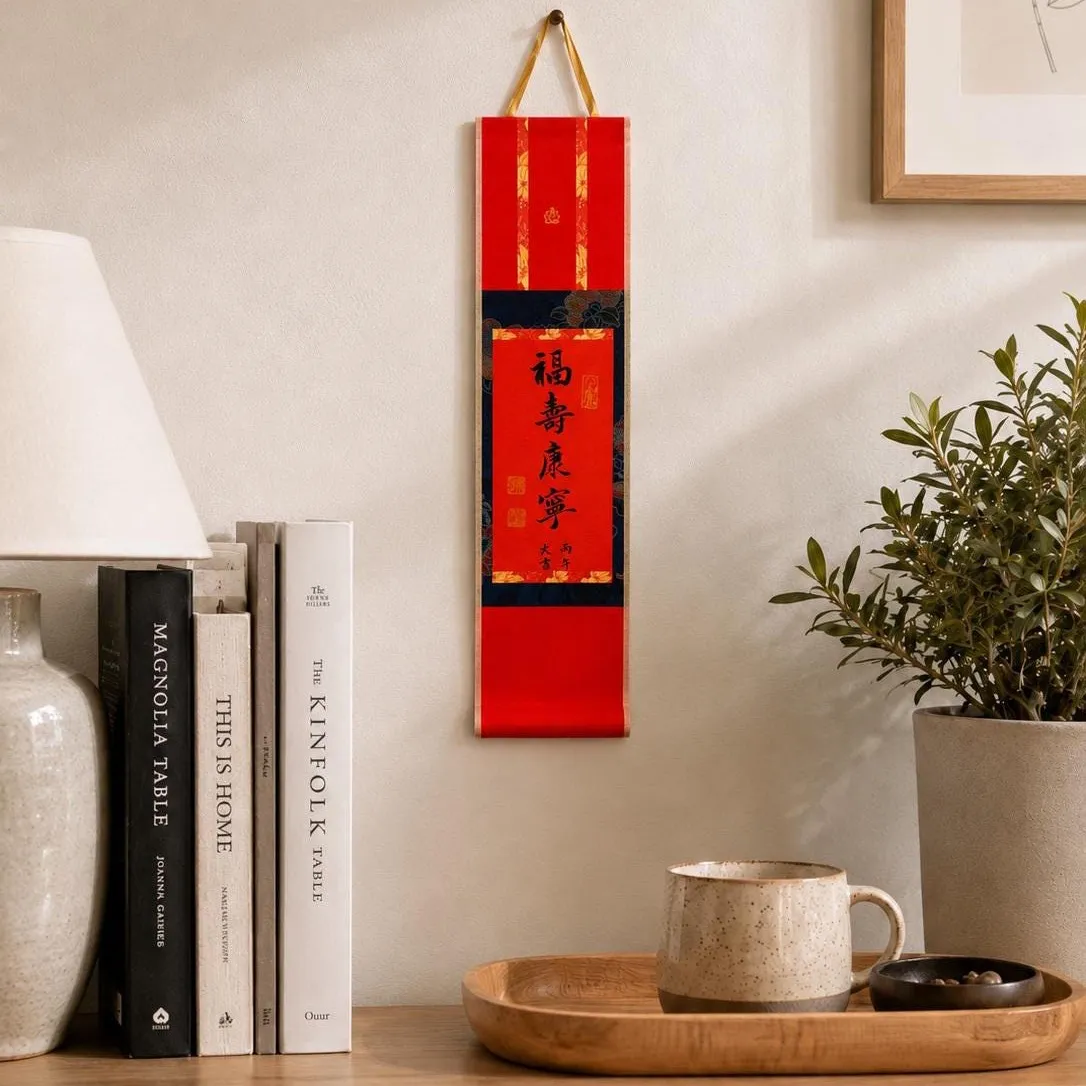
Photo shows a sample — yours will be brushed with the character you choose.
Wall Scroll — for walls & housewarmingsfrom $38→ -
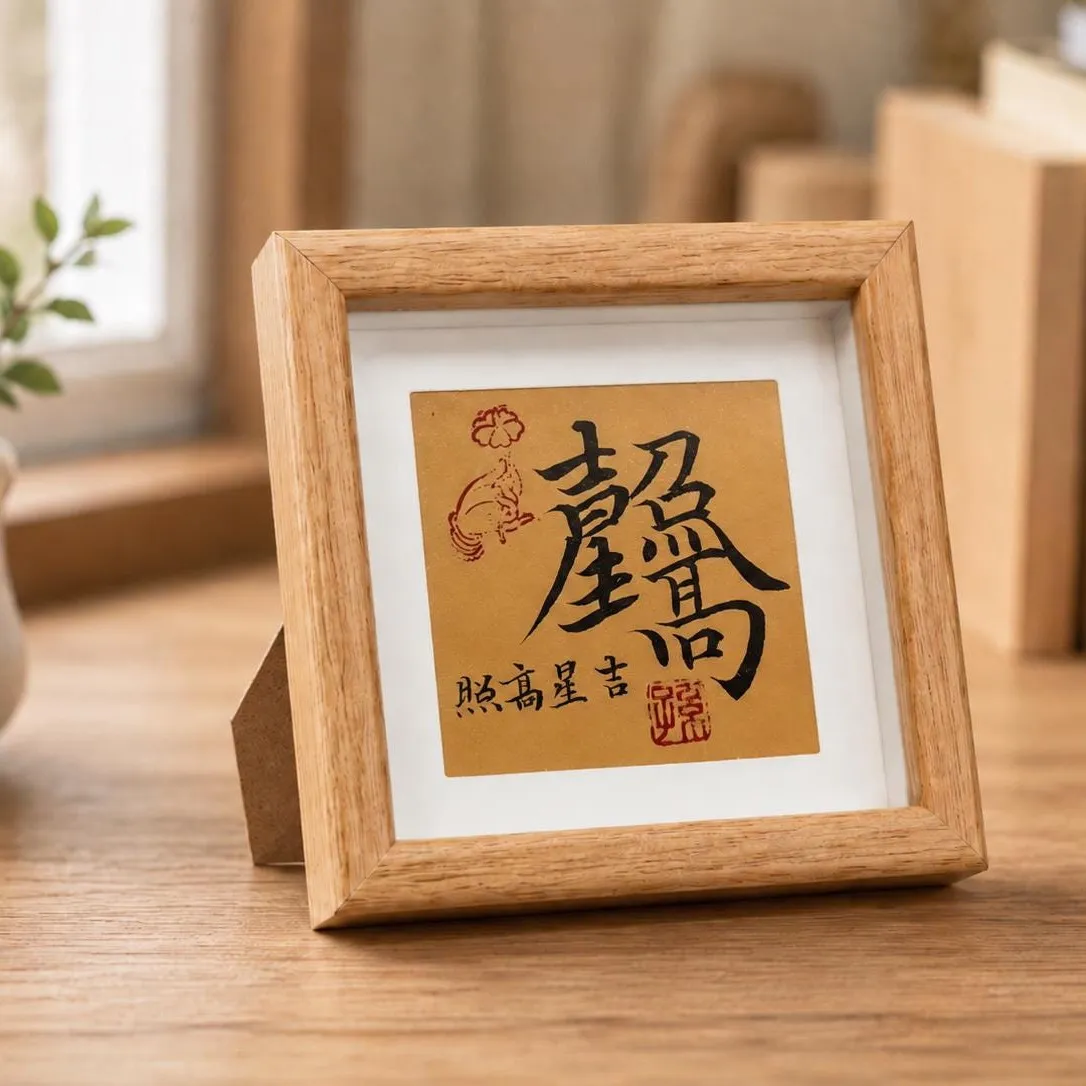
Photo shows a sample — yours will be brushed with the character you choose.
Desk Frame — for desks, studies & studiosfrom $44→ -
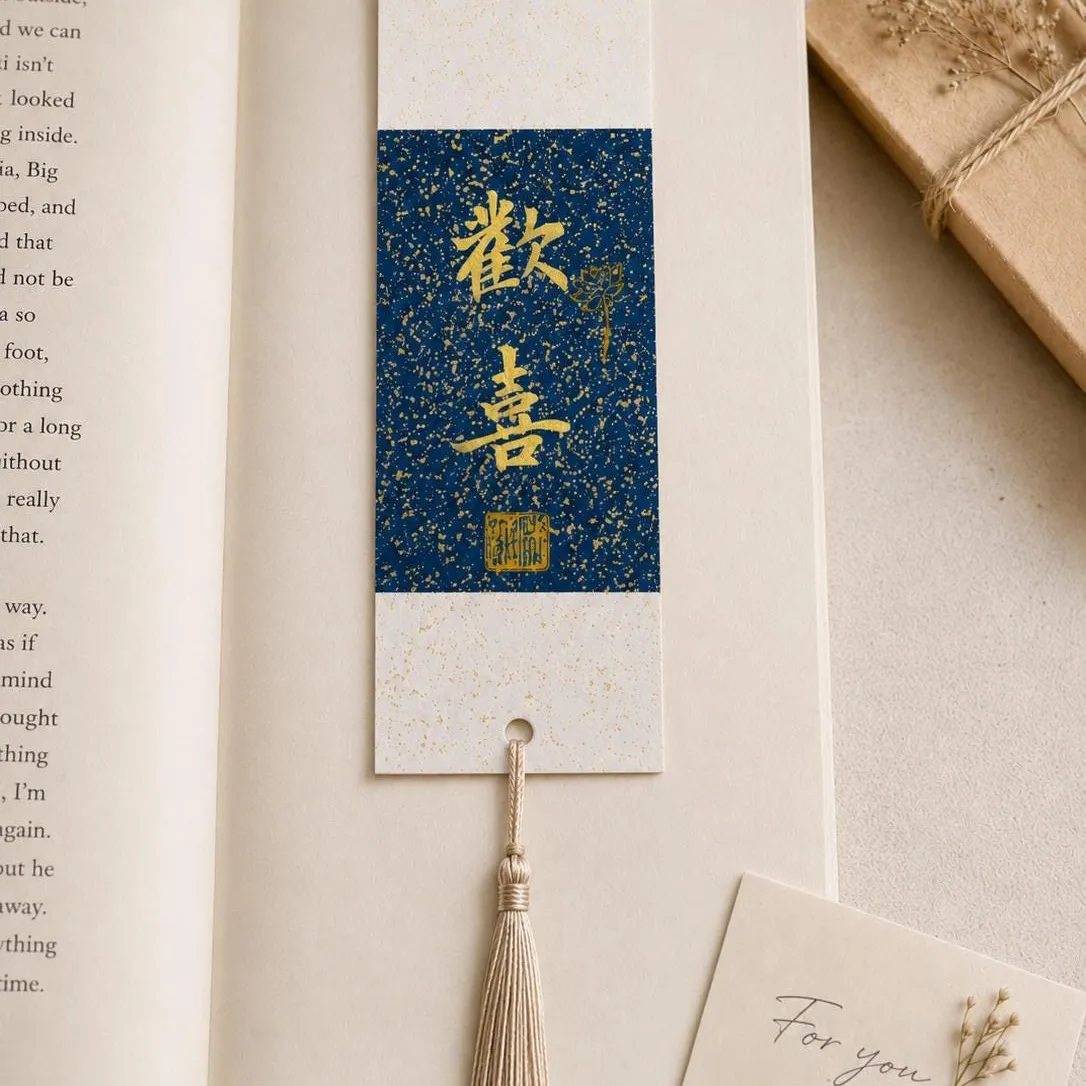
Photo shows a sample — yours will be brushed with the character you choose.
Bookmark — for readers & small thank-yousfrom $17→