远 (yuǎn) — Far · Long Range · The Sight That Reaches Ahead
A single character.
A rope is 长. The place the rope reaches is 远. That difference is the whole character: 远 is the only blessing in this catalog measured from where the recipient happens to be standing. It means far — far in ground, far in years, far in sight — and it always implies a here to be far from, which is what separates it from the characters it sits nearest. 宏 (hóng) names the scale of a design, 恒 (héng) names the stamina to stay with one, 明 (míng) names clear sight of what is already in front of you. 远 names range — how far ahead a person is looking, and how much of what they are working on has not arrived yet. See 宏 → · See 恒 → · See 明 →
Most of what the word does in Chinese is praise foresight. 远见 is the plain noun for it. 高瞻远瞩 — look from a height, gaze far — is the phrase reached for when a decision only made sense years later. 志存高远 goes on school banners in every province, and 宁静致远, from 诸葛亮’s letter to his son, is the line most often quoted about how the distance is actually covered: by being still enough to see it, not by hurrying. Confucius had made the case for 远虑 — far thought — seven centuries before that, and made it in the negative: 人无远虑,必有近忧, no far thought, near trouble. It is still what a Chinese parent says to a child who has not started. See 静 →
A hand-brushed “远” by Artist Lina Sun is the gift for the colleague, mentor, or friend whose planning horizon runs longer than everyone else’s in the room. At graduation it says something more exact than good luck: that the road is long, and that this person has been seen sizing it up correctly. For a birthday it recognizes the one whose best work is still out ahead of them — and who would rather have the distance taken seriously than the year counted. One practical note when giving it to someone you work with or are close to: 远 also lives in 疏远, to drift apart, so let the card or the framing name the aim — 志存高远, or a line of your own. Read as intended, it is distance ahead of them, not distance from you.
- far
- distant
- long-range
- far-sighted
- far-reaching
- remote
- long Length is 长, a property the thing carries around with it. 远 is not a property at all — it is a relation, and it needs a here to be far from. Move the observer and the same place stops being 远 without having changed.
- aloof The relational compound 疏远 does mean drifted apart, but 远 by itself is neutral about warmth. Given as a gift it does not read as distance from you — it reads as distance ahead of them.
- ambitious 志存高远 needs 志 to supply the wanting. 远 contributes only the range: how far out the aim has been set, not the appetite driving it.
The short arms are the point: these readings don’t reach it.
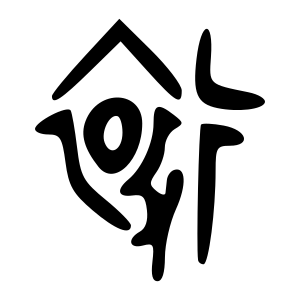
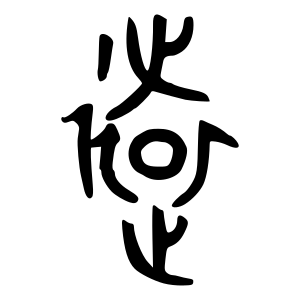
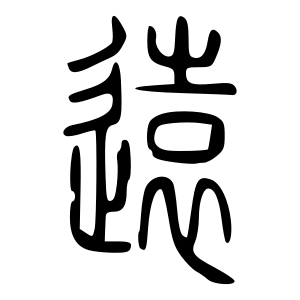
- 辶 road and foot / goingThe walking radical, contracted from 辵 — a foot beside a stretch of road. It is what Chinese attaches to travel and distance: 近, 遥, 途, 返, 进. In 远 it carries the entire meaning; everything the character asserts is a matter of ground between two points.
- 元 soundIn the modern form 元 (yuán) is present purely for the sound. The traditional 遠 uses 袁 (yuán) instead, glossed in 《说文解字》 as 長衣皃 — the look of a long, trailing robe. The swap saved six strokes, 遠 (13) down to 远 (7), and changed nothing about the meaning.
character
- 远大 yuǎn dà far and great — of aims, set at long range and on a large scale
- 远见 yuǎn jiàn foresight; 远见卓识, foresight joined to outstanding judgment
- 长远 cháng yuǎn long-term — distance measured in years rather than ground
- 深远 shēn yuǎn far-reaching — of influence and consequence rather than travel
- 高瞻远瞩 gāo zhān yuǎn zhǔ to look from a height and gaze far — the standard praise for foresight
The Story Behind the Character
Distance is one of the few words a dictionary cannot define downward — there is nothing simpler underneath it — so 《说文解字》 (Shuowen Jiezi, c. 100 CE) defines 遠 sideways, with a synonym: 遠,遼也, far is far. Xu Shen then moves on to the parts, 从辵,袁聲: the road-and-foot radical 辵, with 袁 supplying the sound. 袁 has its own entry, and it turns out to be domestic rather than geographic — 長衣皃, the look of a long, trailing robe. The character for distance was assembled from a road and a garment that drags.
Classical Chinese read the character two ways, and the difference between them was the difference between a fact and an act. In the dipping-tone reading, yuǎn, it states a condition: the place is far. Read in the departing tone — yuàn under the traditional 破读 system, and still marked that way in the rime dictionaries — it becomes transitive: to put something at a distance, to hold it off. That is the 远 in 《论语·雍也》, 敬鬼神而远之 — respect the spirits and keep them at arm's length — Confucius's dry instruction on how to handle what cannot be verified. The verb outlived the tone distinction and survives in 疏远, to drift apart, and in 敬而远之, still said about the person one has decided to be polite to from further away.
The modern 远 is older than the 1956 scheme that made it standard. Woodblock-printed drama and fiction of the Song and Yuan already show 辶 over 元, trading the ten strokes of 袁 for the four of 元 on the strength of a shared sound alone. What the character now covers is wider than mileage: it measures time as readily as ground (长远, 久远), consequence as readily as either (深远, 影响深远), and above all sight. 远见 is foresight; 高瞻远瞩 is looking from a height at what has not appeared yet; 志存高远 is what a teacher writes about a student they expect something from. In all of them the distance is real, but the achievement is in the seeing.
Classical lines
- roughly 150 years
- c. 400 BCE 《论语·卫灵公》
- c. 300 BCE 《礼记·中庸》第十五章
- c. 250 BCE 《荀子·劝学》
人无远虑,必有近忧。 A person without distant concern will have near sorrow.
Confucius states it as a mechanism rather than a warning: trouble that arrives soon is usually the bill for a thought nobody had in time. This is the sentence that fixed 远虑 — far thought — in Chinese as the ordinary word for planning.
登高而招,臂非加长也,而见者远;顺风而呼,声非加疾也,而闻者彰。……君子生非异也,善假于物也。 Climb high and wave: your arm is no longer, but you are seen from far off. Call downwind: your voice is no louder, but it carries. … The gentleman is not born different
he is good at making use of what is available. — Xunzi's account of how reach is actually acquired. Not by growing, but by choosing where to stand, which is his whole argument for study in one image.
君子之道,辟如行远必自迩,辟如登高必自卑。 The way of a person of character is like traveling far: it must begin from nearby. Like climbing high: it must begin from low down.
The standing correction to 远. The distance is never argued away or made to look smaller; it is simply reattached to the ground directly underfoot, which is the only part of it anyone ever actually does.
Why This Character Matters
Chinese also has a proverb that flatly demotes distance: 远亲不如近邻 — a distant relative is worth less than a near neighbour. It was already circulating in Yuan-dynasty drama, and it is still the line said when someone's family is four provinces away and the person who drove them to hospital lives on the same floor. Kinship uses the word the same way: 远房 is the branch of the family you see at funerals. So 远 runs in two directions at once. Applied to relationships it names a deficit. Applied to sight, plans, and ambition it is close to the highest praise the language offers.
It is the second sense that does the public work. 志存高远 — let your aims rest high and far — is standard on school banners and in end-of-year comments on a report card. 高瞻远瞩 is what a company history or a memorial notice says about the person who made the decision no one else understood at the time. And 宁静致远, from 诸葛亮's letter of advice to his son, supplies the tradition's most quoted claim about how distance is reached: not by pushing harder, but by being still enough to see that far. The pairing matters, because the language keeps a correction ready for distance pursued badly: 舍近求远, to abandon what is near and go looking far off, said of the person who overlooked the answer standing next to them. 远 is prized in Chinese, and the near ground is never conceded in the process.
A Chinese person meeting 远 on skin would most likely think first of 志存高远 or 宁静致远, and read the wearer as someone oriented forward — planning at a longer range than the people around them. The character almost never turns up on a tattoo chart, which is part of why it lands as a decision rather than a default. One thing worth knowing before committing to it: in relational contexts 远 can mean drifted apart (疏远), so standing entirely alone it is occasionally read as distance from something rather than toward it. Set inside a phrase, or placed where the aspiration is legible, that reading does not arise.
Calligraphy Styles for Tattoos
- Regular script (楷书 kǎishū) Best for tattoos
7 strokes with an unusual balance: a compact 元 riding on the long level sweep of 辶. Regular script keeps that sweep disciplined and the 元 clearly seated on it rather than floating. Minimum recommended size: 1.5 inches.
- Running script (行书 xíngshū) Very good
辶 is one of the components running script handles best — its three strokes become a single gliding motion, which suits a character about travel. Watch that 元 does not ride too high and break contact with the sweep. Good at 2+ inches.
- Cursive script (草书 cǎoshū) Only with an expert calligrapher
In cursive the 辶 flattens to one tail and 元 reduces to a pair of marks; at that point 远 is easily read as 运 or 达. Attempt only with a calligrapher who specializes in cursive.
Common Mistakes to Avoid
- Getting 运 (yùn) tattooed when 远 was intendedIntended: 远 — far
The two characters differ only in what sits inside the 辶: 元 gives 远 (far), 云 gives 运 (fortune, transport, to move). At small sizes, or in a stylized font pulled from an image search, that difference collapses into a couple of strokes. Confirm the enclosed component against a printed dictionary before the design is final.
- Mixing 远 and 遠 inside one designIntended: one form, used consistently throughout
遠 is the traditional form, standard in Taiwan and Hong Kong and in most calligraphy; 远 is the mainland standard. Either is correct on its own. A multi-character phrase that uses 遠 in one position and simplified forms elsewhere reads to a native speaker the way mixed typefaces read in English — as an accident rather than a choice.
- Writing 元 as 无 or 兀Intended: 远 with 元 formed correctly
元 is two horizontal strokes over 儿, the upper one shorter than the lower. Drop the upper horizontal and you have 兀; run the falling stroke up through it and you have 无. Neither is what you asked for, and both are differences a native reader registers immediately as an error rather than as style.
Notes for Your Tattoo Artist
7 strokes. The character stands or falls on the 辶: its final stroke is a long, level sweep that must carry 元 without sagging at the end, and it should extend past 元's right edge rather than stopping underneath it. Keep 元 compact and set slightly high, its last stroke hooking up so it clears the sweep below. The most common failure is a timid 辶 — shorten that stroke and a character about distance ends up looking cramped, which is the opposite of what it says.
A few characters live near "远" but mean something quieter, sharper, or more specific. Here's how to tell them apart.
how far out the aim sits — range, measured from where you stand
how large the design is drawn — scale, measured on its own terms
the reach of the plan — how far ahead it looks
the endurance behind it — how long the effort actually holds
seeing far — what has not appeared over the horizon yet
seeing clearly — what is already in front of you, understood
For the graduate who has been planning past the first job — who chose the slower degree, the harder field, or the unfashionable specialization because of where it goes rather than where it starts.
- For the graduate who has been planning past the first job — who chose the slower degree, the harder field, or the unfashionable specialization because of where it goes rather than where it starts. 远 states the distance rather than promising anything about the far end of it, and credits the student with having looked at that distance squarely. Behind it stands 志存高远, written on school banners in every province: let the aim rest high and far. What it says is that the road is long, and that the length is not bad news — it is the reason the work is worth beginning at all.
- A birthday counts backward by default. 远 turns the person around. For a colleague or a mentor it names what is still ahead — the plan not yet arrived at, the horizon they have been working toward for longer than anyone has been watching. Where 宏 measures how large the design is, 远 measures how far out it sits, which is the more forgiving thing to say to someone mid-career: not that they have done a great deal, but that they are aimed at something that has not landed yet. Best for the recipient who would rather have the distance acknowledged than the year counted.
Looking for a name? See Western names written in Chinese →
-
What does 远 (yuǎn) mean?
远 (yuǎn) is the Chinese character for far, long range, the sight that reaches ahead. A rope is 长. The place the rope reaches is 远. That difference is the whole character: 远 is the only blessing in this catalog measured from where the recipient happens to be standing. It means far — far in ground, far in years, far in sight — and it always implies a here to be far from, which is what separates it from the characters it sits nearest. 宏 (hóng) names the scale of a design, 恒 (héng) names the stamina to stay with one, 明 (míng) names clear sight of what is already in front of you. 远 names range — how far ahead a person is looking, and how much of what they are working on has not arrived yet. See 宏 → · See 恒 → · See 明 → Chinese also has a proverb that flatly demotes distance: 远亲不如近邻 — a distant relative is worth less than a near neighbour. It was already circulating in Yuan-dynasty drama, and it is still the line said when someone's family is four provinces away and the person who drove them to hospital lives on the same floor. Kinship uses the word the same way: 远房 is the branch of the family you see at funerals. So 远 runs in two directions at once. Applied to relationships it names a deficit. Applied to sight, plans, and ambition it is close to the highest praise the language offers.
-
What occasions is 远 given for?
远 is traditionally given for Graduation, Birthday. For the graduate who has been planning past the first job — who chose the slower degree, the harder field, or the unfashionable specialization because of where it goes rather than where it starts. 远 states the distance rather than promising anything about the far end of it, and credits the student with having looked at that distance squarely. Behind it stands 志存高远, written on school banners in every province: let the aim rest high and far. What it says is that the road is long, and that the length is not bad news — it is the reason the work is worth beginning at all. A birthday counts backward by default. 远 turns the person around. For a colleague or a mentor it names what is still ahead — the plan not yet arrived at, the horizon they have been working toward for longer than anyone has been watching. Where 宏 measures how large the design is, 远 measures how far out it sits, which is the more forgiving thing to say to someone mid-career: not that they have done a great deal, but that they are aimed at something that has not landed yet. Best for the recipient who would rather have the distance acknowledged than the year counted.
-
Is 远 a good Chinese tattoo?
A Chinese person meeting 远 on skin would most likely think first of 志存高远 or 宁静致远, and read the wearer as someone oriented forward — planning at a longer range than the people around them. The character almost never turns up on a tattoo chart, which is part of why it lands as a decision rather than a default. One thing worth knowing before committing to it: in relational contexts 远 can mean drifted apart (疏远), so standing entirely alone it is occasionally read as distance from something rather than toward it. Set inside a phrase, or placed where the aspiration is legible, that reading does not arise.
-
Who brushes the 远 calligraphy?
Each 远 (Yuǎn) is hand-brushed to order by Artist Lina Sun in ink on rice paper — never printed, never repeated.
Bring 远 home — choose how you'd like it brushed.
-
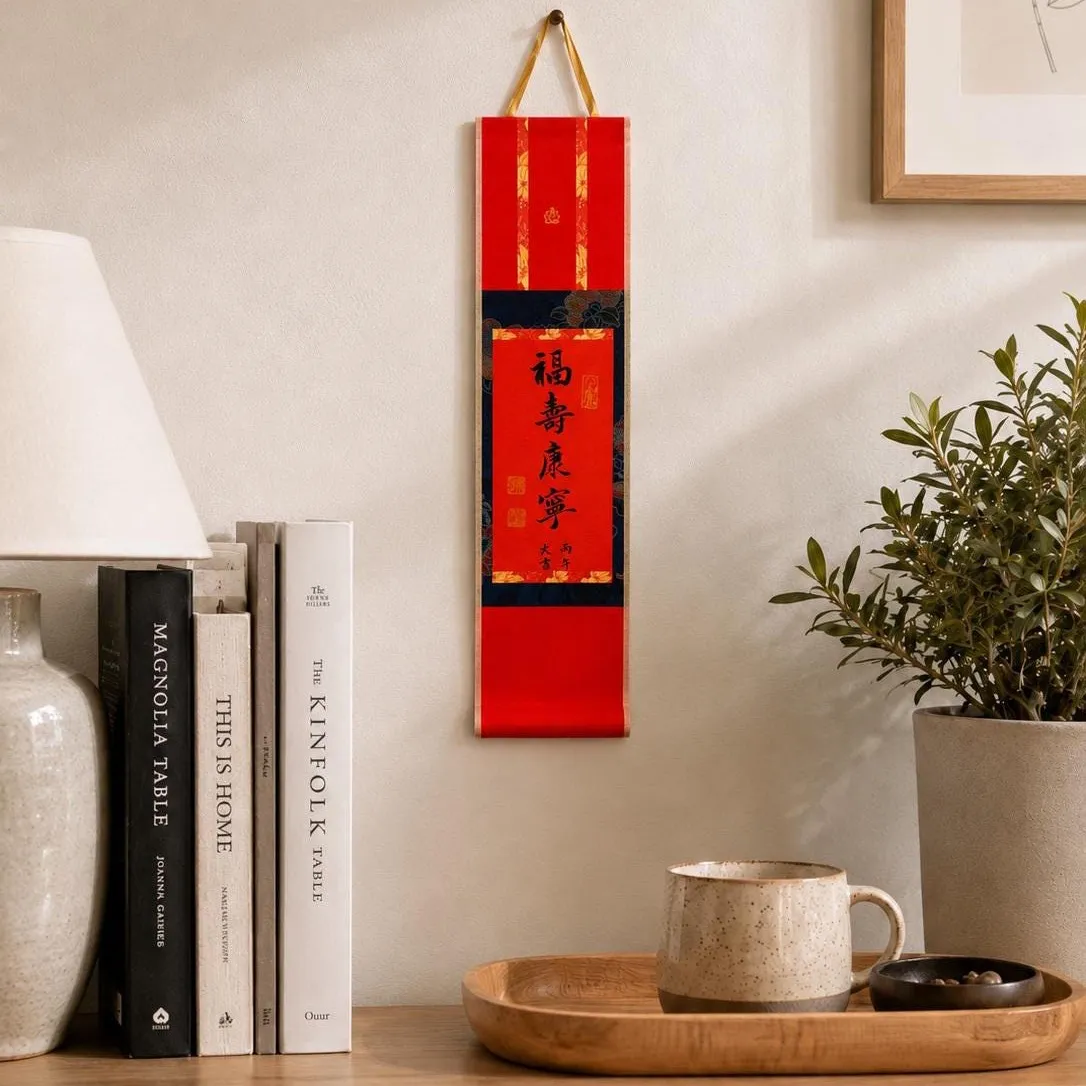
Photo shows a sample — yours will be brushed with 远, or any character you choose.
Wall Scroll — for walls & housewarmingsfrom $38→ -
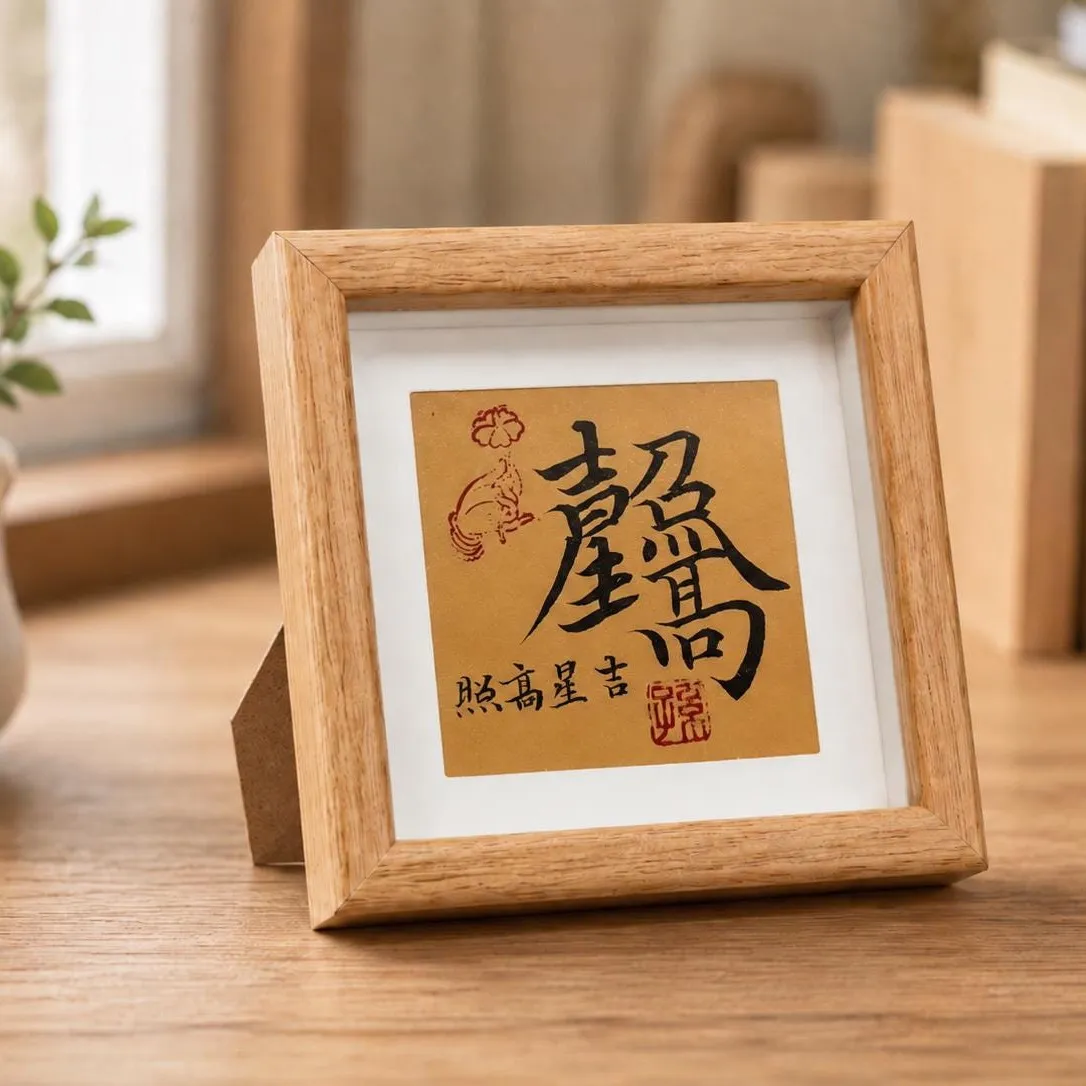
Photo shows a sample — yours will be brushed with 远, or any character you choose.
Desk Frame — for desks, studies & studiosfrom $44→ -
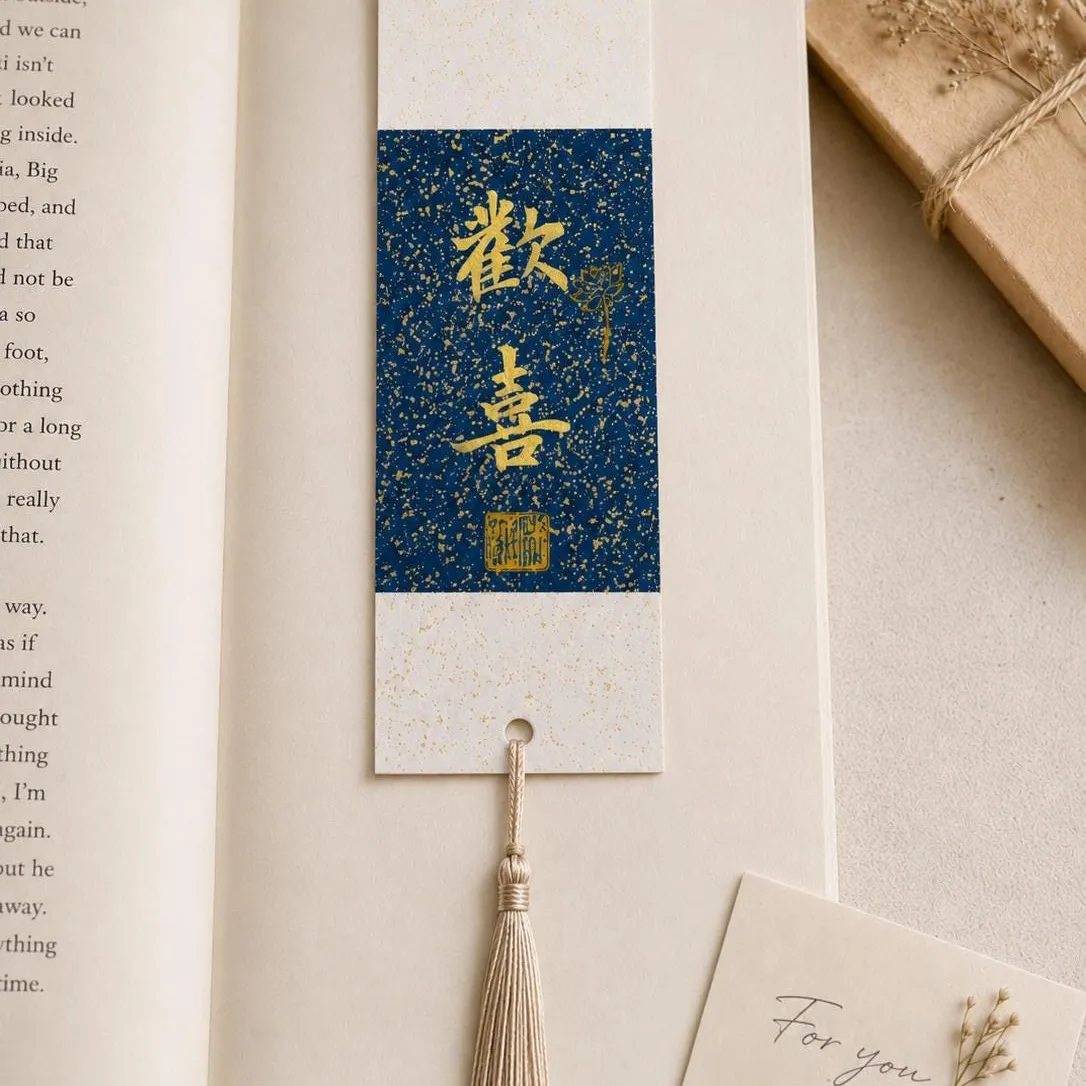
Photo shows a sample — yours will be brushed with 远, or any character you choose.
Bookmark — for readers & small thank-yousfrom $17→

What people said after it arrived.
-
The item is fantastic. The customer service was genuine. Thanks!
— M.Verified purchase · from our Etsy shop reviews · -
They were great they gave me exactly what I asked for and then some. Thank you!!
— G.Verified purchase · from our Etsy shop reviews · -
It is well designed and customized. My daughter loves it. Amazing gift for family’s d friends
— S.Verified purchase · from our Etsy shop reviews ·
Each "远" is hand-brushed by Artist Lina Sun on rice paper.
See 远 (Yuǎn) on Etsy →