长乐未央 (cháng lè wèi yāng) — Lasting Joy, Not Yet Used Up · Joy That Has Not Run Out
A 4-character phrase, not a single character.
Three of the sources best placed to say what 央 meant give four different answers between them. 《说文解字》 could not settle it inside one entry, opening with 中央也, the middle, and then conceding 一曰久也, “alternatively: long-enduring.” The Mao commentary on the Book of Songs reads it as 旦, daybreak. The Chu Ci commentators read it as 尽, used up — and that is the one the Han took up and the one the blessing carries. So 长乐未央 is lasting joy that has not run out: not a wish for more of it, not a forecast about how much remains, but a report that the supply is not yet spent. What survives all four readings is the 未. Whatever 央 marks, the phrase says the joy has not reached it. See 乐 →
The four characters were manufactured before they were ever calligraphy. They come down to us stamped into 瓦当 — the round clay caps that finish a roof-tile at the eaves — one seal-script character to each quarter of the disc, pressed from moulds in Han workshops and fired in batches for palace halls and the gate-towers of imperial tomb precincts. They were cast in rings on the backs of bronze mirrors and cut into seals, in company with 长生无极 and 千秋万岁, tags that all turn on duration rather than on any particular good. The two great palace complexes of the Han capital, the 长乐宫 and the 未央宫, carried the same two words as their names; which borrowed from which is not something the sources settle, and it hardly matters, because both facts say the same thing about how thoroughly this vocabulary belonged to the period. The palaces are excavated rammed-earth foundations in an archaeological park on the northwest side of Xi’an now. The tiles are still legible.
A hand-brushed “长乐未央” by Artist Lina Sun suits the friend or grandparent in the middle of a good stretch, given at a birthday, when the arithmetic is the whole subject and you would rather not do any, or at a housewarming, which returns the words to the kind of structure they were fired for. The Book of Songs has a poem about a cricket coming indoors and a man realising the year is nearly gone. This is the sentence that looks at the same stretch and says it is not gone yet.
- lasting joy that has not run out
- a report on a supply, not a quantity of it
- the blessing that was fired into a roofline before it was ever brushed
- what you say when you want to make no forecast and still say something warm
- eternal joy Closer than it used to look, since Han usage reads 未央 as unexhausted — but eternity is a claim about all future time, and 未央 only reports on the present state of a supply. It says the joy has not run out. It declines to say how much is left.
- 延年益寿 延年益寿 asks for more: years added to a span. 长乐未央 asks for nothing to be added, which is why it works as a gift without sounding like a request made on the recipient's behalf.
- happily ever after A promise about how a story ends. 长乐未央 makes no promise and describes no ending — its whole second half is the refusal of one.
The short arms are the point: these readings don’t reach it.
- 长乐 joy of long duration长 is extent in time rather than degree — not intense joy but joy that keeps going. 乐 is gladness in its most everyday sense, the 乐 of 快乐; its oldest written form shows strings stretched over a wooden frame, an instrument before it was ever an emotion. Together they name what is being measured.
- 未央 not yet used up未 is the plain negative, not yet. 央 is the contested half: 《说文解字》 gives it twice in one entry, 中央也 and then 一曰久也; the Mao commentary reads it 旦, daybreak; the Chu Ci commentators read it 尽, exhausted. Han usage settled on that last one, so 未央 means unexhausted — a report on a supply rather than a quantity of it.
characters
- 长乐 cháng lè lasting joy — the two-character core, and the name of the Han palace that housed Gaozu and then the empress dowagers
- 未央 wèi yāng not yet used up — the negative half, the name of the Han palace of state, and a word that stands alone in classical verse
- 长生无极 cháng shēng wú jí long life without limit — with 千秋万岁, one of the two tile legends 长乐未央 shares its set with, all three turning on duration
- 长毋相忘 cháng wú xiāng wàng let us never forget one another — the same Han inscription stock, cast on mirror backs and belt-hooks
- 延年益寿 yán nián yì shòu extend the years, increase the span — the Han phrase that does ask for more, and the useful contrast to 未央
Cinnabar marks the characters 长乐未央 actually contains. The dark row is a relative by meaning or by sound, not one shared stroke.
The Story Behind the Character
The object is a disc of grey fired clay about the width of a palm, and there are thousands of them. It is a 瓦当 — the decorated cap that finishes a roof-tile where the tile reaches the eaves — and on the most common Han examples the round face is quartered by raised ridges with one seal-script character set in each quarter. Read them and they say 长乐未央. These come out of the ground across the site of the Han capital at Chang'an by the crateful; they fill museum cases in Xi'an and turn up in rubbings sold to calligraphers to this day. Before the phrase was ever a scroll it was a roof edge — mass-produced, structural, and pointed outward at the street.
The word everything turns on is 央, and the remarkable thing about it is that the people best placed to define it did not agree. 《说文解字》 (c. 100 CE) cannot settle it inside a single entry: it opens 央,中央也 — the middle, drawn as 大, a standing person, held inside an enclosure — and then, four clauses later, offers a second reading outright, 一曰久也, "alternatively: long-enduring." The Mao commentary on the Book of Songs takes 夜未央 to mean the night has not yet reached 旦, daybreak. The commentators on the Chu Ci read it as 尽, used up. Middle, duration, dawn, exhaustion: four readings of one syllable, from the three sources with the best claim to know. What none of them disputes is the 未. Whatever 央 marks — the midpoint, the end, the light — the phrase says the joy has not got there.
The Han settled the question in practice rather than in commentary, and settled it on 未尽: not used up. 长乐 supplies what is being measured, and the four characters together are a Han formation rather than a line lifted from any classic — which is exactly why the phrase lives on objects instead of in books. It belongs to a stock of auspicious four-character tags the period stamped onto everything it made, alongside 长生无极, 千秋万岁 and 长毋相忘. That vocabulary was ordinary enough that the two great palace complexes of Western Han Chang'an carried these same two words as their names, the 长乐宫 and the 未央宫. Which came first — the blessing stock or the buildings — is not something the sources settle, and the phrase does not need it settled. Both facts point the same way: these were the words of the period, and everyone was using them.
Classical lines
- roughly 500 years
- c. 800 BCE 《诗经·小雅·庭燎》
- c. 600 BCE 《诗经·唐风·蟋蟀》
- c. 300 BCE 《离骚》屈原
夜如何其?夜未央。庭燎之光。 How goes the night? The night is not yet ended. The courtyard torches are still burning.
A duty officer answers the same question three times before dawn, and this is the first answer. It is the earliest 未央 in the language, and it already carries the sense the blessing would inherit a thousand years later: not a prediction of how long the night will last, but a report that it has not finished.
及年岁之未晏兮,时亦犹其未央。 While the years are not yet late, while time itself has not yet run out.
Qu Yuan applies to a whole life the word the Book of Songs applied to a single night. The passage is about hurrying, and its logic is the one the blessing runs on in reverse: the reason to act is not that time is short but that it demonstrably has not gone.
蟋蟀在堂,岁聿其莫。今我不乐,日月其除。 The cricket has come into the hall; the year is drawing to its close. If I do not take my joy now, the days and the months will pass me by.
The cricket moves indoors when the cold arrives, which is how the household knows what month it is. The poem is the exact anxiety 未央 answers: here a man counts the year down and finds it nearly spent, where the blessing looks at the same stretch and reports that it is not.
Why This Character Matters
This is a blessing that arrived by the crateful. The 长乐未央 tiles were not written by anyone in the ordinary sense — they were pressed from moulds in official workshops and fired in batches, so a hall got the words on its eaves the way it got the eaves: as part of the order. That is an unusual origin for a Chinese blessing, most of which are chosen, brushed by a particular hand, and given by one person to another. Here the wish was infrastructure. It went up with the roof, it faced the street rather than the room, and nobody inside had to have picked it.
What that history left behind is a preference in the brush. Calligraphers taking up the phrase today often reach for seal script (篆书), because the shapes most people picture when they hear it are the ones squeezed to fit a curved clay quarter — though 汉隶, the clerical hand of the same dynasty, has at least as good a claim on it. The phrase also kept the company it was cast with: on mirror backs and tile faces it sits in a set with 长生无极 and 千秋万岁, all of them turning on duration rather than on any particular good. That is the family it belongs to, and it is the reason the phrase reads as generous rather than merely cheerful. It does not name a thing to be acquired. It reports on a supply, and the report is that the supply is not out.
A few characters live near "长乐未央" but mean something quieter, sharper, or more specific. Here's how to tell them apart.
gladness with a report attached — that it has not been used up
gladness as the felt texture of a day, described rather than accounted for
an observation that something has not run out — asking nothing of anyone
the discipline of not stopping — constancy as something a person has to keep doing
a claim about the supply — the joy is not spent
a claim about the face — the readiness to laugh, kept open through whatever comes
长乐未央 arrives at a birthday with no number in it.
- 长乐未央 arrives at a birthday with no number in it. Its second half is a plain negative with no quantity attached to it: 未央, not used up, not run out. That is a different kind of thing to say than either more years or many years, and it is the reason the phrase carries so easily between a friend turning thirty and a grandparent turning eighty. To the first it says the good stretch they are in has not been spent. To the second it says the same sentence, without adjusting it downward, which is the courtesy elders notice most and get offered least.
- The words began as building material. In Han Chang'an they were pressed into 瓦当 — the round clay caps that finish a roof-tile at the eaves — so that the blessing on a roofline was fired from the same batch as the roof, facing outward from the edge of it. Those roofs were state ones: palace halls and the gate-towers of imperial tomb precincts, where the tiles came out of official workshops by the mould-load. The phrase only reached ordinary houses much later, on paper. Giving it to someone who has just taken possession of rooms puts it back on a building, and the wording suits the moment on its own terms: it says of the life about to be lived there not that it will be long, but that none of it has been used up yet.
Friend · Best Friend · Grandparent · or yourself
Looking for a name? See Western names written in Chinese →
-
What does 长乐未央 (cháng lè wèi yāng) mean?
长乐未央 (cháng lè wèi yāng) is a 4-character Chinese phrase for lasting joy, not yet used up, joy that has not run out. Three of the sources best placed to say what 央 meant give four different answers between them. 《说文解字》 could not settle it inside one entry, opening with 中央也, the middle, and then conceding 一曰久也, "alternatively: long-enduring." The Mao commentary on the Book of Songs reads it as 旦, daybreak. The Chu Ci commentators read it as 尽, used up — and that is the one the Han took up and the one the blessing carries. So 长乐未央 is lasting joy that has not run out: not a wish for more of it, not a forecast about how much remains, but a report that the supply is not yet spent. What survives all four readings is the 未. Whatever 央 marks, the phrase says the joy has not reached it. See 乐 → This is a blessing that arrived by the crateful. The 长乐未央 tiles were not written by anyone in the ordinary sense — they were pressed from moulds in official workshops and fired in batches, so a hall got the words on its eaves the way it got the eaves: as part of the order. That is an unusual origin for a Chinese blessing, most of which are chosen, brushed by a particular hand, and given by one person to another. Here the wish was infrastructure. It went up with the roof, it faced the street rather than the room, and nobody inside had to have picked it.
-
What occasions is 长乐未央 given for?
长乐未央 is traditionally given for Birthday, Housewarming. 长乐未央 arrives at a birthday with no number in it. Its second half is a plain negative with no quantity attached to it: 未央, not used up, not run out. That is a different kind of thing to say than either more years or many years, and it is the reason the phrase carries so easily between a friend turning thirty and a grandparent turning eighty. To the first it says the good stretch they are in has not been spent. To the second it says the same sentence, without adjusting it downward, which is the courtesy elders notice most and get offered least. The words began as building material. In Han Chang'an they were pressed into 瓦当 — the round clay caps that finish a roof-tile at the eaves — so that the blessing on a roofline was fired from the same batch as the roof, facing outward from the edge of it. Those roofs were state ones: palace halls and the gate-towers of imperial tomb precincts, where the tiles came out of official workshops by the mould-load. The phrase only reached ordinary houses much later, on paper. Giving it to someone who has just taken possession of rooms puts it back on a building, and the wording suits the moment on its own terms: it says of the life about to be lived there not that it will be long, but that none of it has been used up yet.
-
Who brushes the 长乐未央 calligraphy?
Each 长乐未央 (Cháng Lè Wèi Yāng) is hand-brushed to order by Artist Lina Sun in ink on rice paper — never printed, never repeated.
Bring 长乐未央 home — choose how you'd like it brushed.
-
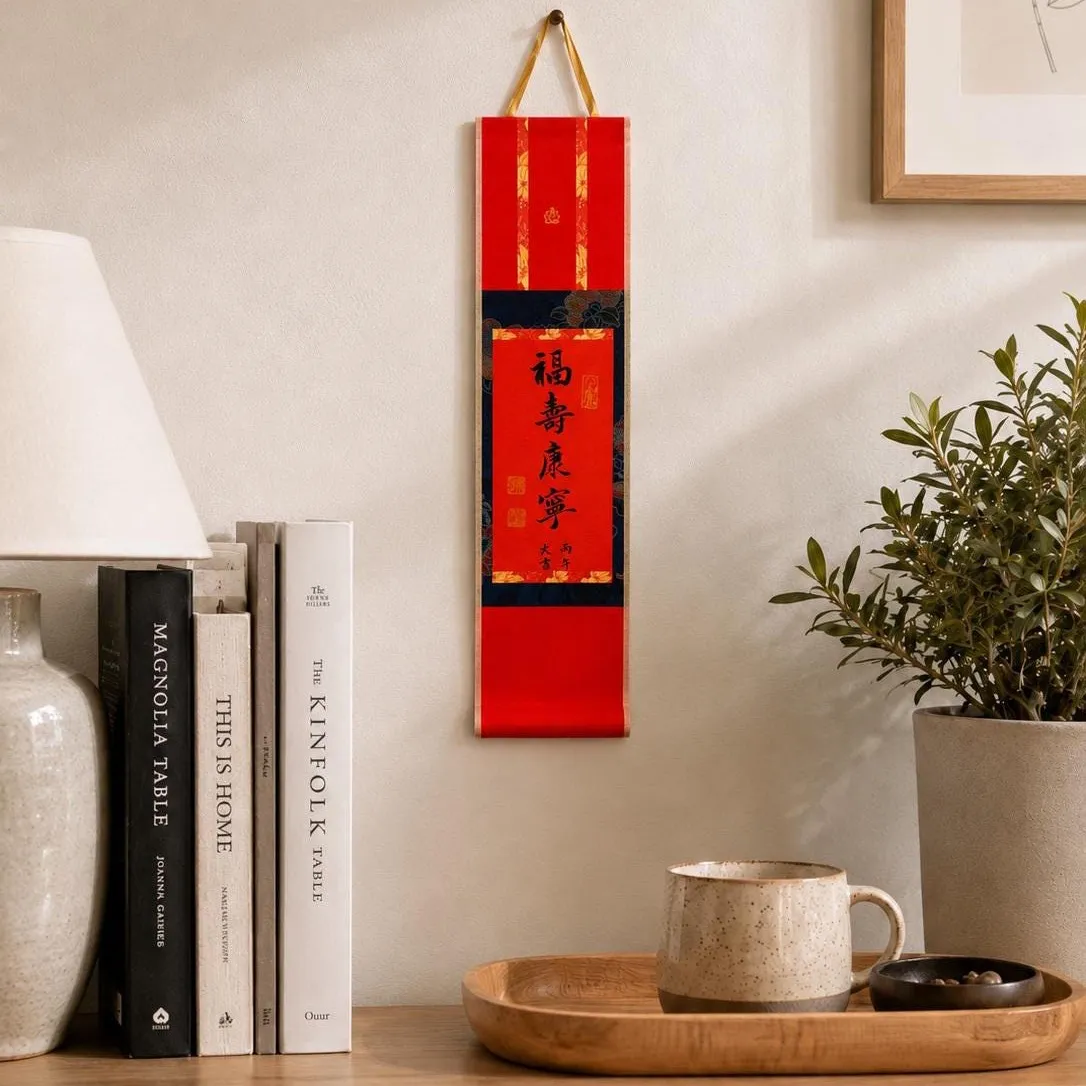
Photo shows a sample — yours will be brushed with 长乐未央, or any character you choose.
Wall Scroll — for walls & housewarmingsfrom $38→ -
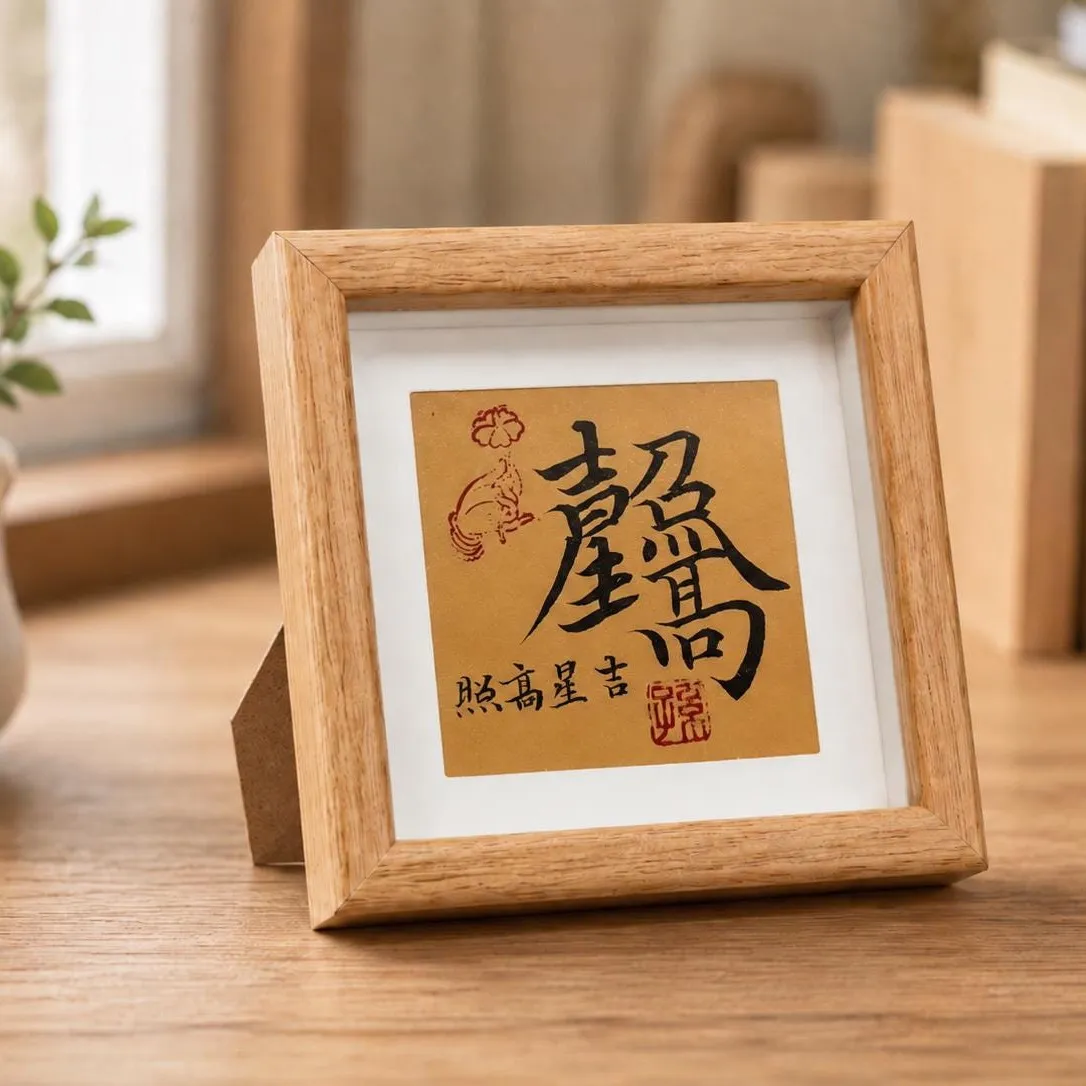
Photo shows a sample — yours will be brushed with 长乐未央, or any character you choose.
Desk Frame — for desks, studies & studiosfrom $44→ -
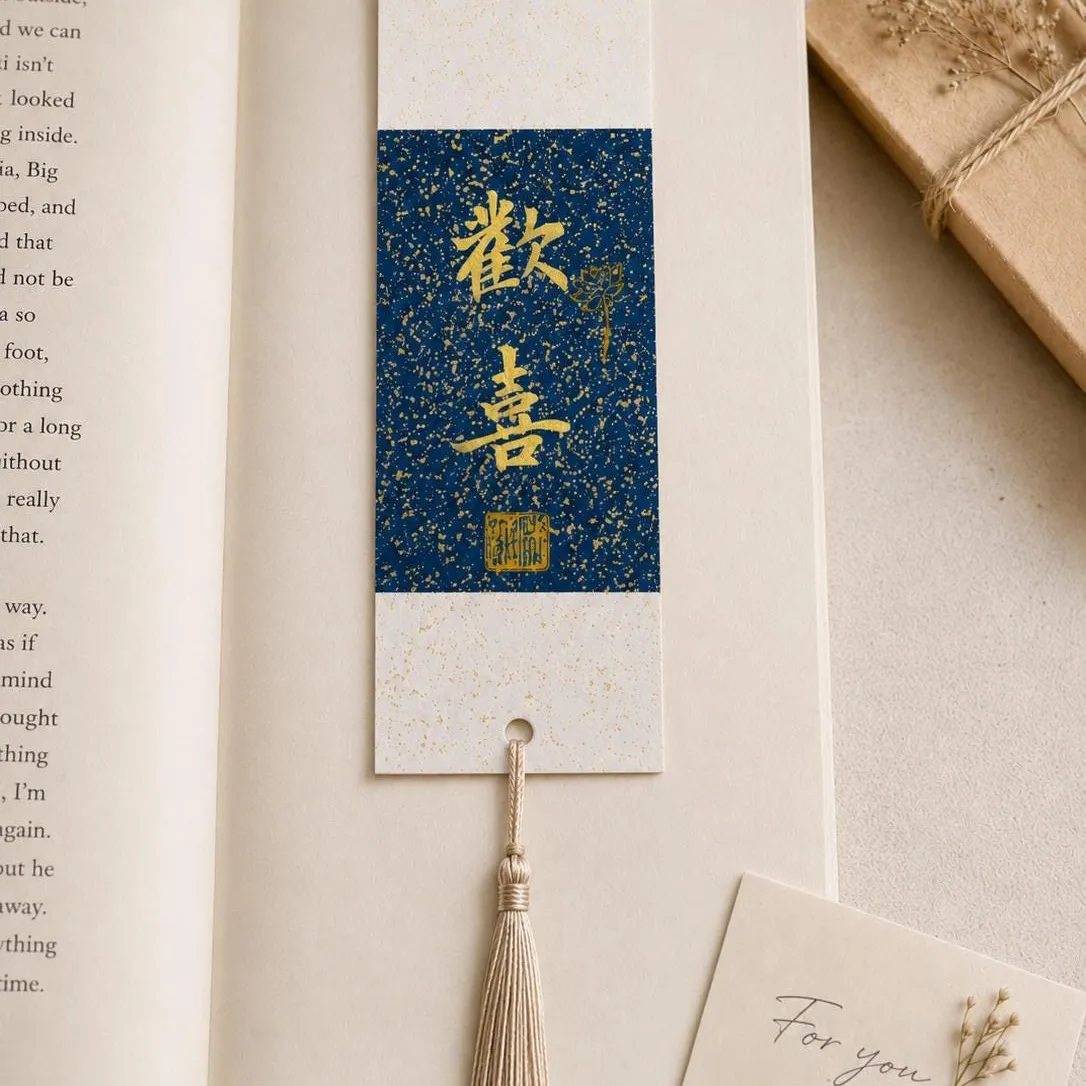
Photo shows a sample — yours will be brushed with 长乐未央, or any character you choose.
Bookmark — for readers & small thank-yousfrom $17→
What people said after it arrived.
-
The item is fantastic. The customer service was genuine. Thanks!
— M.Verified purchase · from our Etsy shop reviews · -
They were great they gave me exactly what I asked for and then some. Thank you!!
— G.Verified purchase · from our Etsy shop reviews · -
It is well designed and customized. My daughter loves it. Amazing gift for family’s d friends
— S.Verified purchase · from our Etsy shop reviews ·
Each "长乐未央" is hand-brushed by Artist Lina Sun on rice paper.
See 长乐未央 (Cháng Lè Wèi Yāng) on Etsy →