旺 (wàng) — Blazing · Thriving · At Full Strength
A single character.
旺 (wàng) is a word about rate. 盛 names a height that has been reached and carries the turn on the far side of it inside the word; 强 names force a person has whether or not any of it is in use; 丰 measures what came in off the fields. 旺 measures none of those. It tells you how hard something is burning at this moment, which is why it applies equally to a stove, a street, a crop and a child, and why it stops being true the instant the burning slows. That also makes it the least predictive of the blessing characters. You cannot wish someone 旺 next decade the way you can wish them 康 or 安. You can only say: may it be going hard, and may it be going hard again next year. See 盛 → · See 强 → · See 康 →
The uses stack up from one fire, and they stay physical for a surprising distance. 火旺 is a hearth doing its job. 人气旺 is the warmth a room only has when people are in it, the thing a new flat conspicuously lacks. 精力旺盛 is a body at full output; 长势很旺 is a crop growing hard; 旺季 is the season a trade runs hottest — a phrase whose logic the almanacs had worked out centuries before it turned up in quarterly reports. Across all of them the character does one job. The pair 兴旺 is a useful measure of what that job is not. 兴 is a verb of rising, and it is the half doing the growing; 旺 contributes the heat, and never claimed the climb. See 兴旺 →
A hand-brushed “旺” by Artist Lina Sun goes to the household you want loud. The friends who just took the keys and have not yet cooked in the place. The couple whose first winter it is. The grandparent for whom a good year has always been counted in how many people came home and how late they stayed. 旺 promises nothing and forecasts nothing — it is the character for a state you can see from the doorway, the fire high and the room full. Say on the card which fire you mean, at home or at work; on its own the word is read by some as the hearth and by others as the shop sign, and both of them are right.
- burning hard — a fire, a stove, a furnace at its hottest
- a body or a crop at full output
- a shop, a street, a season at its busiest
- a house with enough people in it to feel warm
- intensity while it lasts, not a total
- prosperous That points at money already in hand. 旺 points at activity: a packed noodle shop on thin margins is 旺, and a large fortune sitting still in an account is not. The word is about traffic and heat, and it says nothing about the balance.
- lucky 旺 describes a state anyone can walk past and verify — the queue is out the door, the stove is roaring, the house is loud. It makes no claim about why, and predicts nothing about tomorrow.
- strong 强 is capacity — the force a thing could bring. 旺 is the rate at which it is being spent right now. Someone can be 强 while resting; nobody is 旺 while resting.
- 盛 盛 is a height arrived at, and the classics never let the word travel without its warning attached: whatever tops out has started down. 旺 is cyclical rather than terminal: a trade has a 旺季 every year and expects another one, and the fire that dies down gets fed again.
The short arms are the point: these readings don’t reach it.
- 日 meaning — the sun, light at full strengthThe 《说文解字》 files this character's ancestor 暀 under 日 and glosses it 光美也 — light at its best. Every later sense is that image spent on something else: a stove at its hottest, a body at full energy, a street at its busiest. The sun is why the word measures intensity rather than quantity.
- 王 sound — and nothing more王 replaced the original phonetic 往 in 暀 sometime after the Han, and the swap stayed inside one sound family: the oldest graphs of 往 are a foot 止 over 王, taken for the sound. It is here for the sound, and the survival of 暀 is the proof. But a component that also spells 'king' standing beside a sun is not something Chinese readers manage to ignore, and sun-plus-king circulates widely as a reading of the character. It is a later gloss, not the etymology.
character
- 兴旺 xīng wàng thriving — the climb and the heat together, said of a household or a trade
- 旺盛 wàng shèng vigorous, exuberant — of energy, appetite, or growth at full output
- 旺季 wàng jì peak season — the standard business term, with 淡季 for the slack half of the year
- 人气旺 rén qì wàng full of people — said of a shop, a street, or a home that has warmth because someone is in it
- 火旺 huǒ wàng the fire going hard — the literal sense the whole character still rests on
The Story Behind the Character
When 许慎 closed the 《说文解字》 around 100 CE he had catalogued 9,353 characters. 旺 is not among them. What he does have, filed under the sun radical, is 暀 — defined in three characters, 光美也, light at its best — built from 日 with 往 (wǎng) supplying the sound. That is the character 旺 grew out of. Somewhere in the centuries after the Han the phonetic was traded down to 王: half the strokes, and a cleaner match than it looks, since 王 carries a second reading — wàng, the verb, to reign — beside the familiar wáng. The abbreviation won so completely that the original now survives mainly inside dictionaries. A character in daily use across the Chinese-speaking world is, on the record, a Six Dynasties shortcut.
The sense never left the sun. Light at full strength moves first to the most ordinary fire a household owns: 炉火正旺 is what a cook says without thinking before the wok goes on, the coals at the point where you stop feeding them and start using them. From there it generalizes to any capacity being spent at full rate. A body has it — 精力旺盛, energy at full output. A crop has it — 长势很旺, growing hard. A street has it. A trade has it. What stays constant through all of them is that 旺 measures rate, not amount: it describes how hard a thing is currently burning, and the moment the burning slows the word stops being true.
One branch of that went technical early. Traditional almanacs assign each of the five phases a season in which it is 旺 — 木旺于春, wood at full strength in spring; 火旺于夏 — a calendrical vocabulary for the stretch of the year in which a thing is in its own element and running at its peak. Whether or not modern 旺季 was coined out of that system, the sense it needed was sitting there centuries in advance: 旺季 is what every Chinese business calls its peak season, 淡季 the slack one, and the logic is identical — a trade, like a phase, has its own stretch of the year. The 王 borrowed for the sound was never meant to carry meaning. It is hard to find a Chinese reader who does not notice it anyway.
Classical lines
- roughly 1,100 years
- c. 300 BCE 《孟子·尽心上》
- c. 200 BCE 《黄帝内经·素问·生气通天论》
- c. 754 CE 《秋浦歌·其十四》李白
炉火照天地,红星乱紫烟。 The furnace fire lights up heaven and earth; red sparks scatter through purple smoke.
李白 watching night-shift smelters at the furnaces of Qiupu, and the rest of the quatrain is about the men, not the metal: their faces flushed in the moonlight, their singing carrying across the cold river. It is the clearest picture in Chinese poetry of what 旺 actually describes — not a quantity of anything, but something burning at its limit and everything nearby lit by it.
民非水火不生活,昏暮叩人之门户求水火,无弗与者,至足矣。 People cannot live without water and fire, yet knock on any door at dusk asking for water and fire and no one refuses you
because there is more than enough. — 孟子's test for a well-governed country is a strikingly domestic one: whether a neighbor can come for a light and be handed it without a thought. His point is sufficiency rather than generosity, but the example he reached for is worth noticing. A fire at full strength is one of the very few things a household can give away all evening and still have.
阳气者,若天与日,失其所则折寿而不彰。 The body's yang is like the sky's relation to the sun: lose its proper place and life is cut short and never shines.
The classic of Chinese medicine explains a person's vitality by pointing at the sun, the same 日 standing at the left of 旺. It is the reasoning behind 精力旺盛, the everyday phrase for a body at full output, and it treats that output as something with a proper level rather than something to maximize.
Why This Character Matters
In the 1930s a district of Kowloon called 芒角 — silvergrass horn, after the reeds that grew there and the spur of land running out into the water — was renamed 旺角. The Cantonese reading changed with it, from Mong to Wong, but the English romanization had already been fixed and stayed behind, which is why the Hong Kong district written "thriving corner" in Chinese is still spelled Mong Kok in English. The renaming caused nothing, but the description held: Mong Kok is now among the densest urban districts anywhere on earth, and 旺 is the exact word for what its street signs stand in the middle of — this many people in this small a space. Very few blessing words get tested at that scale.
Two things are worth knowing before hanging a lone 旺. First, it is one of the rare blessing characters that works as a transitive verb — 旺财, 旺家, 旺夫 — and the last of those has not aged well. 旺夫, said of a wife who supposedly makes her husband prosper, is a compliment a lot of Chinese women now hear as an insult, and 旺夫相 is the version applied to a face. Nothing obliges the character to that reading, but the phrase is common enough to be worth avoiding on a card. Second, the register is commercial and comic as much as it is domestic. 旺铺 is a real-estate listing term for a prime shopfront. 旺旺 is a very large Taiwanese snack company whose rice crackers and mascot are recognized by essentially every Chinese child. And 旺财 is the standard joke name for a dog, built on 汪汪 (wāng wāng, the bark) — the same syllable under a different tone, and the Chinese equivalent of naming a dog Rex. A single 旺 in a home is read as the hearth. A single 旺 with no context at all is read by a fair number of people as a punchline, and a card or a paired character settles it.
A few characters live near "旺" but mean something quieter, sharper, or more specific. Here's how to tell them apart.
how hard a thing is burning right now — and it will burn again next season
the height a thing has reached, with the turn on the far side already in the word
the rate a capacity is being spent at — visible from outside, and true only while it lasts
the capacity itself — force available, whether or not any of it is currently in use
a body at full output — 精力旺盛, the energy that wears other people out
a body with nothing wrong with it — the quieter and, past a certain age, the more valuable wish
In Shanxi and across Inner Mongolia the year does not turn on a firework but on a fire.
- In Shanxi and across Inner Mongolia the year does not turn on a firework but on a fire. Households build a cone of coal in the courtyard through the last days of the twelfth month — chunks stacked into a chimney, kindling inside, a red paper strip pasted on the side — and light it at midnight on 除夕. It is called 旺火, and the custom is to walk a circle around it while it roars, 转旺火, the whole family in the cold with their faces lit. Nothing about it is a prediction. It is a household making the biggest, hottest, most visible thing it can and standing in the light of it, and 旺 is the character for exactly that state. The right gift for the friend whose good year would be measured in heat rather than in quiet.
- Housewarming · A New HomeThere is a Mandarin word for what an empty flat is missing: 人气 — the warmth a place takes on only from people being in it — and a new home is said to have none until it does. That is why the housewarming is called 暖房 or 温锅 across much of the north, warming the house, warming the pot: friends come and the stove gets lit for the first time, and the point of the evening is less the meal than the fact of cooking it. 旺 names both halves at once, the fire going hard and the room full enough to matter — 人气旺, 火旺. For the couple or the friend who has the keys and the boxes and not yet the noise.
Friend · New Couple · Grandparent · or yourself
Looking for a name? See Western names written in Chinese →
-
What does 旺 (wàng) mean?
旺 (wàng) is the Chinese character for blazing, thriving, at full strength. 旺 (wàng) is a word about rate. 盛 names a height that has been reached and carries the turn on the far side of it inside the word; 强 names force a person has whether or not any of it is in use; 丰 measures what came in off the fields. 旺 measures none of those. It tells you how hard something is burning at this moment, which is why it applies equally to a stove, a street, a crop and a child, and why it stops being true the instant the burning slows. That also makes it the least predictive of the blessing characters. You cannot wish someone 旺 next decade the way you can wish them 康 or 安. You can only say: may it be going hard, and may it be going hard again next year. See 盛 → · See 强 → · See 康 → In the 1930s a district of Kowloon called 芒角 — silvergrass horn, after the reeds that grew there and the spur of land running out into the water — was renamed 旺角. The Cantonese reading changed with it, from Mong to Wong, but the English romanization had already been fixed and stayed behind, which is why the Hong Kong district written "thriving corner" in Chinese is still spelled Mong Kok in English. The renaming caused nothing, but the description held: Mong Kok is now among the densest urban districts anywhere on earth, and 旺 is the exact word for what its street signs stand in the middle of — this many people in this small a space. Very few blessing words get tested at that scale.
-
What occasions is 旺 given for?
旺 is traditionally given for Chinese New Year, Housewarming · A New Home. In Shanxi and across Inner Mongolia the year does not turn on a firework but on a fire. Households build a cone of coal in the courtyard through the last days of the twelfth month — chunks stacked into a chimney, kindling inside, a red paper strip pasted on the side — and light it at midnight on 除夕. It is called 旺火, and the custom is to walk a circle around it while it roars, 转旺火, the whole family in the cold with their faces lit. Nothing about it is a prediction. It is a household making the biggest, hottest, most visible thing it can and standing in the light of it, and 旺 is the character for exactly that state. The right gift for the friend whose good year would be measured in heat rather than in quiet. There is a Mandarin word for what an empty flat is missing: 人气 — the warmth a place takes on only from people being in it — and a new home is said to have none until it does. That is why the housewarming is called 暖房 or 温锅 across much of the north, warming the house, warming the pot: friends come and the stove gets lit for the first time, and the point of the evening is less the meal than the fact of cooking it. 旺 names both halves at once, the fire going hard and the room full enough to matter — 人气旺, 火旺. For the couple or the friend who has the keys and the boxes and not yet the noise.
-
Who brushes the 旺 calligraphy?
Each 旺 (Wàng) is hand-brushed to order by Artist Lina Sun in ink on rice paper — never printed, never repeated.
Bring 旺 home — choose how you'd like it brushed.
-
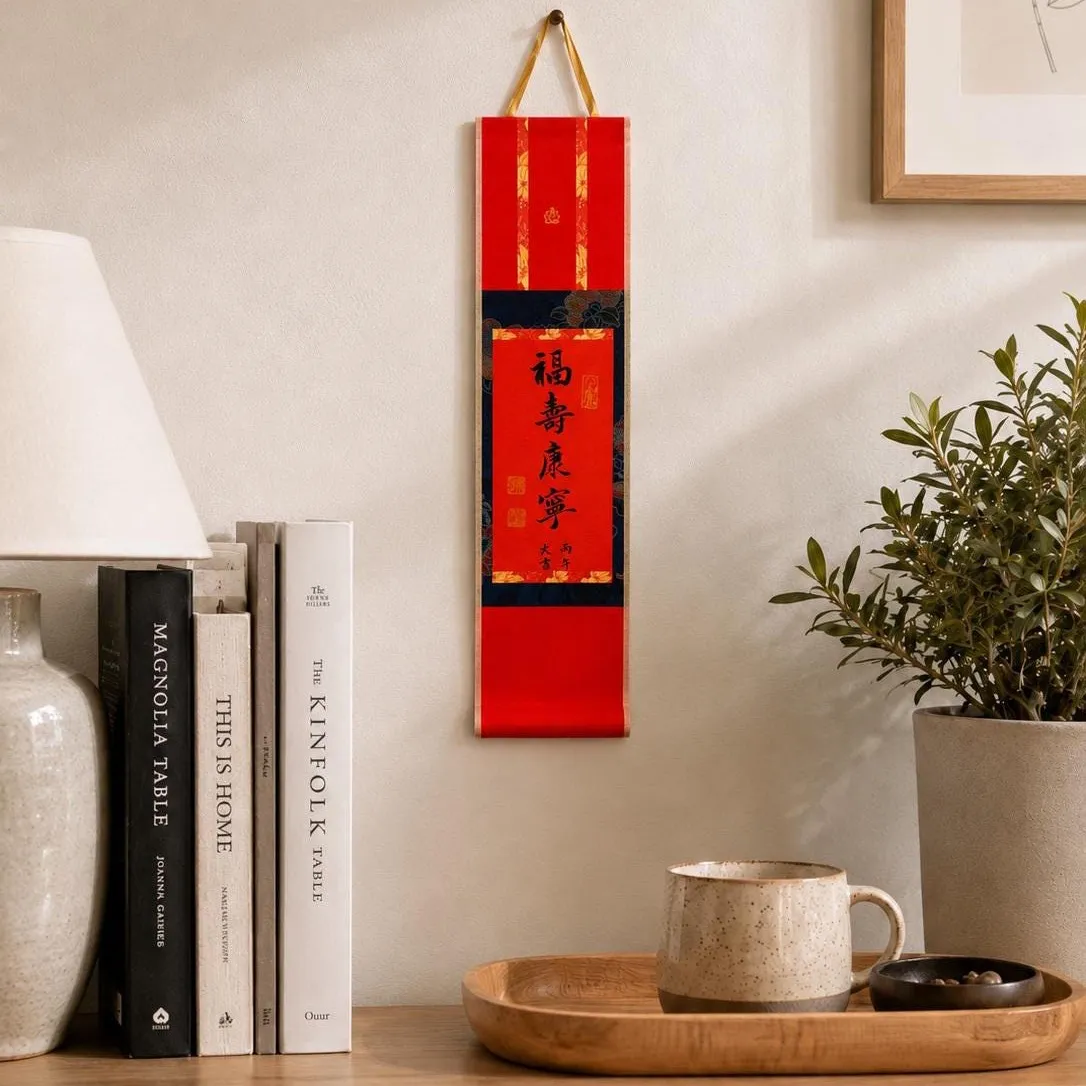
Photo shows a sample — yours will be brushed with 旺, or any character you choose.
Wall Scroll — for walls & housewarmingsfrom $38→ -
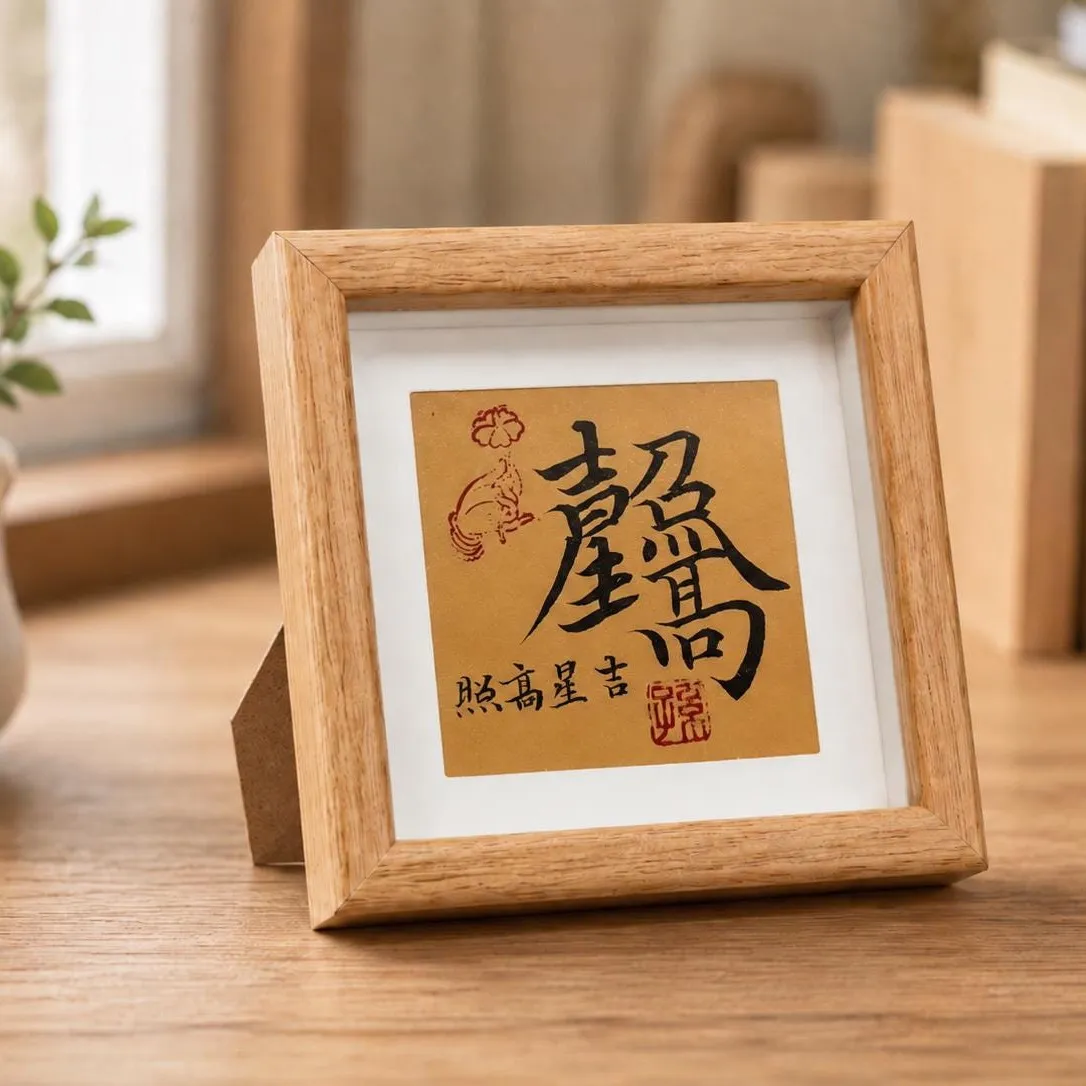
Photo shows a sample — yours will be brushed with 旺, or any character you choose.
Desk Frame — for desks, studies & studiosfrom $44→ -
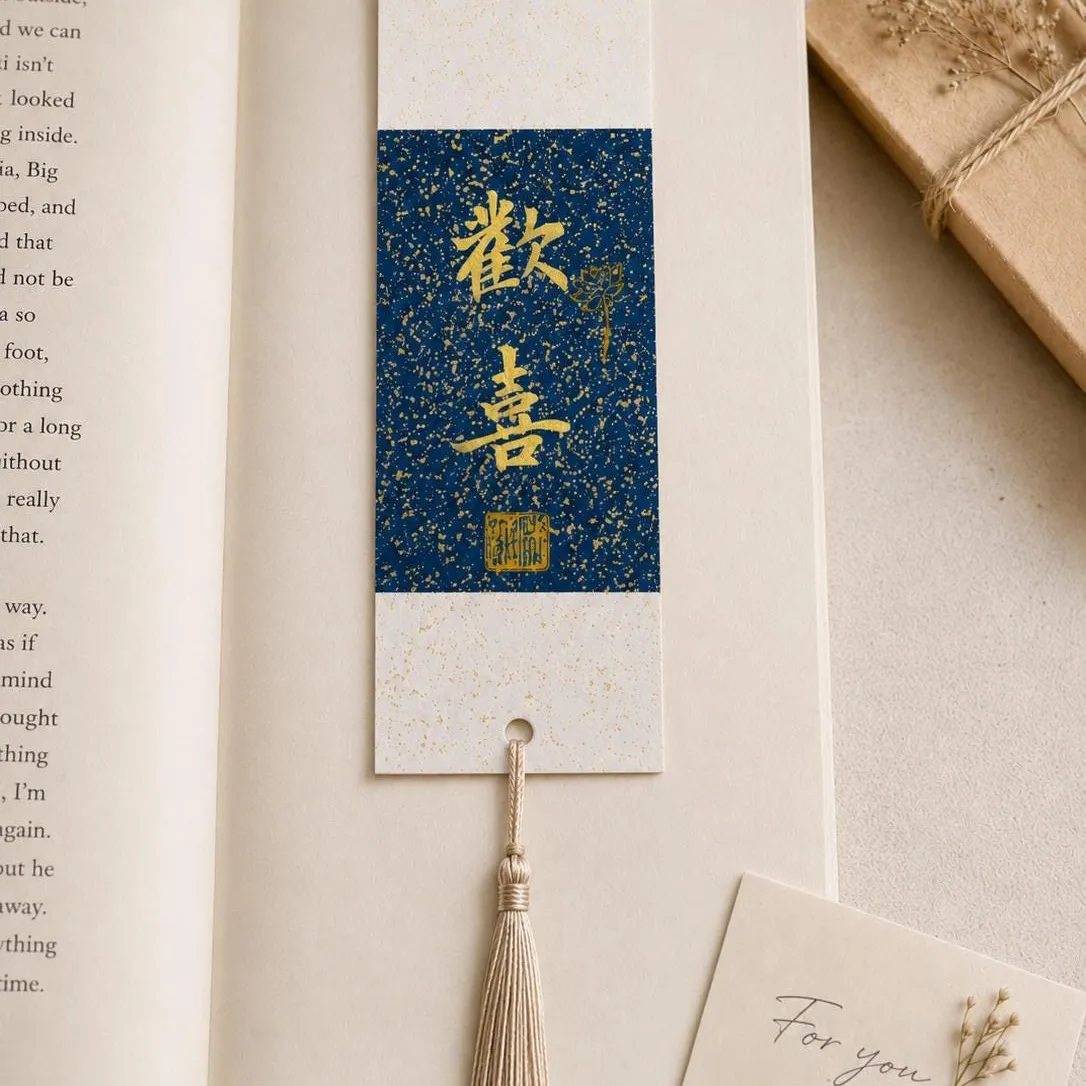
Photo shows a sample — yours will be brushed with 旺, or any character you choose.
Bookmark — for readers & small thank-yousfrom $17→
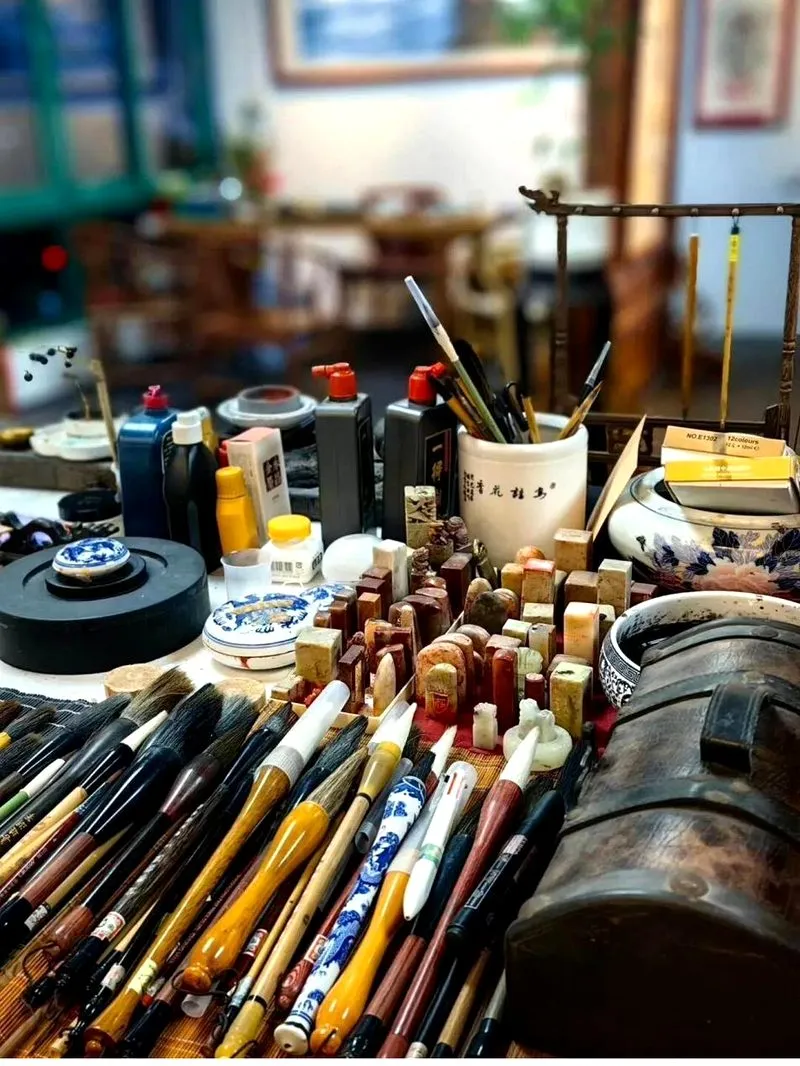
What people said after it arrived.
-
The item is fantastic. The customer service was genuine. Thanks!
— M.Verified purchase · from our Etsy shop reviews · -
They were great they gave me exactly what I asked for and then some. Thank you!!
— G.Verified purchase · from our Etsy shop reviews · -
It is well designed and customized. My daughter loves it. Amazing gift for family’s d friends
— S.Verified purchase · from our Etsy shop reviews ·
Each "旺" is hand-brushed by Artist Lina Sun on rice paper.
See 旺 (Wàng) on Etsy →