昌盛 (chāng shèng) — Flourishing at Scale · A Trade, a Line, an Era on the Rise
A two-character word, not a single character.
Ask what can be 昌盛 and the answers come back large: a country, an era, a family line, a trade. Nothing on that list is a month, a room, or an afternoon. The word has a floor under it and the floor is set high, which is the first thing worth knowing about giving it, because the size registers before the meaning does. Both halves push that way. 盛 is a vessel heaped past its brim, quantity that lifted off the table to name any thing at its height. See 盛 → 昌 is the other kind of abundance, the kind that shows — the half whose oldest glosses are fine words and sunlight, both of them things noticed from a distance. What the pair names is flourishing that is legible: not only that it is going well, but that anyone looking can tell.
That is why its live uses all take a wide subject. 繁荣昌盛 belongs to the state, and turns up wherever the country is being spoken about formally. 生意昌盛 goes on the card or the banner sent to a business, the toast rather than the doorpost. 家族昌盛 is said at a table with three or four generations at it, and it is about the line rather than the household — the branch continuing and doing well across a span nobody at the table will see the end of. A period, looked back on from the far side, is 昌盛的时代. Against its neighbours the boundary is sharp: 兴旺 is a fire in one hearth and one shop, warm and immediate; 盛 names a single thing at its peak; 丰 counts what is in the granary. 昌盛 is the wide-angle one, and it is the only one of the four that asks to be seen from outside.
A hand-brushed “昌盛” by Artist Lina Sun is the gift for something that has already outgrown a single room. The friend whose venture is past being a project. The grandparent at whose table the family keeps getting larger. The manager responsible for a department that has become a going concern. It is a formal wish and reads as one — nearer to what gets engraved on a plaque than to what gets said across a dinner table — and the formality is the point. It tells the person receiving it that the thing being wished well is large enough to deserve the register.
The Story Behind the Character
One of the earliest surviving uses of 昌 in Chinese poetry means crowded. In 《诗经·齐风·鸡鸣》 a wife is trying to get her husband up and out the door: 东方明矣,朝既昌矣 — the east is light, the court is already 昌. The poem is seven or eight centuries older than the compound, and by the time the two characters had been joined into a word, the commentators were already using each half to gloss the other. The standard Han reading of that 昌 is 盛.
The graph is 日 over 曰 — the sun above the element for speech. China's first dictionary (Shuowen Jiezi, c. 100 CE) gives 美言也, fine words, as its main gloss and 日光也, sunlight, as an alternate, and quotes this same poem as its example. Many paleographers reading the oracle-bone forms take the light as primary — a sun over a mouth-shaped element, brightness first and everything else downstream of it — though the graph has never been settled either way. It hardly matters for the sense. Fine words and sunlight are both things that carry: they are noticed from a distance.
盛 arrives from the other direction, from the table. Its foot is 皿, the vessel radical, and the Shuowen defines it as 黍稷在器中以祀者也, the millet heaped in a dish for an offering: filled past the level, then ample, then at the height. So the compound holds two unlike pictures of abundance. 盛 is the kind that fills — quantity, vigor, a vessel that will not take more. 昌 is the kind that shows. What 昌盛 names is flourishing legible from outside itself, which is why the word has always attached to large and long-running things: a state, an age, a trade, a family line.
Classical lines
- roughly 350 years
- c. 9th–7th c. BCE 《诗经·齐风·鸡鸣》
- c. 7th c. BCE 《诗经·鲁颂·閟宫》
- c. 5th–4th c. BCE 《论语·泰伯》
东方明矣,朝既昌矣。 The east is light; the court is already thronged.
A wife pressing her husband to get up and go, in a poem that is mostly him arguing that it is not morning yet. 昌 here is at its plainest and most physical — full, crowded, in full swing — and the standard Han commentary glosses it with one word: 盛, the other half of this compound.
俾尔昌而炽,俾尔寿而富。 May you flourish and blaze; may you have long years and plenty.
A temple hymn for the lords of Lu, setting out in ten characters what a state was supposed to want. 昌 leads the list, and the verb it is yoked to — 炽, to burn fiercely — is the measure of how public a thing that flourishing was meant to be.
唐虞之际,于斯为盛。 Since the days of Yao and Shun, there has been no richer time for it than this one.
Confucius on the ten capable ministers King Wu claimed to have, in the same remark where he says 才难, talent is hard to come by. His measure of a flourishing age is not its treasury or its borders but a headcount of who was available to do the work.
Why This Character Matters
Two cities carry the first half of this word in their names, and both were given it on purpose. 武昌 was minted in 221 CE, when Sun Quan moved his seat to a county then called 鄂 and renamed it on a four-character slogan — 以武而昌, flourish by force of arms. 南昌, the provincial capital of Jiangxi, was walled early in the Han and takes its name from 昌大南疆: make the southern frontier flourish. 昌 is the character an administration reaches for when it wants a place to become something, and the compound never came down from that altitude. 繁荣昌盛 is what most people in China hear first from a television — the standard thing said of the country on National Day, printed on banners and read out in speeches.
Knowing that altitude matters before the word is given, because it sets the size of what the recipient hears being wished. Applied to one household's kitchen, 昌盛 lands like a weather forecast read for a continent. Applied to a trade, a firm, or a family line it is exactly right. The distinction that governs it is one of genre rather than scale: the red paper pasted at a shop door each spring says 生意兴隆 because 兴隆 is the couplet formula, while 昌盛 is the register of the toast, the speech, and the plaque — a two-person shop can perfectly well be wished 生意昌盛 on a card. Its close relative 昌隆 is no smaller, and travels just as wide: 国运昌隆 for the fortunes of a state, 家道昌隆 for those of a household. What 昌盛 asks for, in any of these settings, is a span with years in it and a result someone outside can see.
For the New Year gift addressed to something larger than the household.
- For the New Year gift addressed to something larger than the household. 繁荣昌盛 is what the country gets wished when the year turns; 生意昌盛 is the version written to a business, and 家族昌盛 the one said at a table with four generations sitting at it. All three ask for the same thing — that the flourishing be wide enough and long enough to be visible from outside. Where 兴旺 wishes the counter busy and the rooms noisy, and 年年有余 wishes a margin kept back at the end of twelve months, 昌盛 sets no twelve-month frame at all. It wishes a run of years on something. The choice for the friend whose good year would be one more year in a stretch of them.
- Housewarming · A New HomeFor the new home when the household is understood as a house in the older sense — a line and its undertakings — rather than an address and its furniture. 家族昌盛 is the phrase that carries this, said at a table where three or four generations are sitting; it looks past the keys to the thing the keys are one stage of, the branch continuing and doing well over a span longer than any lease. That is deliberately out of scale with the rest of this page, and the scale is the gift. 兴旺 asks for heat and traffic now; 盛 asks for a height; 金玉满堂 pictures the hall stocked; 出入平安 asks that everyone crossing the threshold come back whole. 昌盛 asks nothing about this year at all, and asks instead that this address turn out to have been the start of a long good stretch. For the family who mean to be found here in thirty years.
Friend · Grandparent · Boss · or yourself
Looking for a name? See Western names written in Chinese →
-
What does 昌盛 (chāng shèng) mean?
昌盛 (chāng shèng) is a two-character Chinese word for flourishing at scale, a trade, a line, an era on the rise. Ask what can be 昌盛 and the answers come back large: a country, an era, a family line, a trade. Nothing on that list is a month, a room, or an afternoon. The word has a floor under it and the floor is set high, which is the first thing worth knowing about giving it, because the size registers before the meaning does. Both halves push that way. 盛 is a vessel heaped past its brim, quantity that lifted off the table to name any thing at its height. See 盛 → 昌 is the other kind of abundance, the kind that shows — the half whose oldest glosses are fine words and sunlight, both of them things noticed from a distance. What the pair names is flourishing that is legible: not only that it is going well, but that anyone looking can tell. Two cities carry the first half of this word in their names, and both were given it on purpose. 武昌 was minted in 221 CE, when Sun Quan moved his seat to a county then called 鄂 and renamed it on a four-character slogan — 以武而昌, flourish by force of arms. 南昌, the provincial capital of Jiangxi, was walled early in the Han and takes its name from 昌大南疆: make the southern frontier flourish. 昌 is the character an administration reaches for when it wants a place to become something, and the compound never came down from that altitude. 繁荣昌盛 is what most people in China hear first from a television — the standard thing said of the country on National Day, printed on banners and read out in speeches.
-
What occasions is 昌盛 given for?
昌盛 is traditionally given for Chinese New Year, Housewarming · A New Home. For the New Year gift addressed to something larger than the household. 繁荣昌盛 is what the country gets wished when the year turns; 生意昌盛 is the version written to a business, and 家族昌盛 the one said at a table with four generations sitting at it. All three ask for the same thing — that the flourishing be wide enough and long enough to be visible from outside. Where 兴旺 wishes the counter busy and the rooms noisy, and 年年有余 wishes a margin kept back at the end of twelve months, 昌盛 sets no twelve-month frame at all. It wishes a run of years on something. The choice for the friend whose good year would be one more year in a stretch of them. For the new home when the household is understood as a house in the older sense — a line and its undertakings — rather than an address and its furniture. 家族昌盛 is the phrase that carries this, said at a table where three or four generations are sitting; it looks past the keys to the thing the keys are one stage of, the branch continuing and doing well over a span longer than any lease. That is deliberately out of scale with the rest of this page, and the scale is the gift. 兴旺 asks for heat and traffic now; 盛 asks for a height; 金玉满堂 pictures the hall stocked; 出入平安 asks that everyone crossing the threshold come back whole. 昌盛 asks nothing about this year at all, and asks instead that this address turn out to have been the start of a long good stretch. For the family who mean to be found here in thirty years.
-
Who brushes the 昌盛 calligraphy?
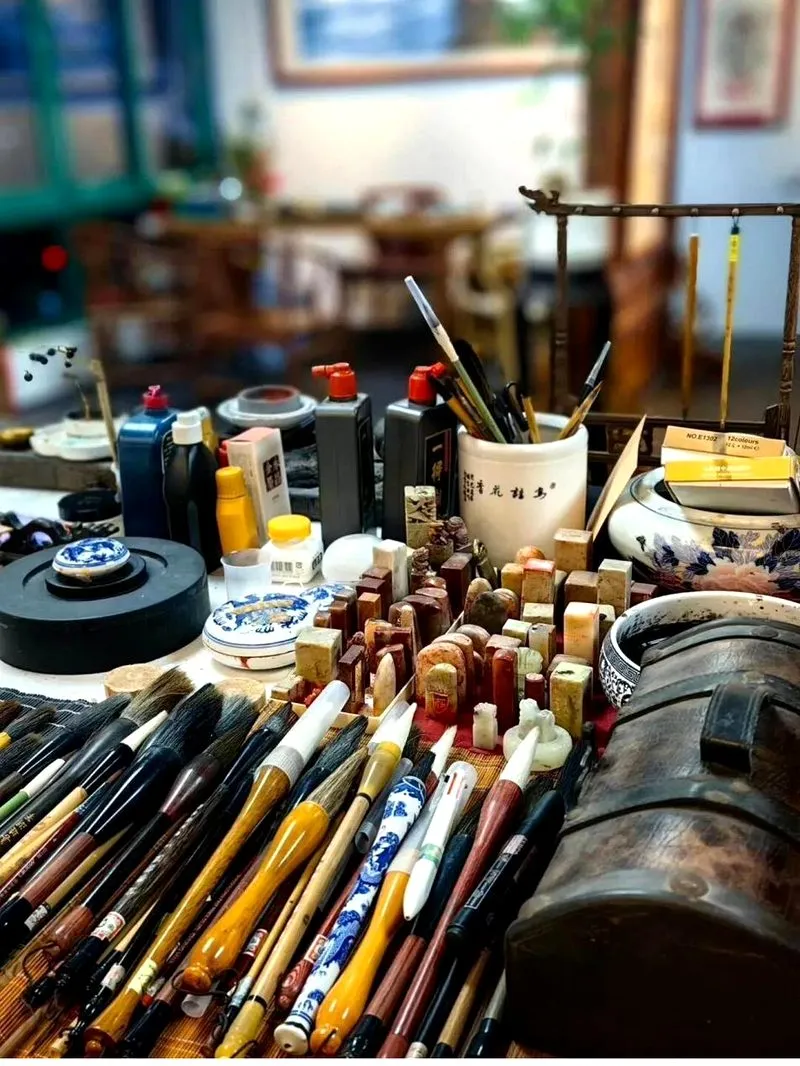
Each 昌盛 (Chāng Shèng) is hand-brushed to order by Artist Lina Sun in ink on rice paper — never printed, never repeated.
Bring 昌盛 home — choose how you'd like it brushed.
-
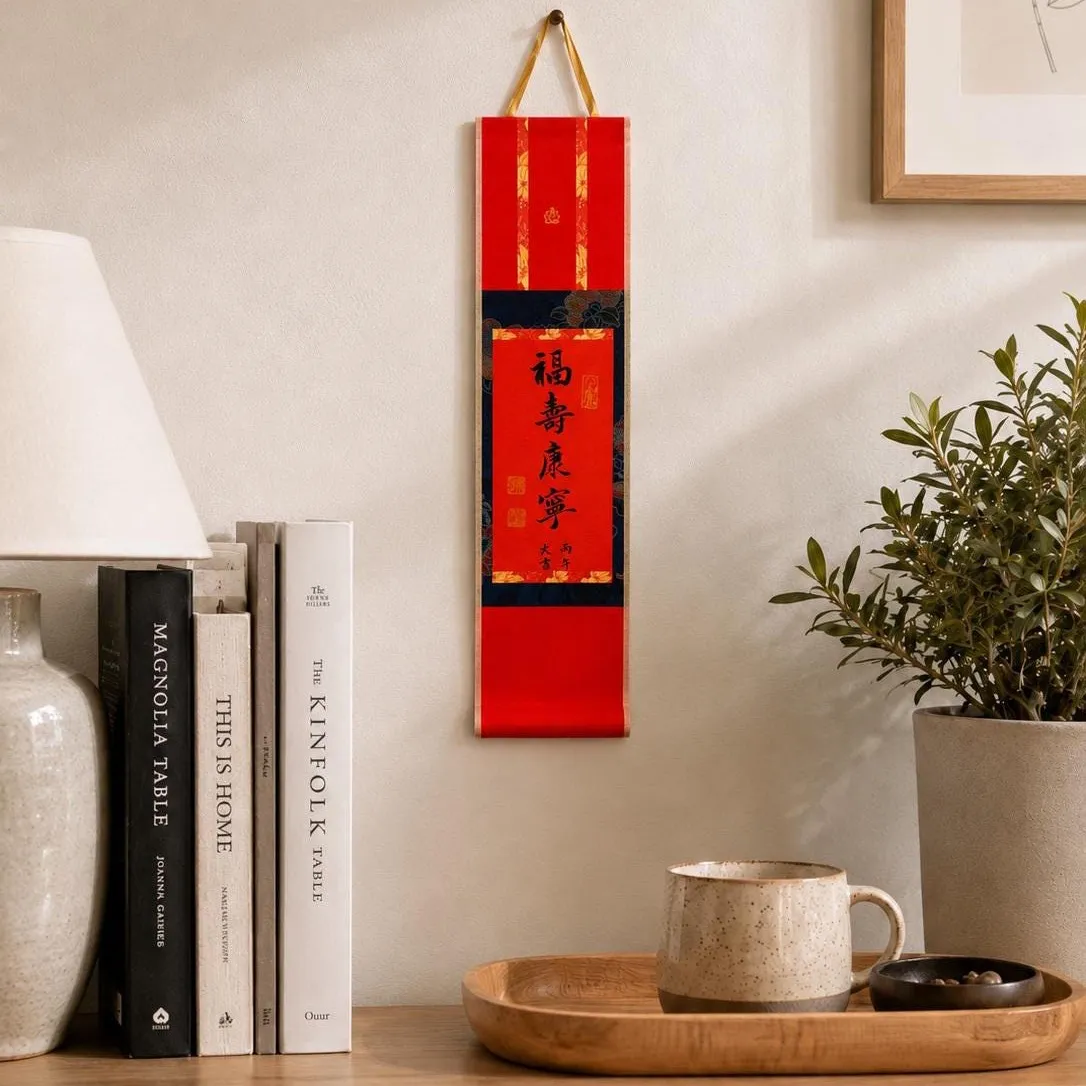
Photo shows a sample — yours will be brushed with 昌盛, or any character you choose.
Wall Scroll — for walls & housewarmingsfrom $38→ -
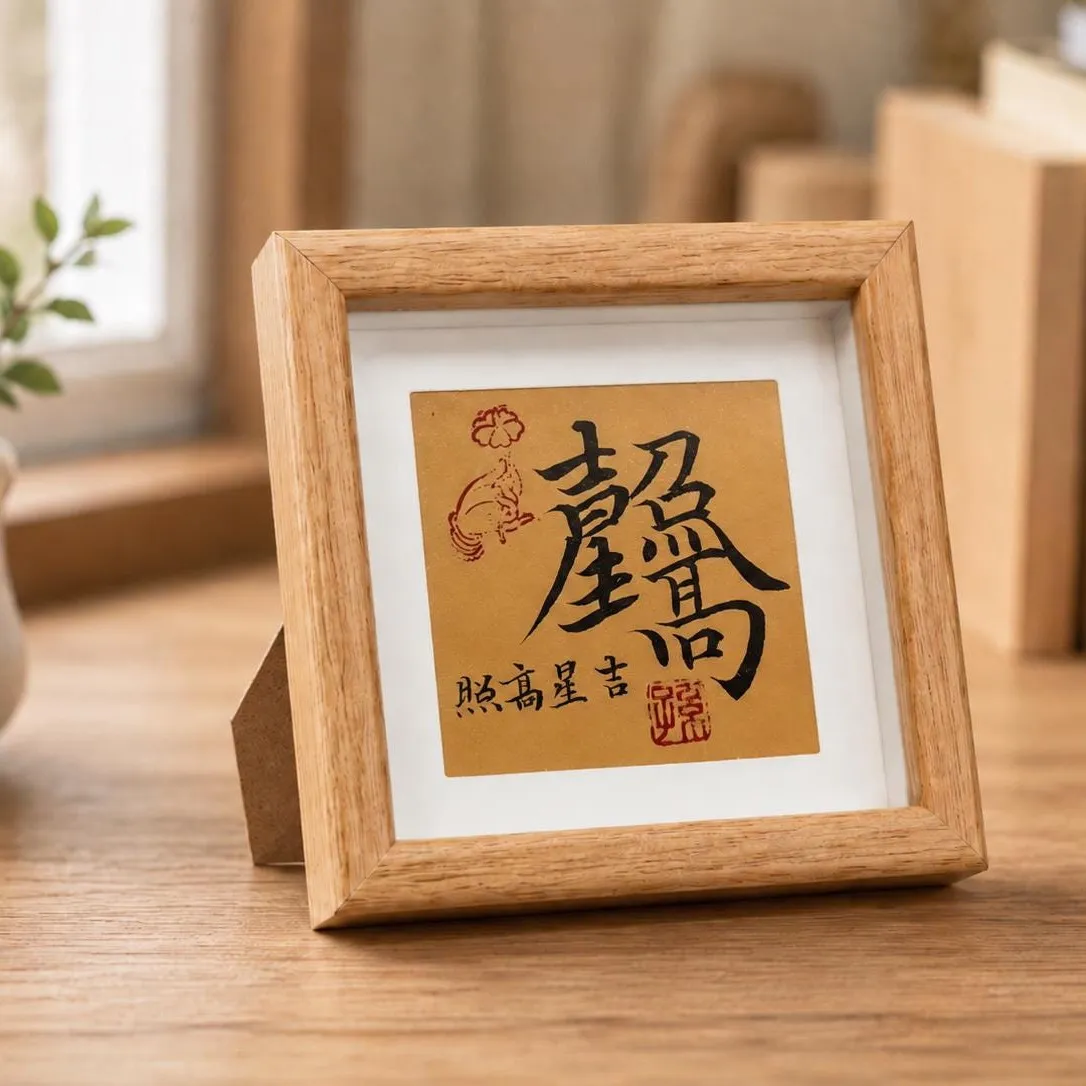
Photo shows a sample — yours will be brushed with 昌盛, or any character you choose.
Desk Frame — for desks, studies & studiosfrom $44→ -
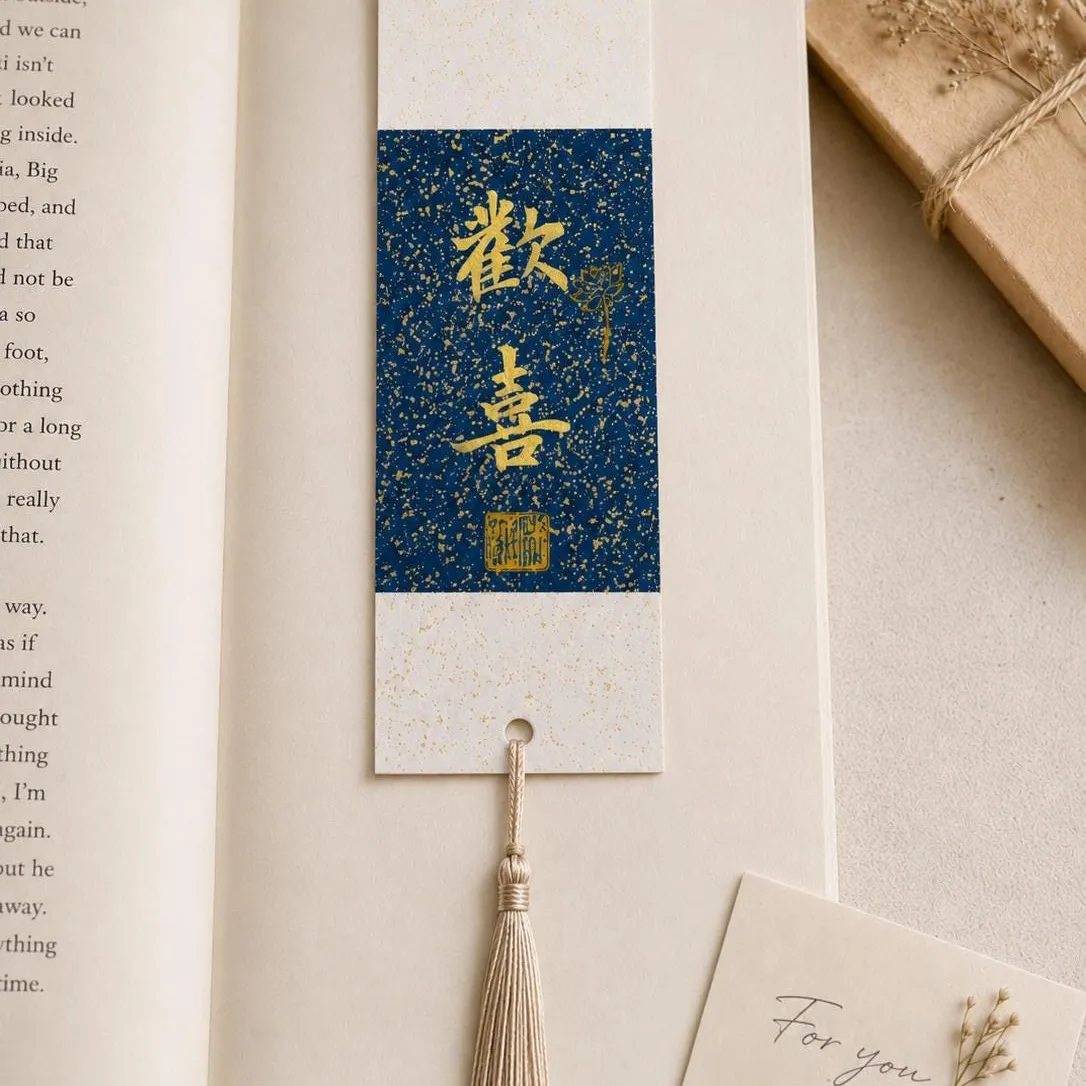
Photo shows a sample — yours will be brushed with 昌盛, or any character you choose.
Bookmark — for readers & small thank-yousfrom $17→
What people said after it arrived.
-
The item is fantastic. The customer service was genuine. Thanks!
— M.Verified purchase · from our Etsy shop reviews · -
They were great they gave me exactly what I asked for and then some. Thank you!!
— G.Verified purchase · from our Etsy shop reviews · -
It is well designed and customized. My daughter loves it. Amazing gift for family’s d friends
— S.Verified purchase · from our Etsy shop reviews ·
Each "昌盛" is hand-brushed by Artist Lina Sun on rice paper.
See 昌盛 (Chāng Shèng) on Etsy →