顺遂 (shùn suì) — Smooth Passage · Carried Through to Done
A two-character word, not a single character.
Two things have to go right before a plan counts as having worked: nothing may block the road, and the thing at the end of it has to be the thing that was wanted. 顺遂 is the blessing that asks for both, and keeps a character for each. 顺 is the clear passage — the current at your back, no sideways turn, no obstacle you did not see coming. See 顺 → 遂 is the arrival, the 遂 of 遂愿 and of 未遂: carried through, and carried through onto what was intended. That double demand is what sets the pair apart from its neighbours. 如意 weighs the outcome alone — whether what came matches what was hoped — and says nothing about what the road cost to travel. 平安 asks only that nothing bad happen on it. 和顺 is about the workings of a household rather than the progress of a plan. 顺利, the word people actually say, stops at the quality of the going. 顺遂 is the one that takes in the passage and the landing in a single breath.
Everywhere it appears, it takes something large as its object. 前程顺遂 for the road ahead of a graduate; 一生顺遂 written by a parent for a child old enough to have plans of their own; 工作顺遂 to a colleague at the turn of the year; 万事顺遂 — ten thousand matters — sent by the million on New Year’s Eve. 顺遂 is a quality rather than a quantity, and it needs a stretch of road to describe. Note what none of those phrases promise. Not wealth, not rank, not that the ambition was the right one to have. Only that between here and the end of it the way stays open, and that what gets there is what was meant to.
A hand-brushed “顺遂” by Artist Lina Sun is the gift for someone in the middle of an effort — the friend who has moved for a job, the graduate whose plans are already specific, the colleague carrying something that will take another two years. It makes no claim about their character and sets no size on what they are after. It says the two things they actually need said: may the road stay clear, and may you get where you meant to go.
The Story Behind the Character
遂 shows what it does most sharply when it is negated. 未遂 — not carried through — is the term Chinese law still uses for an attempt that got started and failed to complete: 遂 marks the point past which a thing is finished rather than in progress. The graph is built on 辵 (chuò), the walking radical that puts motion under a character. The Shuowen Jiezi (c. 100 CE) gives its first gloss as 亡, to get away — a reading later philologists have argued with — while the senses 遂 actually carries in use are 达, to reach, and 成, to complete, along with the pair that matters most for a blessing: 遂愿 and 遂心, the wish that reaches its object. 遂 is the character for the last stretch. Not the setting out, but the getting there, and getting there onto the thing you wanted.
In this compound 顺 supplies the road. Its older forms set 川, a river current, beside 頁, a head turned to follow it, and the same dictionary defines it in a single word: 理, in accord with the way things run. The compound itself is much younger than either half, and the uses the dictionaries record first are Song-dynasty and causative, in a sense modern Chinese has dropped — Zeng Gong (曾巩, 1019–1083), drafting the decree that appoints a Minister of Rites, writes that ritual order 顺遂万物: it lets the ten thousand things each run their own course to completion.
What the word does now is smaller and more personal, but it kept the shape of that older sense: two demands rather than one. Chinese has a separate complaint ready for each of them failing. 白忙一场, busy for nothing — the stretch that met no obstacle and produced nothing. 得不偿失, the gain not covering the loss — the thing that arrived at a price that ruined it. The everyday word 顺利 answers only the first: 利 means benefit or sharpness, and it describes how the going feels. 遂 reports whether it finished, and whether what finished was what was wanted. 顺遂 asks for the road and the ending in one word.
Classical lines
- roughly 150 years
- c. 400 BCE 《道德经》第十七章
- c. 300 BCE 《周易·豫卦·彖传》
- c. 250 BCE 《荀子·天论》
功成事遂,百姓皆谓我自然。 The work is completed, the matter carried through, and the people all say: we did this ourselves.
Laozi's portrait of the best ruler, the one whose hand is never visible in the result. 事遂 is the exact 遂 of 顺遂: not the effort spent, but the moment the thing is finally done.
天地以顺动,故日月不过,而四时不忒。 Heaven and earth move by going with things, and so the sun and moon never overrun and the four seasons never err.
The line that keeps 顺 from meaning passivity. Going with the grain is what makes the movement exact: nothing overshoots, nothing arrives out of order.
万物各得其和以生,各得其养以成。 Each of the ten thousand things gets the balance it needs to be born, and the nourishment it needs to come to completion.
Xunzi is describing the natural order rather than anyone's plans, but he keeps 生 and 成 apart, and gives each its own conditions. That separation — starting and finishing are two different achievements — is the one 顺遂 also keeps.
Why This Character Matters
顺遂 is a word people write and almost never say. Spoken Mandarin runs on 顺利 — 一切顺利 is what you tell a friend heading into an exam — while 顺遂 turns up in the written registers: the New Year message, the inscription in a graduate's book, the line added under a signature, nearly always inside a set phrase (万事顺遂, 诸事顺遂, 一生顺遂). It sounds slightly stiff said aloud, which is part of why it holds up in ink. Putting it in brushwork is not a formal translation of an everyday wish; it is already the form the wish takes when someone sits down to write it.
The word describes a road, never a person. A life can be 顺遂 (一生顺遂), and so can a career, a year, a journey — but there is no 顺遂的人 the way there is 善良的人. That boundary is what separates it from most of the blessing vocabulary. 德 and 仁 say what someone is; 福 and 禄 name something bestowed from outside; 顺遂 makes no claim about a person's worth and no promise about the size of the outcome, and reports only how things unfolded, and whether they unfolded onto what was wanted. It is the reason the word fits someone in the middle of an effort rather than at the end of one. It does not tell them they deserve to arrive. It wishes that the road stays open and that they do.
前程顺遂 — may the road ahead run clear and arrive — is a standard line to write inside a graduating student's book.
- 前程顺遂 — may the road ahead run clear and arrive — is a standard line to write inside a graduating student's book. Where 前程似锦 promises a road like brocade and 鹏程万里 promises distance, 顺遂 promises neither splendor nor scale. It asks for the two conditions any plan needs before size becomes a question: that the passage meet no obstruction, and that what the graduate sets out to do land where they meant it to. The graduation gift that wishes for a working ambition rather than a bigger one.
- For the birthday that falls in the middle of something — a move, a degree, a business in its second year — where the gift should be about the twelve months ahead rather than the years already counted. Where 长寿 asks for more years and 身体健康 asks that the body hold, 顺遂 asks about the texture of the next stretch of road: little friction on it, and the thing at the end of it turning out to be the thing that was wanted. Most apt for a friend whose year is not a milestone but a distance to cover.
- New Year is when a household treats the coming twelve months as one unit with things placed inside it, and 顺遂 is the wish addressed to that unit rather than to its contents. 顺 asks that the year run without the sideways turns that make even a good one exhausting; 遂 asks that the things planned inside it get carried through to done. Where 步步高升 counts stairs and 年年有余 asks for a surplus kept back, this one names no goods and no rank at all — it is about the shape of the year rather than what accumulates in it. Most apt for the friend whose January already has something specific in it.
Friend · Best Friend · Coworker · or yourself
Looking for a name? See Western names written in Chinese →
-
What does 顺遂 (shùn suì) mean?
顺遂 (shùn suì) is a two-character Chinese word for smooth passage, carried through to done. Two things have to go right before a plan counts as having worked: nothing may block the road, and the thing at the end of it has to be the thing that was wanted. 顺遂 is the blessing that asks for both, and keeps a character for each. 顺 is the clear passage — the current at your back, no sideways turn, no obstacle you did not see coming. See 顺 → 遂 is the arrival, the 遂 of 遂愿 and of 未遂: carried through, and carried through onto what was intended. That double demand is what sets the pair apart from its neighbours. 如意 weighs the outcome alone — whether what came matches what was hoped — and says nothing about what the road cost to travel. 平安 asks only that nothing bad happen on it. 和顺 is about the workings of a household rather than the progress of a plan. 顺利, the word people actually say, stops at the quality of the going. 顺遂 is the one that takes in the passage and the landing in a single breath. 顺遂 is a word people write and almost never say. Spoken Mandarin runs on 顺利 — 一切顺利 is what you tell a friend heading into an exam — while 顺遂 turns up in the written registers: the New Year message, the inscription in a graduate's book, the line added under a signature, nearly always inside a set phrase (万事顺遂, 诸事顺遂, 一生顺遂). It sounds slightly stiff said aloud, which is part of why it holds up in ink. Putting it in brushwork is not a formal translation of an everyday wish; it is already the form the wish takes when someone sits down to write it.
-
What occasions is 顺遂 given for?
顺遂 is traditionally given for Graduation, Birthday, Chinese New Year. 前程顺遂 — may the road ahead run clear and arrive — is a standard line to write inside a graduating student's book. Where 前程似锦 promises a road like brocade and 鹏程万里 promises distance, 顺遂 promises neither splendor nor scale. It asks for the two conditions any plan needs before size becomes a question: that the passage meet no obstruction, and that what the graduate sets out to do land where they meant it to. The graduation gift that wishes for a working ambition rather than a bigger one. For the birthday that falls in the middle of something — a move, a degree, a business in its second year — where the gift should be about the twelve months ahead rather than the years already counted. Where 长寿 asks for more years and 身体健康 asks that the body hold, 顺遂 asks about the texture of the next stretch of road: little friction on it, and the thing at the end of it turning out to be the thing that was wanted. Most apt for a friend whose year is not a milestone but a distance to cover.
-
Who brushes the 顺遂 calligraphy?
Each 顺遂 (Shùn Suì) is hand-brushed to order by Artist Lina Sun in ink on rice paper — never printed, never repeated.
Bring 顺遂 home — choose how you'd like it brushed.
-
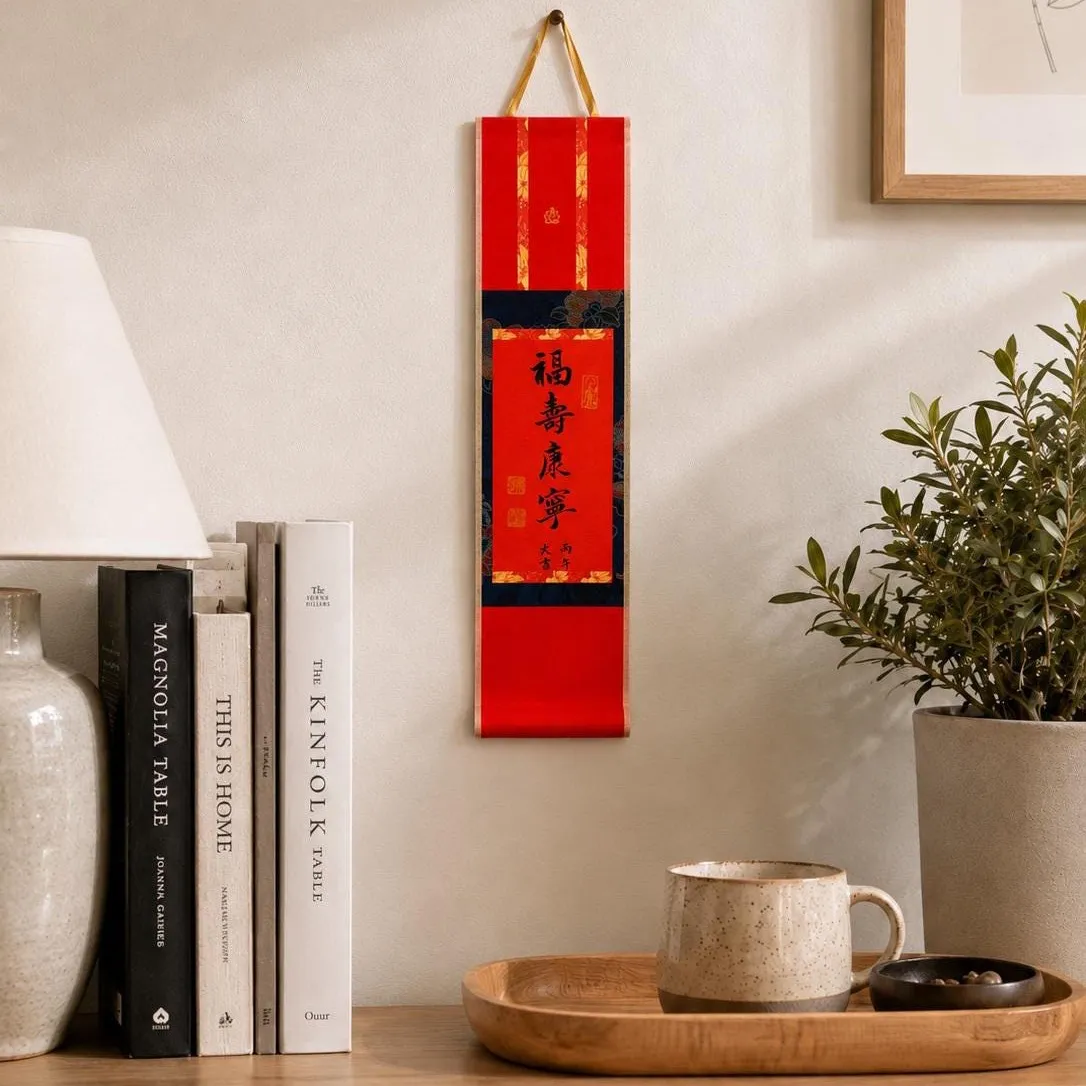
Photo shows a sample — yours will be brushed with 顺遂, or any character you choose.
Wall Scroll — for walls & housewarmingsfrom $38→ -
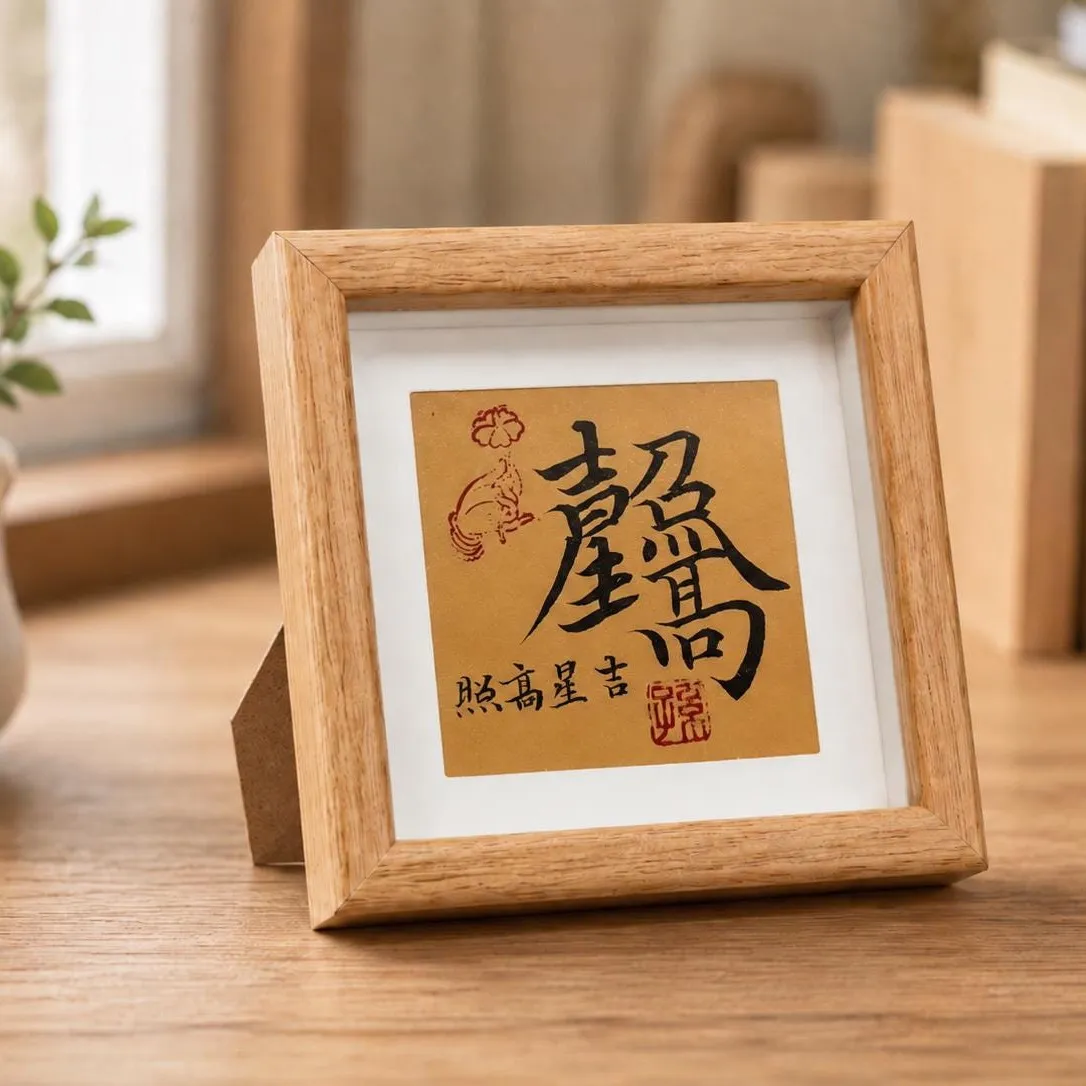
Photo shows a sample — yours will be brushed with 顺遂, or any character you choose.
Desk Frame — for desks, studies & studiosfrom $44→ -
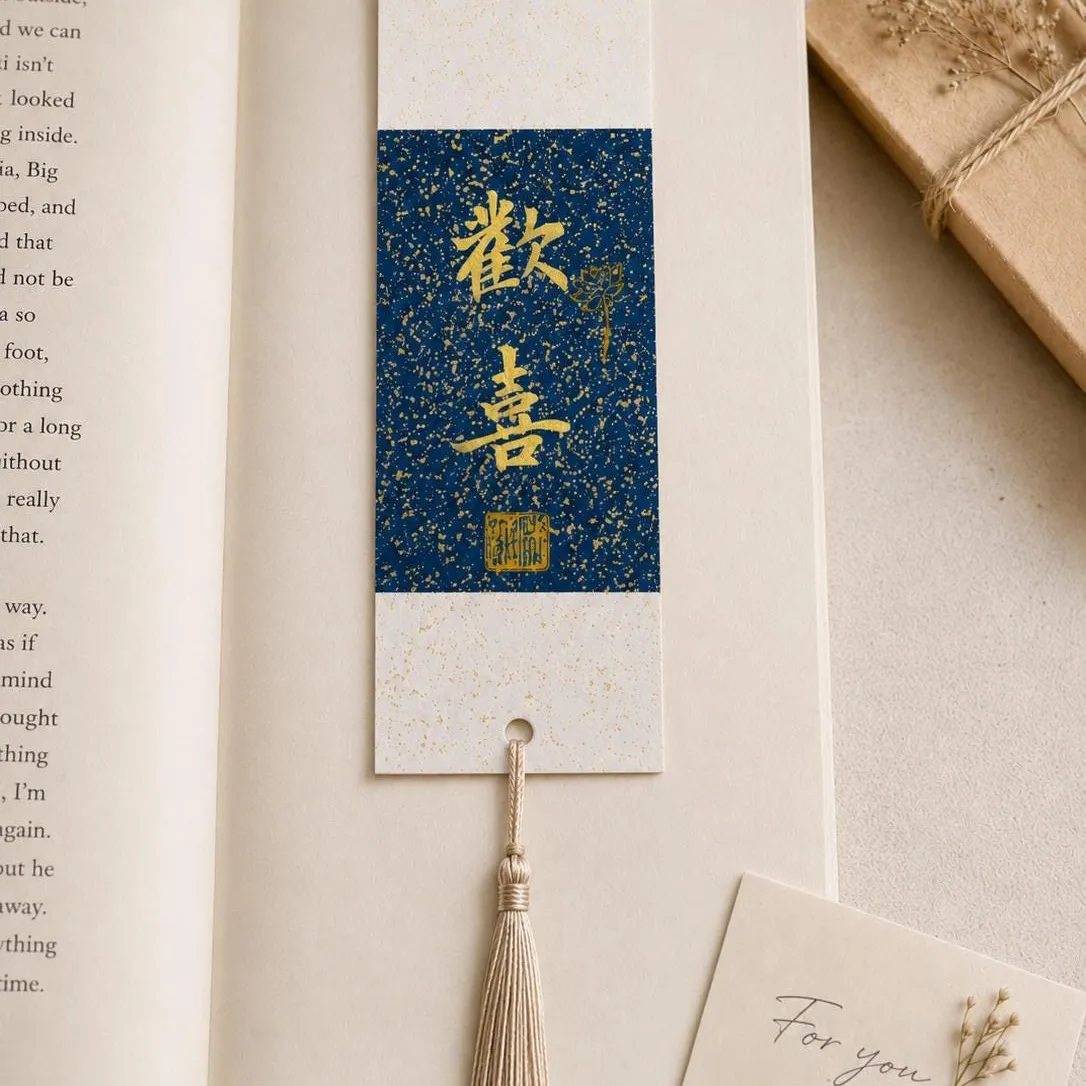
Photo shows a sample — yours will be brushed with 顺遂, or any character you choose.
Bookmark — for readers & small thank-yousfrom $17→

What people said after it arrived.
-
The item is fantastic. The customer service was genuine. Thanks!
— M.Verified purchase · from our Etsy shop reviews · -
They were great they gave me exactly what I asked for and then some. Thank you!!
— G.Verified purchase · from our Etsy shop reviews · -
It is well designed and customized. My daughter loves it. Amazing gift for family’s d friends
— S.Verified purchase · from our Etsy shop reviews ·
Each "顺遂" is hand-brushed by Artist Lina Sun on rice paper.
See 顺遂 (Shùn Suì) on Etsy →