阖家幸福 (hé jiā xìng fú) — Happiness for the Whole Family
A 4-character phrase, not a single character.
阖家幸福 and 阖家欢乐 are the two great blessings addressed not to a person but to a whole household — and they divide the same warmth between them. 阖家欢乐 names the joy in the room: the laughter at the reunion table, the gladness of everyone being present at once. 阖家幸福 names what that joy sits on — the durable well-being of the family’s life, the good years rather than the good evening. Where 家和 points at the harmony between members and 团圆 at the moment they gather, 阖家幸福 wishes the outcome those make possible: a whole family, and a good life shared among all of them. See 阖家欢乐 →
It is the most common close to a Chinese New Year greeting — four characters at the foot of a red card, a text message, a 拜年 call: 祝您阖家幸福. Where 恭喜发财 wishes wealth and 万事如意 wishes that things go your way, 阖家幸福 wishes the whole family a good life, and it is the blessing that widens most naturally past the New Year. In-laws commission it for a newly married couple, wishing the two joined families a lasting well-being rather than a single day’s celebration; it is hung in a new home as the wish that a good life begins within these walls; and modern Chinese, which now speaks of 幸福感 — a sense of well-being — as something to be sought and even measured, has only made the old phrase feel more exact.
A hand-brushed “阖家幸福” by Artist Lina Sun is the blessing for a family at the start of something — a new home, a marriage joining two families, the first card of a new year. It puts into ink a wish larger than any single evening’s joy: that the whole household, everyone inside and no one missing, share not just a good night but a good life, and that the good life lasts.
- happiness for the whole family
- a household's enduring well-being
- a good life, shared by everyone at home
- family fun Too light. 幸福 is settled well-being across years, not an afternoon's enjoyment.
- good luck to the family 阖家幸福 wishes an achieved, lived happiness — not a turn of fortune still to come.
The short arms are the point: these readings don’t reach it.
- 阖家 the whole household, no one missing阖 is the literary word for 'all' — a gate (門) plus the element for closing (盍) — picturing the family complete, the door shut, everyone inside. Not the everyday 全.
- 幸福 well-being, both full and unthreatened幸 is the fortune of being spared harm (《说文》: 吉而免凶也); 福 is blessing as fullness, the brimming vessel raised at the altar. Together: the enduring happiness of a whole, contented life.
characters
- 阖家 hé jiā the whole household — literally 'the gate shut, all inside'
- 幸福 xìng fú happiness as an enduring, whole-life well-being
- 团圆 tuán yuán family reunion — the gathering that 阖家 assumes
- 美满 měi mǎn perfectly happy and complete — often said of a home: 家庭美满
- 天伦之乐 tiān lún zhī lè the natural joy of family bonds — the felt happiness inside 幸福
Cinnabar marks the characters 阖家幸福 actually contains. The dark row is a relative by meaning or by sound, not one shared stroke.
The Story Behind the Character
In Chinese, the gentlest way to say that someone has died is 不幸 — "un-fortunate." 他不幸去世, he unfortunately passed away. The word carries, at its root, the very shadow it escapes. 幸 (xìng) is defined in the 《说文解字》 as 吉而免凶也 — "that which is auspicious and avoids the ominous" — and Xu Shen adds the sober gloss that since untimely death (夭) is the worst of the ominous, to be spared it is 幸, and so death itself came to be called 不幸. 幸福 begins, then, from a darker place than its warmth suggests: fortune is not what arrives, but what calamity has passed over.
Set beside 福, that reading deepens. 福 (fú) is the full vessel raised at the altar — the 示 of the spirits beside 畐, a jar brimming with grain and wine — blessing pictured as fullness offered and returned. [See 福 →](/library/fu/) Where 福 is abundance, 幸 is the luck of being spared to enjoy it; together, 幸福 names a well-being that is both full and unthreatened — a life where blessing has arrived and misfortune has stayed away. It is worth knowing that 幸福 as the everyday Chinese word for "happiness" — a 幸福的家庭, a happy family; a 幸福的婚姻, a happy marriage — is a relatively modern crystallization of these two old characters, the word a culture reached for when it needed a name for a whole, contented life rather than a single glad moment.
阖家幸福 fronts that well-being with 阖家 — the whole household, the door shut and everyone inside. (阖 is the literary word for "all," built from a gate 門 and the element 盍 for covering or closing; it pictures the family complete, no one missing, not the everyday 全.) The phrase is a plain subject and predicate: 阖家, the whole family; 幸福, be well and happy. What separates it from its near-twin 阖家欢乐 is the second half. 欢乐 is the joy in the room — the laughter at the reunion table, bright and present and tied to the gathering. 幸福 is the durable well-being underneath it: not one evening's joy but the quality of the family's whole life, the years and not the night. 阖家欢乐 is what you wish for New Year's Eve; 阖家幸福 is what you wish for all the New Years to come. [See 阖家欢乐 →](/library/he-jia-huan-le/)
Classical lines
- roughly 350 years
- 405 陶渊明《归去来兮辞》
- 760 杜甫《江村》
One further source is quoted below without a date printed, so it stays off the rail.
身修而后家齐,家齐而后国治,国治而后天下平。 When the self is cultivated the family falls into accord; when the family is in accord the state is well governed; when the state is well governed, all under heaven is at peace.
The Great Learning's famous chain sets 家齐, the whole family in order, at the hinge between a single life and the wider world. It is the premise beneath 阖家幸福: the household made whole is where a well-lived life begins.
老妻画纸为棋局,稚子敲针作钓钩。 My old wife draws a chessboard on paper; my small son bends a needle into a fishhook.
Du Fu wrote this after years of war and flight, finally settled by a quiet river. The whole poem is a portrait of 幸福 as the ordinary happiness of an intact family at home — not joy at a feast, but the peace of a household simply together, wanting for little.
悦亲戚之情话,乐琴书以消忧。 I delight in the heartfelt talk of family, and take joy in zither and books to dispel my cares.
Tao Yuanming, having left office for good, names the happiness he came home for: the settled contentment of family intimacy and a quiet house. It is 幸福 as an enduring condition of a life, the reason 阖家幸福 wishes the years and not a single evening.
Why This Character Matters
阖家幸福 is one of the most common closes to a Chinese New Year greeting — four characters at the foot of more red cards, text messages, and 拜年 calls than almost any rival except 恭贺新禧. Its reach comes from what it declines to specify. 恭喜发财 wishes wealth; 万事如意 wishes that things go your way; 步步高升 wishes a rising career. 阖家幸福 wishes only a good life, for everyone at home at once — a blessing broad enough to send to anyone with a family, and addressed, like its twin 阖家欢乐, to the household as a unit rather than to any single person within it.
In gift-giving the two 阖家 phrases divide the calendar between them. 阖家欢乐 belongs to the festive plaque and the New Year's Eve couplet — the joy of the gathering itself. 阖家幸福 is the more all-weather blessing: the standard New Year card, the inscription in-laws commission when a wedding joins two families, the piece hung in a new home to wish a good life beginning within its walls. Modern Chinese has only sharpened the phrase — it now speaks of 幸福感 (a sense of well-being) as something to be sought and even measured, so that 阖家幸福 reads today as a wish not merely for gladness but for a life worth having, shared by the whole household.
A few characters live near "阖家幸福" but mean something quieter, sharper, or more specific. Here's how to tell them apart.
the whole family's enduring well-being — the years, the shared life
the joy in the room at the reunion — bright, present, tied to the gathering
the family's happiness — the outcome, a good life shared
the family's harmony — the accord between members that makes the happiness possible
happiness spread across the whole household, everyone inside
completeness with nothing lacking — wholeness itself, at any scale
Hung in a new home, 阖家幸福 is the wish that a good life begins within these walls — not the joy of one housewarming evening but the well-being of all the years the family will spend here.
- Hung in a new home, 阖家幸福 is the wish that a good life begins within these walls — not the joy of one housewarming evening but the well-being of all the years the family will spend here. Where 阖家欢乐 blesses the warmth in the room, 阖家幸福 blesses the life the room will hold: the ordinary, durable happiness of a household settled and whole. The standard blessing to write for a family moving into the place where the rest of their life together will happen.
- 阖家幸福 is the most common close to a Lunar New Year greeting — 祝您阖家幸福, the four characters at the foot of a red card, a text, a 拜年 call. Where 恭喜发财 wishes wealth and 万事如意 wishes that things go one's way, 阖家幸福 wishes the whole family a good life, addressed to the household as a unit rather than any one member. It is the New Year wish that reaches past the holiday: not joy for the reunion table alone, but well-being for all the New Years to come.
- Given between families rather than to the couple, 阖家幸福 wishes the two households now joined a lasting well-being — not a single day's celebration but the good life the marriage is meant to become. Where 百年好合 blesses the union of the two people, 阖家幸福 widens the blessing to everyone the marriage now binds together: a whole, contented family life shared across both sides. The traditional inscription in-laws commission when a wedding makes two families one.
New Couple · Mom · Dad · or yourself
Looking for a name? See Western names written in Chinese →
-
What does 阖家幸福 (hé jiā xìng fú) mean?
阖家幸福 (hé jiā xìng fú) is a 4-character Chinese phrase for happiness for the whole family. 阖家幸福 and 阖家欢乐 are the two great blessings addressed not to a person but to a whole household — and they divide the same warmth between them. 阖家欢乐 names the joy in the room: the laughter at the reunion table, the gladness of everyone being present at once. 阖家幸福 names what that joy sits on — the durable well-being of the family's life, the good years rather than the good evening. Where 家和 points at the harmony between members and 团圆 at the moment they gather, 阖家幸福 wishes the outcome those make possible: a whole family, and a good life shared among all of them. See 阖家欢乐 → 阖家幸福 is one of the most common closes to a Chinese New Year greeting — four characters at the foot of more red cards, text messages, and 拜年 calls than almost any rival except 恭贺新禧. Its reach comes from what it declines to specify. 恭喜发财 wishes wealth; 万事如意 wishes that things go your way; 步步高升 wishes a rising career. 阖家幸福 wishes only a good life, for everyone at home at once — a blessing broad enough to send to anyone with a family, and addressed, like its twin 阖家欢乐, to the household as a unit rather than to any single person within it.
-
What occasions is 阖家幸福 given for?
阖家幸福 is traditionally given for Housewarming, Chinese New Year, Wedding. Hung in a new home, 阖家幸福 is the wish that a good life begins within these walls — not the joy of one housewarming evening but the well-being of all the years the family will spend here. Where 阖家欢乐 blesses the warmth in the room, 阖家幸福 blesses the life the room will hold: the ordinary, durable happiness of a household settled and whole. The standard blessing to write for a family moving into the place where the rest of their life together will happen. 阖家幸福 is the most common close to a Lunar New Year greeting — 祝您阖家幸福, the four characters at the foot of a red card, a text, a 拜年 call. Where 恭喜发财 wishes wealth and 万事如意 wishes that things go one's way, 阖家幸福 wishes the whole family a good life, addressed to the household as a unit rather than any one member. It is the New Year wish that reaches past the holiday: not joy for the reunion table alone, but well-being for all the New Years to come.
-
Who brushes the 阖家幸福 calligraphy?
Each 阖家幸福 (Hé Jiā Xìng Fú) is hand-brushed to order by Artist Lina Sun in ink on rice paper — never printed, never repeated.
Bring 阖家幸福 home — choose how you'd like it brushed.
-
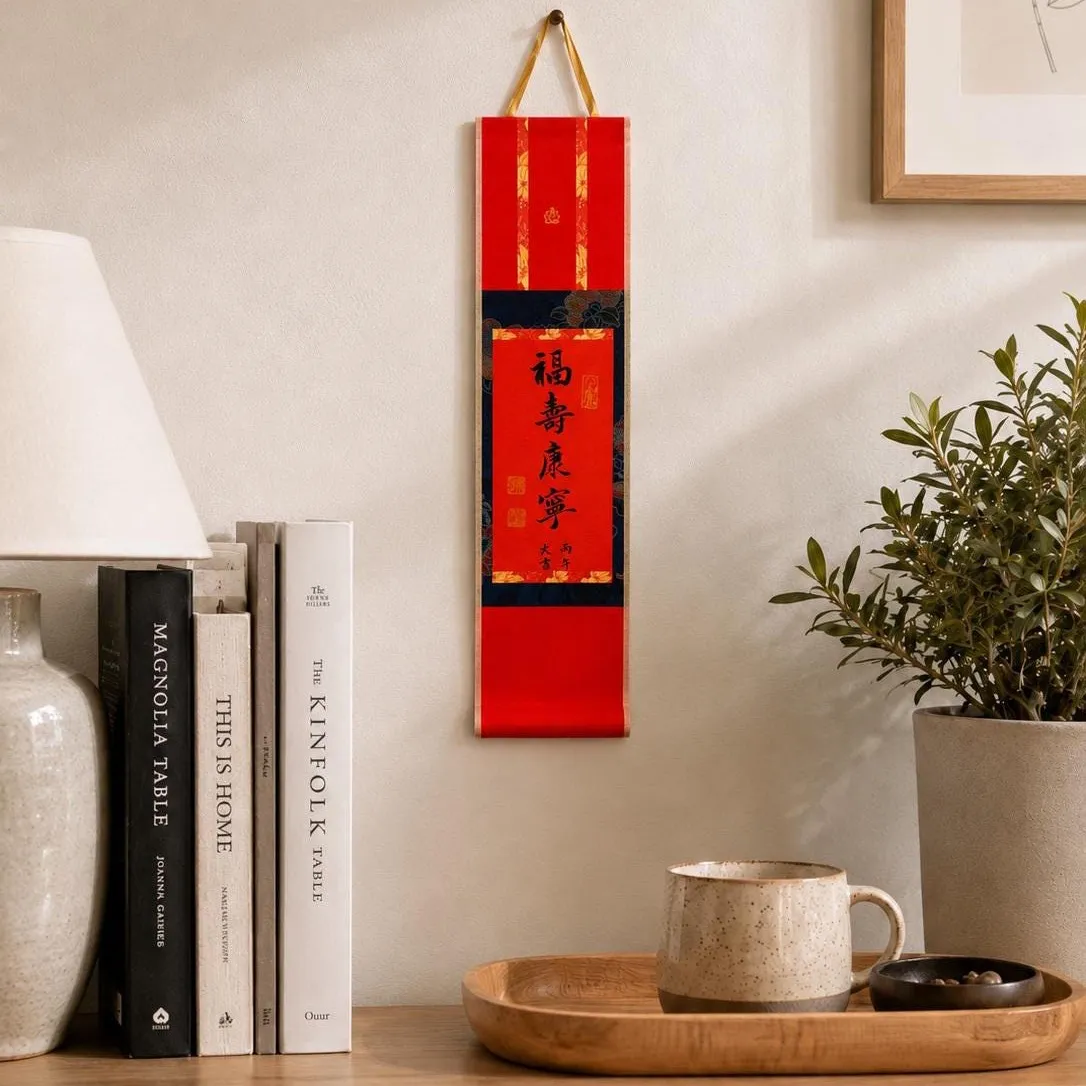
Photo shows a sample — yours will be brushed with 阖家幸福, or any character you choose.
Wall Scroll — for walls & housewarmingsfrom $38→ -
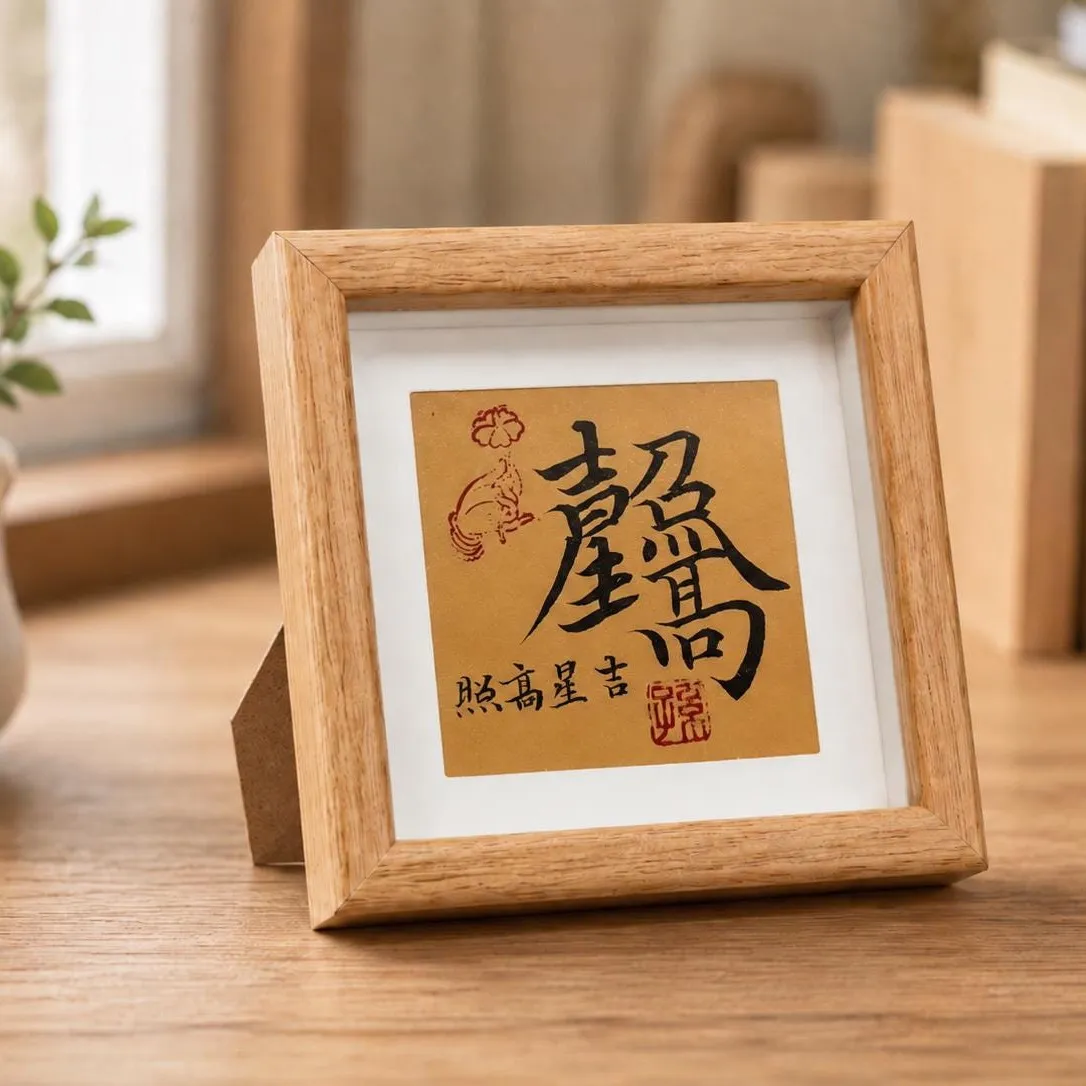
Photo shows a sample — yours will be brushed with 阖家幸福, or any character you choose.
Desk Frame — for desks, studies & studiosfrom $44→ -
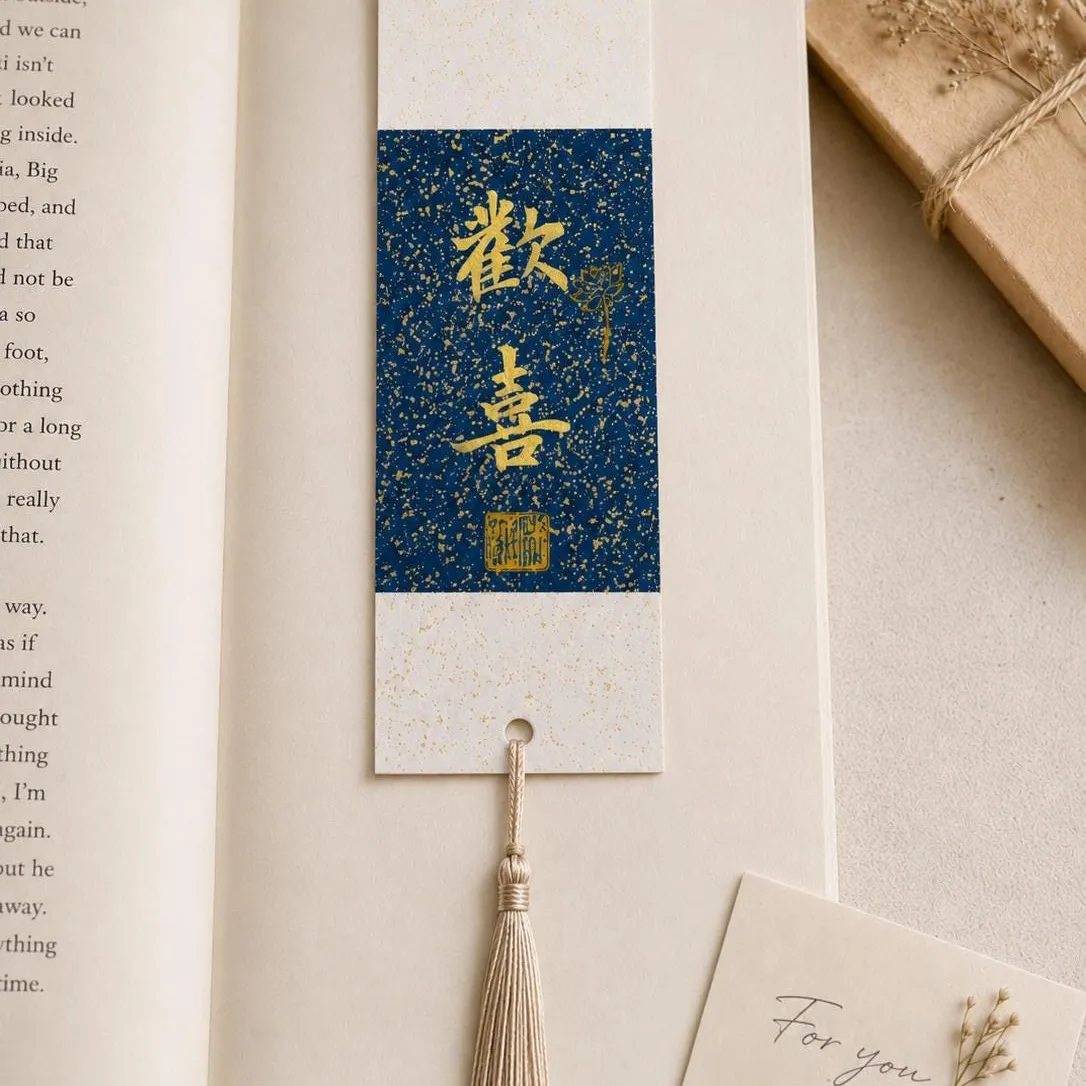
Photo shows a sample — yours will be brushed with 阖家幸福, or any character you choose.
Bookmark — for readers & small thank-yousfrom $17→
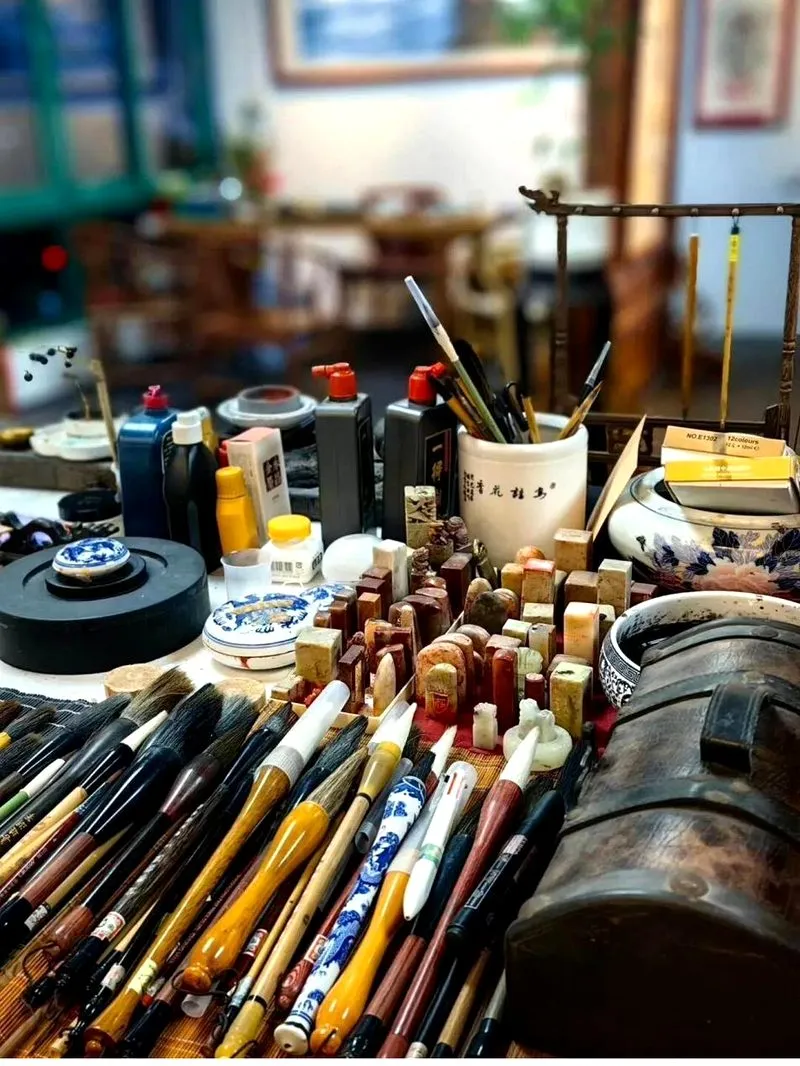
What people said after it arrived.
-
The item is fantastic. The customer service was genuine. Thanks!
— M.Verified purchase · from our Etsy shop reviews · -
They were great they gave me exactly what I asked for and then some. Thank you!!
— G.Verified purchase · from our Etsy shop reviews · -
It is well designed and customized. My daughter loves it. Amazing gift for family’s d friends
— S.Verified purchase · from our Etsy shop reviews ·
Each "阖家幸福" is hand-brushed by Artist Lina Sun on rice paper.
See 阖家幸福 (Hé Jiā Xìng Fú) on Etsy →