For Mom
Chinese characters for the woman who carried you — a gift for Mom. Restrained, lasting, deeply Chinese.
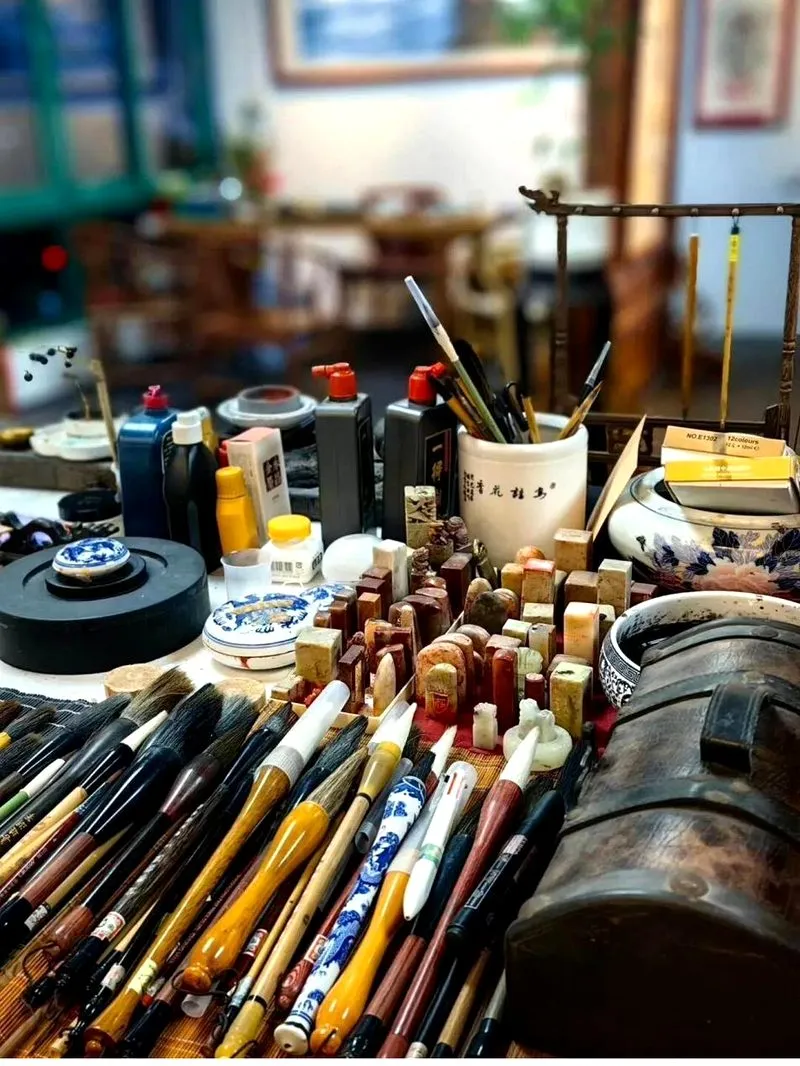
The best Chinese calligraphy gift for parents is one character the household already uses for that relationship, written once in ink. For a mother, 慈 names her care and 孝 names the child's side. Artist Lina Sun hand-brushes it on rice paper in her Shenzhen one-person studio.
Recommended characters
孝 (Xiào) — Filial Piety
For the mother from whom the debt of care cannot be fully repaid — but can be named. 孝 does not wish her anything; it recognizes something: that the years of care have not gone unnoticed and that the relationship is understood to be foundational rather than incidental. The most specifically filial of the Mother’s Day characters, and the one that names the occasion’s actual subject.
长寿 (Cháng Shòu) — Longevity
For the mother whose years have been the sustaining structure of the family. 长寿 — 长 (extended) + 寿 (longevity) — makes the foundational wish without modifiers: more years, unspecified, extending past what was counted on. The directest of the longevity blessings, it is what Chinese families choose when the thing they most want to say is simply that they want her to stay.
康宁 (Kāng Níng) — Health and Ease
For the mother who has spent years attending to others. 康宁 names what she might most need: health that is not merely adequate (康) and a mind that has room to be settled (宁). The two together describe the condition that Mother’s Day can actually recognize — body and mind both at ease, rather than only one of them.
家和 (Jiā Hé) — Family Harmony
For the mother who is the axis of the household. 家和 names the condition she has spent years maintaining — the accord between the people inside the home — and gives it back to her as a blessing rather than an obligation. A gift that recognizes what holding a family together actually looks like, rather than what it produces.
家和万事兴 (Jiā Hé Wàn Shì Xīng) — When Family is Harmonious, All Things Flourish
For the mother whose sustained attention has been the household’s accord — the person whose daily work produced the condition the proverb describes. 家和万事兴 is the full argument where 家和 is only the premise: family harmony does not merely feel good, it produces everything else. A gift that names what the recipient has been doing all along.
雅 (Yǎ) — Elegance
For the mother whose quality of attention shaped the household you grew up in — not the dramatic gestures, but the steady choices: how things were kept, what was brought in, what was not. 雅 is the recognition that those choices added up to something particular. More specific than 美 (beauty) and more personal than 德 (virtue), it names the cultivated sensibility that was already there, long before you had a word for it.
贤 (Xián) — Worthy Character
For the mother who handled what the years required with both competence and character. 贤 is more specific than 孝 (which names the child’s obligation) and more grounded than 德 (which names accumulated virtue in the abstract). It names what the mother’s role actually demands — and recognizes that she met it, in conditions that asked something real of her.
安泰 (Ān Tài) — Peace and Cosmic Right-Order
For the mother whose years of care — within the household and toward the world beyond it — amount to the double condition 安泰 names: a self that has arrived at genuine peace (安) and a world that has, in its large movements, been met with grace (泰). More encompassing than 安康 (which stays at the personal health scale) or 贤 (which names character specifically), 安泰 is the complete atmospheric blessing for the elder mother whose long life has navigated both the interior and the exterior and held well in both. Most apt for a milestone birthday or a Mother’s Day when the occasion calls for a word larger than any single quality.
仁爱 (Rén Ài) — Benevolent Love
For the mother whose care has been the kind that 爱 alone does not name — not the fierce affection of early parenthood but the sustained, outward-facing love that continued after the household quieted and the children stopped needing daily attention. 仁爱 is more specific than 孝 (which names the child’s obligation) and more grounded than 爱 in the abstract: it names the quality of her love, the love that pointed outward and kept pointing long past the point of return.
温 (Wēn) — Warmth
For the mother whose defining quality was a temperature rather than a deed — the warmth you felt in the room before you had a word for it. 温 is more specific than 爱 (which names the love itself) and warmer than 慈 (which can stay dignified, even distant). It does not name the grand gestures; it names the steady, mild warmth that never ran hot or cold, the thing that made being near her feel like being warmed. For the mother whose presence, more than anything she did, is what you remember.
润 (Rùn) — Quiet Nourishment
For the mother whose care worked the way spring rain works — 润物细无声, soaking in at night so the world wakes up greener, never announcing itself. 润 names the nourishment you recognize only by what it grew: you, mostly. Where 温 (warmth) names the temperature you felt in the room and 慈 names protective love, 润 names the soaking, almost invisible giving that you only measure long after — the mother whose steady, soft care was doing its work while you were too young to notice.
慈 (Cí) — A Mother’s Tender Love
For the mother whose love has only ever run one direction — toward you. 慈 is the character built into 家慈, the classical name for one’s own mother, and into 慈母, the loving mother of the language’s most quoted poem. Where 孝 names the child’s debt and 爱 names love between equals, 慈 names the parent’s half of the bond: the protective love that flows downward to shelter something smaller and asks for nothing back. More directional than 温 (the warmth you felt in the room) and more particular than 爱, it is the most precisely maternal character there is.
清雅 (Qīng Yǎ) — Pure Elegance
For the mother whose taste ran clean rather than ornate — the orchid-and-ink kind of refinement, where a single branch in a plain jar said more than a crowded room could. 清雅 names what her restraint produced: a household that felt fresh and uncluttered, an eye that reached for the limpid over the lavish. More specific than 雅 (cultivated taste in general) and cooler than 美 (beauty itself), it names the clear, understated elegance you grew up inside long before you had the word for it.
温润 (Wēn Rùn) — Warm and Smooth as Jade
For the mother whose care was warm without ever being loud and nourishing without ever being announced — the two qualities her own 温 and 润 sections name separately, bound here into one. 温 is the warmth you felt in the room; 润 is the soaking, spring-rain giving you only measured later, in how you turned out. Held together as 温润 they become the quality jade is loved for: a glow that comes from within and rewards being close, 温润如玉. Where 温 names the warmth alone and 润 the quiet nourishment alone, 温润 names the whole texture of being raised by her — warm to be near, and smooth.
慈祥 (Cí Xiáng) — Kindly and Gentle
For the mother whose tenderness has, over the years, become something you can see — the way her face softens before she speaks, the kindness that now lives in her expression. Where 慈 names the protective love that flows down to a child, 慈祥 names that same love worn for decades until it shows: the gentle, benign demeanor of a mother grown old in her kindness. More visible than 温 (the warmth you felt in the room) and quieter than 温润 (the whole jade-smooth texture of her care), it is the word Chinese keeps for the kind elder’s face — the one her grandchildren will picture first.
阖家幸福 (Hé Jiā Xìng Fú) — Happiness for the Whole Family
For the mother whose own well-being has always been measured by the family’s — the one who counts the year good if everyone under her roof is well. Unlike the characters that name her directly (慈 her tender love, 慈祥 her kindly face), 阖家幸福 is addressed to her household as a whole, which is how she has always thought of her own happiness. It is the wish a child writes on the New Year card home: not health for her alone or beauty in her taste, but a good life for the whole family she has spent hers holding together. The gift for the mom who would rather be wished her family’s happiness than her own.
容 (Róng) — The Capacity to Hold
For the mother whose defining act was making room — 包容, the word a family reaches for to describe the one who absorbed the moods, the mistakes, the wrong turns, and steadied them without ever asking her children to be different first. Where 慈 names the tenderness that flows down to a child and 宽 names the breadth measured before anything fills it, 容 names the act of holding itself: to take a person in and contain them whole. It is capacity worn on a face, too — the 从容, the unhurried composure, that a lifetime of making room settles into. For the mother whose room the whole family lived inside without once measuring what it cost to keep open.
秀 (Xiù) — Outstanding and Refined
For the mother whose quality your family has always simply assumed — the delicacy of her taste, the grace of her manner, the way she stood out without ever seeming to try. 秀 is one of the most chosen characters in Chinese women’s given names precisely for this: it means outstanding and finely made at once, beauty that is also a mark of substance. Where 清雅 names the clean, understated register of her taste and 温润 names the jade-smooth warmth of her care, 秀 names the plain fact of her distinction — that what looks effortless in her is the genuine article, ripened rather than arranged. For the mother whose refinement your family measured only by growing up inside it.
清 (Qīng) — Clarity and Cleanness
For the mother whose defining quality was clarity — the clean conscience she raised you by, the uncluttered calm she kept a household on, the fresh and unforced way she carried herself. Where 慈 names her tender love and 清雅 names the clean register of her taste, 清 names something more elemental than either: the transparency of her character, a life with nothing murky folded into it. It does not wish her health or beauty; it recognizes the clear water she has always been to the people around her.
团圆 (Tuán Yuán) — The Family Gathered Whole
For the mother who measures a good year by one thing: whether everyone made it home to the table. Where 慈 names the tenderness she aims down at her children and 阖家幸福 wishes the household happiness for the year ahead, 团圆 names the plainer thing she wants back for herself — not a gift she can hold but the sight of the whole family in one room, no seat empty, the children returned from wherever they scattered. It is the wish she would never say out loud and counts the days toward all the same.
博爱 (Bó Ài) — Universal Love
For the mother whose love spilled past her own children — the one every kid on the street called 阿姨, who set an extra place without being asked, who mothered whoever turned up needing it. Where 慈 names the tender love a mother aims down at her own young and 仁爱 names the sustained care she pours into the family, 博爱 names the reach: a heart wide enough to hold people who were never hers to raise. The recognition for the mom whose warmth was never a private supply — the one whose kindness the whole neighborhood, not just her children, grew up inside.
端庄 (Duān Zhuāng) — Dignified Grace
For the mother whose bearing set the tone of the house — composed, unflustered, dignified without any effort to be. 端庄 is not elegance (that is 雅) or warmth (that is 温) or refinement (that is 秀); it names the poise underneath them — the upright, self-possessed gravity that made a room settle when she walked into it. The gift for the mother whose dignity was quiet and carried its own weight.
感恩 (Gǎn Ēn) — Gratitude
For the mother whose years of care you have finally grown old enough to weigh. 感恩 is not a wish for her and not the filial duty 孝 owes back; it names the child’s side of the bond — the heart turning to reckon what she gave and being moved by how large it is. Where 慈 names the tenderness she poured down and 孝 names what you owe, 感恩 names the feeling in between: gratitude that has understood its own size. The gift for the mom to whom you want to say, plainly, that the debt is felt.
身体健康 (Shēn Tǐ Jiàn Kāng) — May Your Body Be Well
For the mother who spends the entire phone call asking about your health and never gets asked about her own. 身体健康 turns the question around. It is the one wish on this shelf that names the body outright — not her character, not her years, not what she gave — and 身体 there is no metaphor: it is the frame she has been standing up in while doing all the asking. Where 感恩 names what you owe her and 温 names the warmth she gave, 身体健康 is the one thing you want for her going forward, said in the flat words a family actually uses. The gift for the mom who has been keeping track of everyone but herself.
婉 (Wǎn) — Gentle in the Turn
For the mother who changed your mind far more often than she ever raised her voice. 温婉 is the compliment Chinese pays to a whole bearing rather than to a single act, and it is one of those things much more often meant about a mother than said to her. Where 慈 names the tenderness she poured down and 容 the capacity to hold whatever you brought home, 婉 names the skill sitting between them: the judgment about form — which version of a hard thing a particular person can actually take in. Much of it only becomes visible in hindsight, once you notice how few of those conversations you remember as confrontations. The gift for the mom who never needed volume.
岁月静好 (Suì Yuè Jìng Hǎo) — The Years Ahead, Uneventful
What an adult child lies awake about is rarely that a mother’s years will be too few. It is that one of them will turn out to contain a fall, a diagnosis, a stretch that has to be got through. 岁月静好 is that fear turned around and said as a wish, without using any of the frightening words: it asks not for more years or better ones, but for uneventful ones. The indirection is why it works as a gift rather than as something muttered on the drive home from an appointment. 长寿 and 身体健康, further up this page, name the thing you are afraid of losing; this one names the texture you want the years to have instead. The phrase itself is recent, from a marriage document written in Shanghai in 1944; its older half, 静好, is twenty-six centuries old and comes out of a Book of Songs poem about one ordinary morning in a house.
柔 (Róu) — Never Raised Her Voice, Still Set the Terms
The argument in your house was never won loudly, and you would have trouble naming the moment it ended. 柔 is the character for whatever she did instead. 婉, further up, credits a decision about how a hard thing gets said — outbound, and chosen. 柔 runs the other way and credits what comes in: the mother who took the argument, the bad news and the teenage version of you without any of it leaving her louder than it arrived, and whose judgment the household has run on regardless. Chinese has a name for that as a method rather than a mood, and this is it. It is not a wish that she be softer. She already set the terms; this names how.
安心 (Ān Xīn) — Where She Is Allowed to Look
The oldest complaint in Chinese about this exact debt is filed by the sons themselves. 凯风 ends on a count — 有子七人,莫慰母心, seven sons, and not one has eased their mother’s heart — and the poem’s whole method is self-accusation. What makes the debt hard to clear is structural rather than sentimental: the thing a mother is watching is not in the room with her, so nothing that happens to her settles it. Her health does not, which is what 身体健康 addresses, and neither do more years. 安心 is pointed at her attention instead of at her condition — it says one front of it is off duty. Which is also why it cannot be given carelessly. The claim is about the person handing it over.
母慈子孝 (Mǔ Cí Zǐ Xiào) — Her Name in the Subject Position
孝 at the top of this page is a statement about you: the debt is understood, and you are the one filing it. 慈 is a statement about her. 母慈子孝 is the only thing here that is both, and it puts her clause first — 母慈 is a finished sentence with her as the subject, and 子孝 is a second sentence that only gets to happen afterward. 颜之推 made that sequence a cause in the sixth century, writing 父不慈则子不孝: no kindness above and there is none below. Which means the four characters are not a compliment paid to her and a promise made by you, but a single finding about an arrangement that worked, with the credit assigned in the order it was earned. For the mother whose children are grown enough that the second clause has somebody to point at.
逸 (Yì) — The Other Half of a Pair She Only Ever Got One Half Of
The word Chinese actually uses for a mother’s decades is 劳 — 操劳, 辛劳, 劳累 — and 劳 has a partner. 劳逸结合, alternate the exertion and the release, is a fixed phrase, and it is built as a schedule rather than a reward: both halves are required, and a life running on one of them is not virtuous but incomplete. That is what makes 逸 a different gift from 岁月静好 or 安心, which describe a settled condition without saying what was unsettling it. 逸 only means anything relative to a hold, so it cannot be given without naming the hold, and naming the hold is the part that usually never happens out loud.
平和 (Píng Hé) — The Skill You Never Had to Learn
Plenty of people acquire, early, the ability to tell from the sound of a key in a lock which mood is about to come through the door. It is a useful skill and an expensive one, and the households that produce it are not cruel households — only unpredictable ones. 平和 is the word for a home where that skill never had to develop. What it measures is not warmth but range: how far the reading moved. 柔 elsewhere on this page credits what she did with whatever arrived — none of it left her louder than it came in — and 安心 credits the permission she gets to stop watching. This one is not about the absorbing and not about the permission. It credits the reading itself: across a whole childhood it did not move much, because the range was hers to hold and she held it. It is the compliment a child usually cannot pay until they are the one whose key is in the lock.
康泰 (Kāng Tài) — What the Card Says When You Cannot Be There
《礼记》 sets out what caring for a parent concretely consists of, and all of it is physical and daily: warm them in winter, cool them in summer, settle them at night, look in on them at dawn. The schedule assumes you live near enough to do it. 康泰 is that schedule folded into two characters for the decades when you do not. 康宁 elsewhere on this page wishes her body sound and her mind settled, which is a wish about how she feels. This one asks something plainer and much harder to flatter — what she still has in reserve, and whether anything is in the way of it. It can be given to a mother who is already unwell without turning into a lie, because what it asks for is clearance and not a cure.
春暖花开 (Chūn Nuǎn Huā Kāi) — Late Spring on the Wall
慈 and 温 name how she held you; 康泰 asks whether the body still moves freely. 春暖花开 does none of that scoring. It hangs the season Mother’s Day already sits in — warm air, flowers out — the same domestic outdoor picture Qing fiction puts with children led into the garden. For the mother who should be thanked with weather that has arrived, not a wish that still needs proving.
天伦之乐 (Tiān Lún Zhī Lè) — The Bond’s Own Gladness
慈 credits how she held you; 阖家幸福 wishes the household a good life; 团圆 wants everyone in one room. 天伦之乐 names something quieter and harder to fake: that being her child still feels like joy — kinship gladness, not a health score and not a reunion logistics check. For the mother you want thanked with the bond itself.
恩 (Ēn) — The Favor That Landed
感恩 above is a feeling that arrived after the fact. This character is the fact the feeling is about. A child can have been fed, clothed, and sent through school and still have felt nothing yet; the coats and the fees landed anyway. 慈 further up is the warm disposition pointed down. 孝 names a duty practiced in return. For the mother whose gift should list what she bestowed, and leave the performance of being moved to the pair built for that.
福 (Fú) — Blessing · Good Fortune · Happiness
See 福 →爱 (Ài) — Love · Affection · Devotion
See 爱 →寿 (Shòu) — Longevity · Long Life · Health and Vitality
See 寿 →瑞 (Ruì) — Good Tidings · Blessing · Promise of a Bright Year
See 瑞 →宁 (Níng) — Serenity · Inner Calm · Stillness
See 宁 →康 (Kāng) — Health · Well-being · Wholeness
See 康 →静 (Jìng) — Stillness · Tranquility · Quiet
See 静 →平安 (Píng Ān) — Peace · Safety · Well-being
See 平安 →安康 (Ān Kāng) — Peace · Health · Wholeness of Body and Mind
See 安康 →福寿 (Fú Shòu) — Blessing · Longevity · A Long and Happy Life
See 福寿 →力 (Lì) — Strength · Force · The Power to Act
See 力 →阖家欢乐 (Hé Jiā Huān Lè) — Joy for the Whole Household
See 阖家欢乐 →岁岁平安 (Suì Suì Píng Ān) — Peace Year After Year
See 岁岁平安 →健康长寿 (Jiàn Kāng Cháng Shòu) — Good Health · Long Life
See 健康长寿 →龙马精神 (Lóng Mǎ Jīng Shén) — The Vigor of the Dragon and Horse · Tireless Spirit
See 龙马精神 →善 (Shàn) — Goodness · Kindness · Moral Virtue
See 善 →福寿康宁 (Fú Shòu Kāng Níng) — Blessing · Longevity · Health · Peace
See 福寿康宁 →福寿安康 (Fú Shòu Ān Kāng) — Blessing · Longevity · Peace · Health
See 福寿安康 →-
What is the best Chinese calligraphy gift for parents?
The best Chinese calligraphy gift for parents is a character the family already uses for that relationship, not a generic decoration. For mom, people often choose 慈 (a mother's tender love) or 孝 (filial piety) — 孝 names the child's side of the bond. 爱 (love) is the quieter option when the household rarely says the word. For more years and a well body, families use 长寿 or 身体健康. Mother's Day is the usual occasion. Each piece is hand-brushed by Artist Lina Sun on rice paper.
-
Which Chinese characters do people often choose for mom?
The characters that recur for a mother are 孝, 慈, 爱, 感恩, 长寿, and 身体健康. 孝 and 感恩 speak from the child; 慈 and 爱 name her care; 长寿 and 身体健康 wish her more years in a well body. 福寿康宁 gathers blessing, longevity, health, and ease in one phrase. Start with the Mother's Day gift guide. The matching father list is on For Dad.
-
Why give parents a hand-brushed calligraphy piece?
A printed character repeats a file. A hand-brushed piece is written once, in ink, on rice paper, by Artist Lina Sun — the object is the sitting, not a copy. Parents tend to keep a character they already recognize; the brushwork is what makes it a gift rather than wall text. Materials and how each piece is made are on the studio page.
Bring a hand-brushed piece home — choose how you'd like it brushed.
-
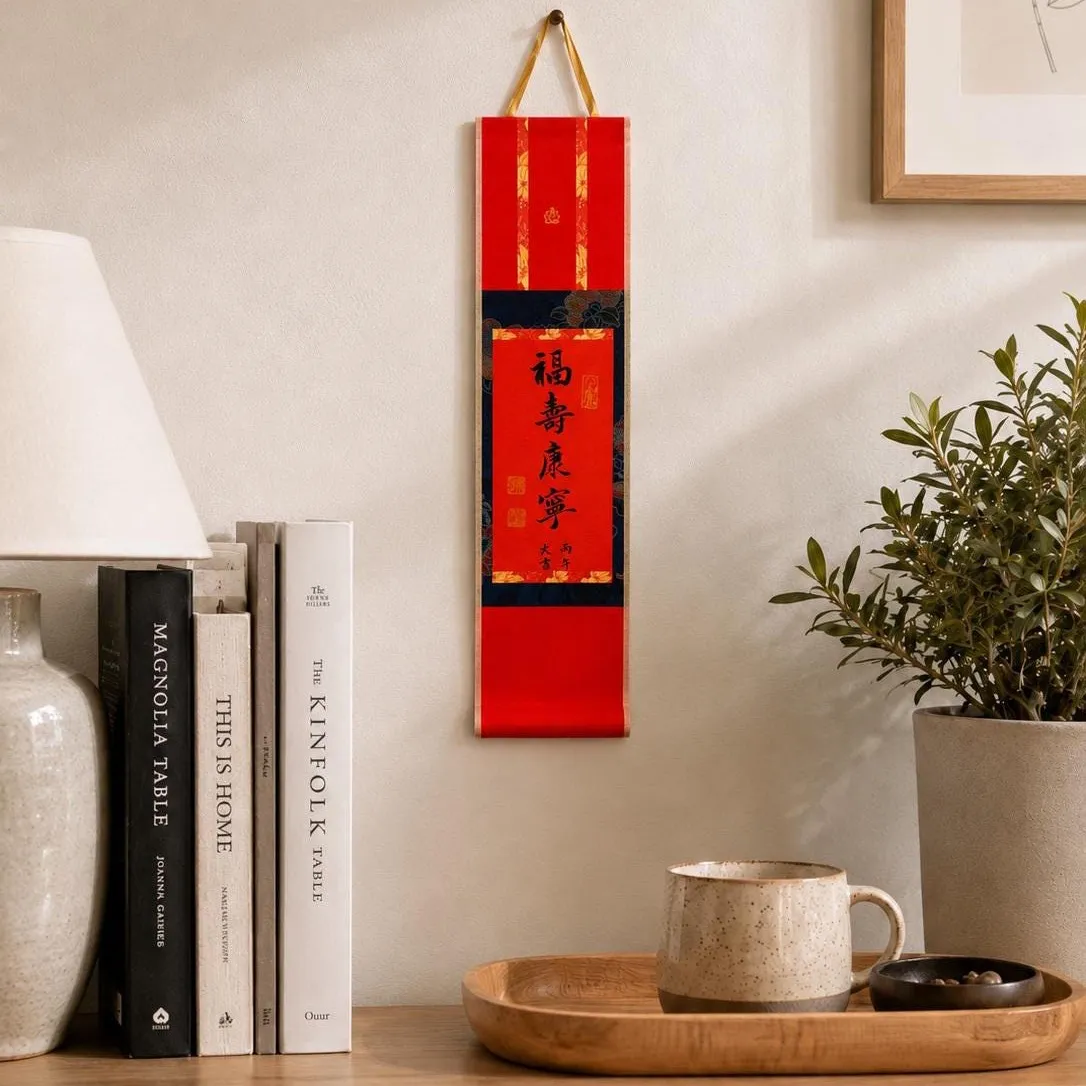
Photo shows a sample — yours will be brushed with the character you choose.
Wall Scroll — for walls & housewarmingsfrom $38→ -
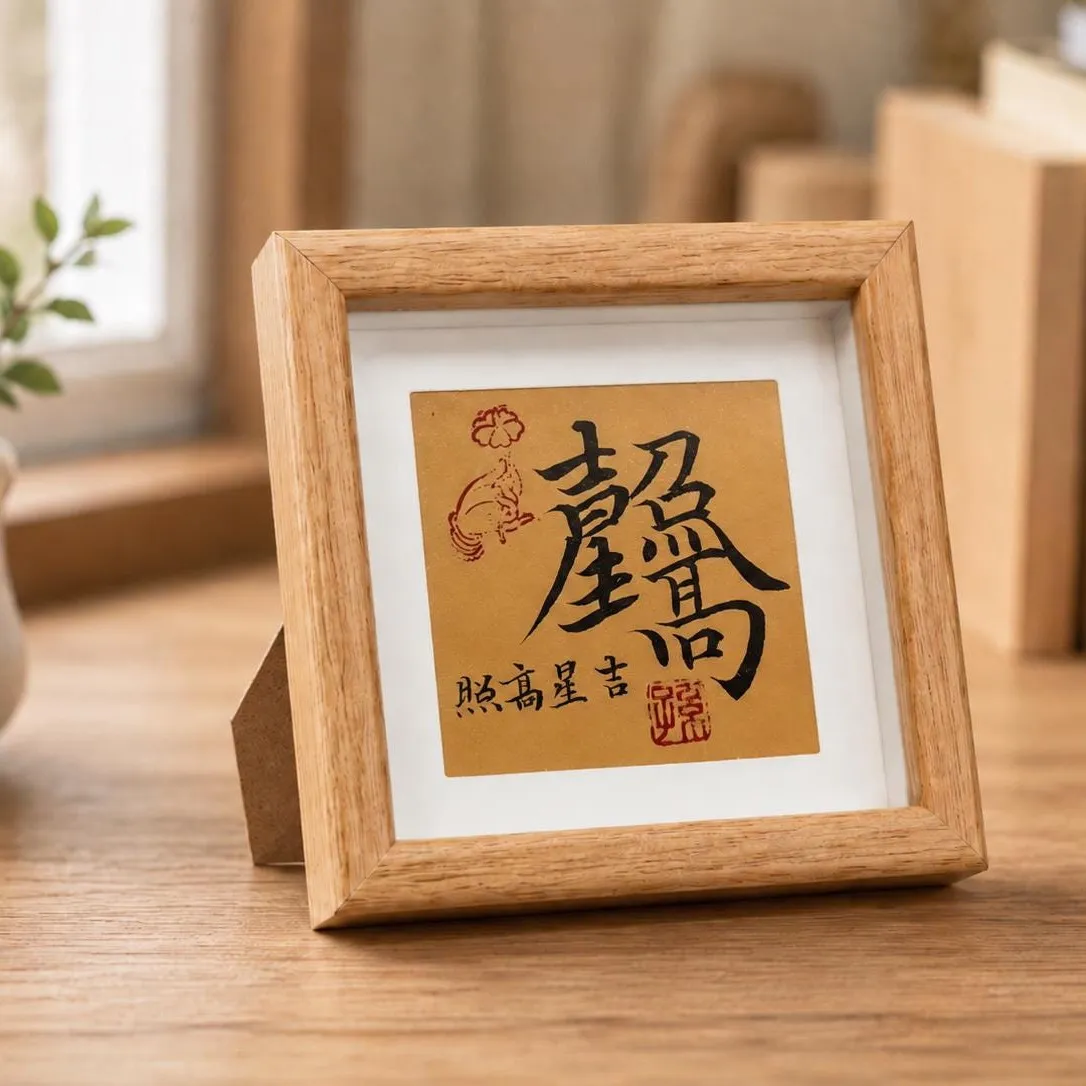
Photo shows a sample — yours will be brushed with the character you choose.
Desk Frame — for desks, studies & studiosfrom $44→