Housewarming Gifts
Chinese characters for a new home — peace, blessing, harmony, and smooth passage.
Recommended characters
和顺 (Hé Shùn) — Harmony and Smooth Going
For the new home when the gift is a wish for the household itself. 和顺 names what turns a residence into a home: warm relationships inside it (和) and daily life that flows without unnecessary friction (顺). A more specific blessing than 和 or 顺 alone, it is the right choice when what you want to say is that you hope both qualities take root here.
家和 (Jiā Hé) — Family Harmony
For the housewarming when the gift is a wish for what the home needs before anything else. 家和 names the foundational condition of a household — the people inside in accord with each other — rather than any particular quality of their relationship or their daily operations. The blessing Chinese families place above a threshold first, because a home is defined by its internal state.
家和万事兴 (Jiā Hé Wàn Shì Xīng) — When Family is Harmonious, All Things Flourish
For the housewarming when the gift should name not just the condition the home needs but what that condition makes possible. 家和万事兴 is the full proverb hung above Chinese doorways at the start of every new occupancy — the argument that what happens inside the home in the first weeks determines what the home will produce over years. A gift that belongs above the threshold before the threshold is crossed.
五福临门 (Wǔ Fú Lín Mén) — The Five Blessings Arrive at the Threshold
For the housewarming gift that names the complete external endowment the new home is being asked to hold. 五福临门 is the most comprehensive of the threshold blessings — it does not ask for harmony (家和), smoothness (顺), or prosperity in isolation, but names all five conditions of a complete life arriving at this door simultaneously. Where 家和万事兴 argues that internal harmony produces all good outcomes and 和顺 names the daily texture of a well-run household, 五福临门 names the full external endowment: the five blessings passing through this threshold into the life being built inside it.
盛 (Shèng) — Flourishing
For the new home when the wish is that it thrive — that the household fill with life and its fortunes rise from this threshold. Where 和顺 names the daily texture of a well-run home and 家和 names the people inside in accord, 盛 names the vital, growing energy of a household on the way up: 家道兴盛, the house flourishing across the years. The gift for a new home you want to see flourish, not merely settle into.
金玉满堂 (Jīn Yù Mǎn Táng) — Gold and Jade Fill the Hall
For the new home when the gift should picture the household abundant rather than name a quality it needs. 金玉满堂 names the 堂 directly — the main reception hall at the center of the house, filled to capacity with what is most valued. Where 家和 names the relational condition the household needs and 盛 names its rising vital energy, 金玉满堂 names the material picture: the central room well-furnished, the family wanting for nothing. The most concrete of the housewarming blessings — it wishes the new home not merely settled but visibly full.
年年有余 (Nián Nián Yǒu Yú) — A Surplus Year After Year
For the new home when the wish is for the security that outlasts any single good year. Where 金玉满堂 pictures the hall full and 盛 names the household’s rising energy, 年年有余 names the quieter, self-renewing thing: a margin that comes back every year, the home that ends each one with something set by rather than spent to nothing. For a family just beginning to keep its own accounts, it is the plainest kind of prosperity — not wealth arriving but shortfall never coming, the reserve that turns a house into a place you can weather things in.
阖家幸福 (Hé Jiā Xìng Fú) — Happiness for the Whole Family
For the new home when the wish is not for what fills it but for the life it will hold — a good family life beginning within these walls. Where 金玉满堂 pictures the hall materially full and 盛 names the household’s rising energy, 阖家幸福 names the plainest and largest hope: that the whole family, everyone inside, share a lasting well-being here across the years. It is the all-weather counterpart to 阖家欢乐 — not the joy of the housewarming evening but the durable happiness of the household that will spend the rest of its life together in this place. The gift for the family moving into the home where the rest of their years will happen.
兴旺 (Xīng Wàng) — Thriving
For the new home when the wish is that it come alive rather than merely be finished. 火旺 — the fire burning hard — is the plainest sign in Chinese that a house is lived in rather than just furnished, and 兴旺 carries that hearth inside it: what it wishes a household is the filling-up, 家道兴旺, the fortunes climbing and the rooms getting noisier with the years. Where 金玉满堂 pictures the hall materially full and 年年有余 wishes a margin that renews, 兴旺 wishes neither stock nor surplus but vitality — growth you can hear. Closest to 盛, which names a household’s rising energy at its peak; 兴旺 is the ordinary, ongoing climb, said of homes and shops rather than eras. The gift for the friends who just took the keys.
紫气东来 (Zǐ Qì Dōng Lái) — Purple Vapor Comes from the East
For the new home when the gift belongs above the door rather than inside it. 紫气东来 is one of the most common inscriptions across a Chinese lintel — the four characters that declare auspicious fortune drawing toward this threshold from the east, the direction of the rising sun and of spring. Where 五福临门 names the five blessings arriving in full and 金玉满堂 pictures the hall already stocked, 紫气东来 names the approach itself: not what the house holds but what is on its way to it, the omen read over the gate on a household’s first morning. Born from the legend of Laozi riding a green ox to the pass where a purple cloud announced him, it is the more lettered of the door blessings — the housewarming gift for the friend or family whose new gate you want to say something with a mind behind it.
出入平安 (Chū Rù Píng Ān) — Safe Passage Coming and Going
For the new home when the gift belongs on the doorframe and wishes the safety of the people rather than the prosperity of the rooms. A door is a threshold crossed thousands of times, and 出入平安 is the blessing written for exactly that — built on the antithesis of 出 (going out) and 入 (coming in), it asks that everyone moving through this entrance, in either direction, stays whole. Where 家和 names the household in accord and 五福临门 names the blessings arriving at the threshold, 出入平安 names the plainest hope a new door can carry: that it let everyone out and bring everyone back.
旺 (Wàng) — Warming the House
There is a Mandarin word for what an empty new flat is missing — 人气, the warmth a place takes on only from people being in it — and this is the character for having it. That is why the housewarming itself is called 暖房 or 温锅 across much of the north, warming the house, warming the pot: friends arrive, the stove is lit for the first time, and the meal matters less than the fact of cooking it. The single character is a narrower gift than its neighbors here. 兴旺 pairs the climb with the heat and wishes a household’s fortunes upward over years; 盛 wishes it a height; 家和 names the accord it will run on. 旺 wishes none of that and makes no forecast — it names a state of the rooms on any given evening, and asks only that it keep recurring. The gift for the friend with the keys, the boxes, and not yet the noise.
昌盛 (Chāng Shèng) — The House, Not the Rooms
For the new home when the household is understood as a house in the older sense — a line and its undertakings — rather than an address and its furniture. 家族昌盛 is the phrase that carries it, said at a table where three or four generations are sitting, and it looks past the keys to the thing the keys are one stage of: the branch continuing and doing well over a span longer than any lease. This is deliberately out of scale with the rest of this page, and the scale is the gift — 昌盛 is a word for countries, eras and trades, and putting it over one doorway is a way of saying the doorway is the beginning of something meant to run. Everything else here keeps to this house and the people in it: 兴旺 asks for heat and traffic now, 盛 asks for a height, 金玉满堂 pictures the hall stocked, 出入平安 asks that everyone crossing the threshold come back whole. 昌盛 asks nothing about this year at all. The most formal gift on this page, and the right one for the family who mean to be found here in thirty years.
长乐未央 (Cháng Lè Wèi Yāng) — It Started as Roof Hardware
Everything else on this page was chosen for a house. These four characters came with one. In Han Chang’an they were pressed into 瓦当 — the round clay caps that finish a roof-tile at the eaves — fired by the mould-load in official workshops for palace halls and the gate-towers of imperial tomb precincts, then set facing outward from the edge of the roof. 出入平安 further up this page went on the doorframe and watches the threshold; this went on the roofline and faced the street. The wording suits a new place on its own terms as well: Han usage reads 未央 as 未尽, not used up, so it says of the life about to be lived in these rooms not that it will be long, but that none of it has been spent yet. The right gift for someone at the beginning of a place, given that the phrase spent its first thousand years being part of one.
春 (Chūn) — Something to Bite
The 立春 custom is to eat: thin pancakes rolled around shredded vegetables, and raw white radish, sharp enough that the point of it is unmistakable. The day is called 咬春 — biting the spring — and the whole idea is to get the season inside you before there is any of it outside. A housewarming is the same transaction in a different room. The evening is built around the first meal cooked in a kitchen nobody has cooked in, and what is actually being marked is not the furniture but the fact that the place has now started. 昌盛 further up this page looks thirty years out at a family line still going, and 出入平安 watches everyone who crosses the threshold. 春 makes no claim about the span or the traffic. It dates the beginning, which on the night of a housewarming is the only thing about the home that is already true.
兴 (Xīng) — The Word for Putting a Building Up
兴 is the ordinary verb for construction: 兴建 for the building itself, 兴修 for the canal or the road. 范仲淹 used it in 1046 for a whole prefecture’s worth of abandoned things raised again — 百废具兴 — naming 滕子京 in the essay’s opening line and crediting him with the year in the next. A new home is that verb completed once, which is the argument for hanging the character inside one. Everything else on this page addresses the finished place: 兴旺 wants the rooms hot and busy, 金玉满堂 pictures the hall stocked, 出入平安 watches the threshold, 昌盛 looks thirty years past the keys. 兴 looks at the hands. It says the lifting is not over, and quietly records the thing a housewarming tends to skip: this address did not appear. Somebody raised it, and 兴 is the verb for that.
祥云 (Xiáng Yún) — What Is Over the New Address
On the night of a housewarming everybody in the room is looking at the rooms. 祥云 is on the wall looking past them, at what is over the roof. It is a smaller thing to say on the night, and a much harder one to be wrong about. A 祥云 is never simply in the sky; it is over something in particular — so on the evening a family first cooks in a kitchen nobody has cooked in, the thing it is over is this address. 出入平安 further up this page is written to hang at the height of a person. This one never comes down that far, which on an evening organized entirely around what happens next is an unusual thing to have in the room.
五谷丰登 (Wǔ Gǔ Fēng Dēng) — The New Home’s Harvest Floor
出入平安 watches the threshold; 金玉满堂 stocks the hall; 家和万事兴 argues from harmony outward. 五谷丰登 wishes the new address staple abundance landing — the five grains come in, the kitchen’s year not thin. For a housewarming where the gift should speak of provision as harvest, not as coin or rank.
福 (Fú) — Blessing · Good Fortune · Happiness
A meaningful welcome for a friend or family beginning a new chapter — expressing wishes for warmth and belonging in their new space.
See 福 →安 (Ān) — Peace · Safety · Tranquility
A wish that the walls hold warmth, the rooms hold quiet, and the threshold welcomes only good things.
See 安 →和 (Hé) — Harmony · Balance · Togetherness
A meaningful welcome for a new home, where harmony and shared meals will fill the rooms.
See 和 →平安 (Píng Ān) — Peace · Safety · Well-being
For a new home, 平安 is the wish that the threshold welcomes only good things. It is the inscription Chinese families have hung in entranceways for centuries — a small piece of calligraphy doing the work of a blessing.
See 平安 →知足 (Zhī Zú) — Contentment · Knowing What is Enough
Hung in a new home, 知足 sets a quiet tone: this place is enough. A wish for the household to feel that, not just say it.
See 知足 →阖家欢乐 (Hé Jiā Huān Lè) — Joy for the Whole Household
Hung in a new home, 阖家欢乐 is the blessing that the house itself becomes a place of family joy — the laughter at the table, the warmth in the rooms.
See 阖家欢乐 →顺 (Shùn) — Smooth Going · Flowing Well · Without Obstruction
A new home is the start of something — and 顺 is the wish that the start proceeds without friction. Where 安 asks for peace and 福 asks for blessing, 顺 asks specifically that the new chapter goes the way they intend.
See 顺 →福至 (Fú Zhì) — Blessings Arrive · Fortune Has Come
For a new home, 福至 marks the threshold: blessing has crossed it. The two characters are among the most traditional housewarming inscriptions, often paired with 福到 in the custom of hanging the character 福 upside down (倒福) to create a visual pun on arrival.
See 福至 →Bring a hand-brushed piece home — choose how you'd like it brushed.
-
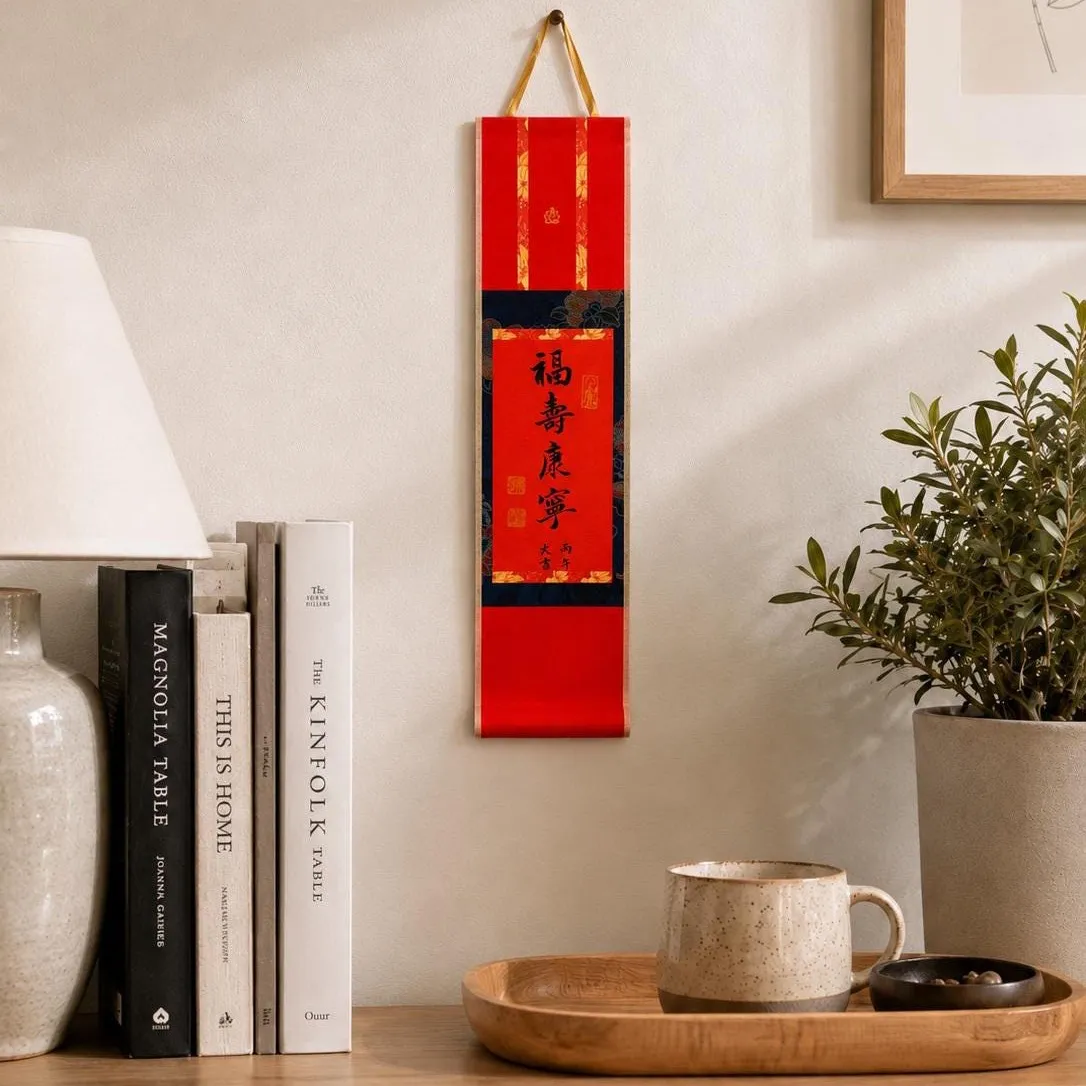
Photo shows a sample — yours will be brushed with the character you choose.
Wall Scroll — for walls & housewarmingsfrom $38→ -
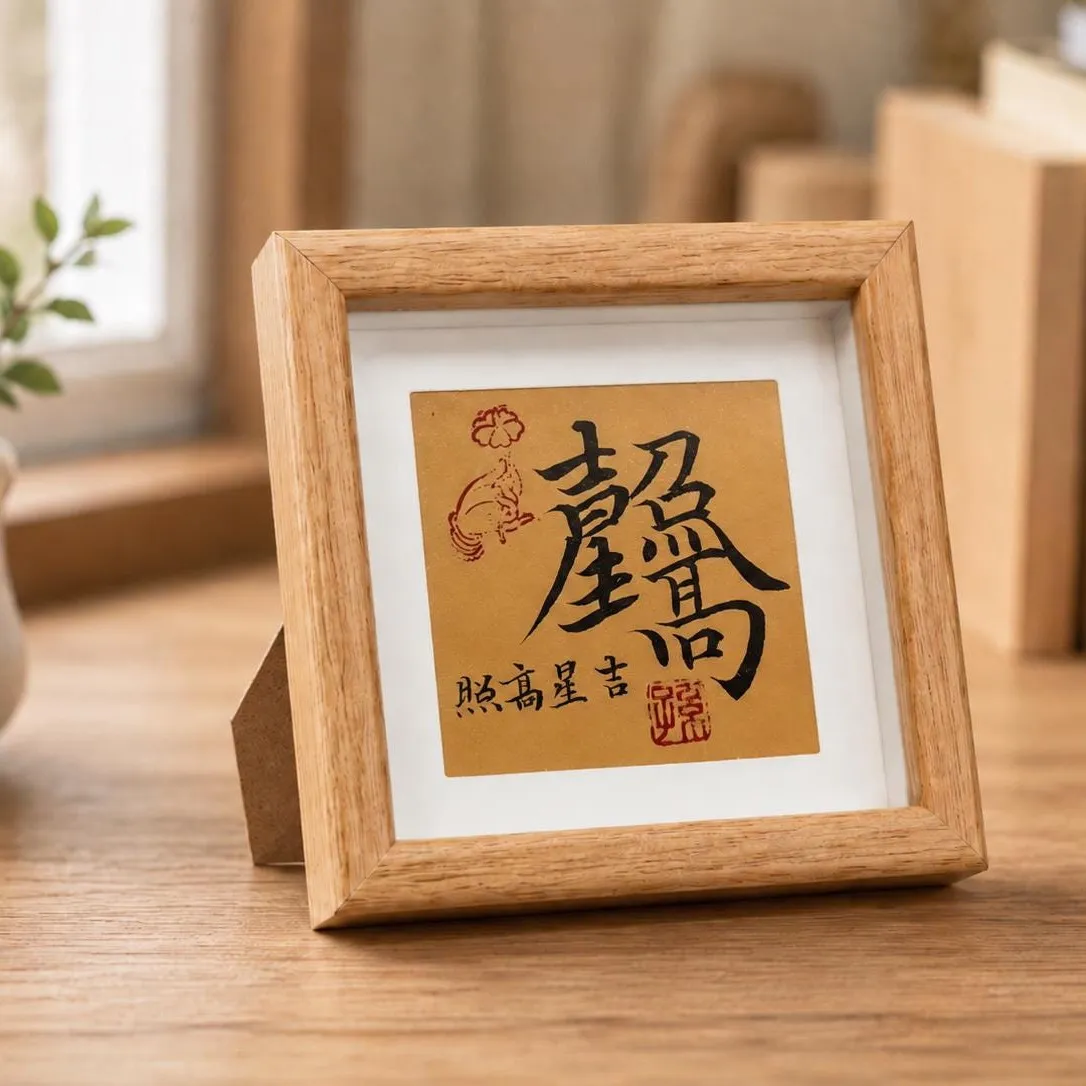
Photo shows a sample — yours will be brushed with the character you choose.
Desk Frame — for desks, studies & studiosfrom $44→ -
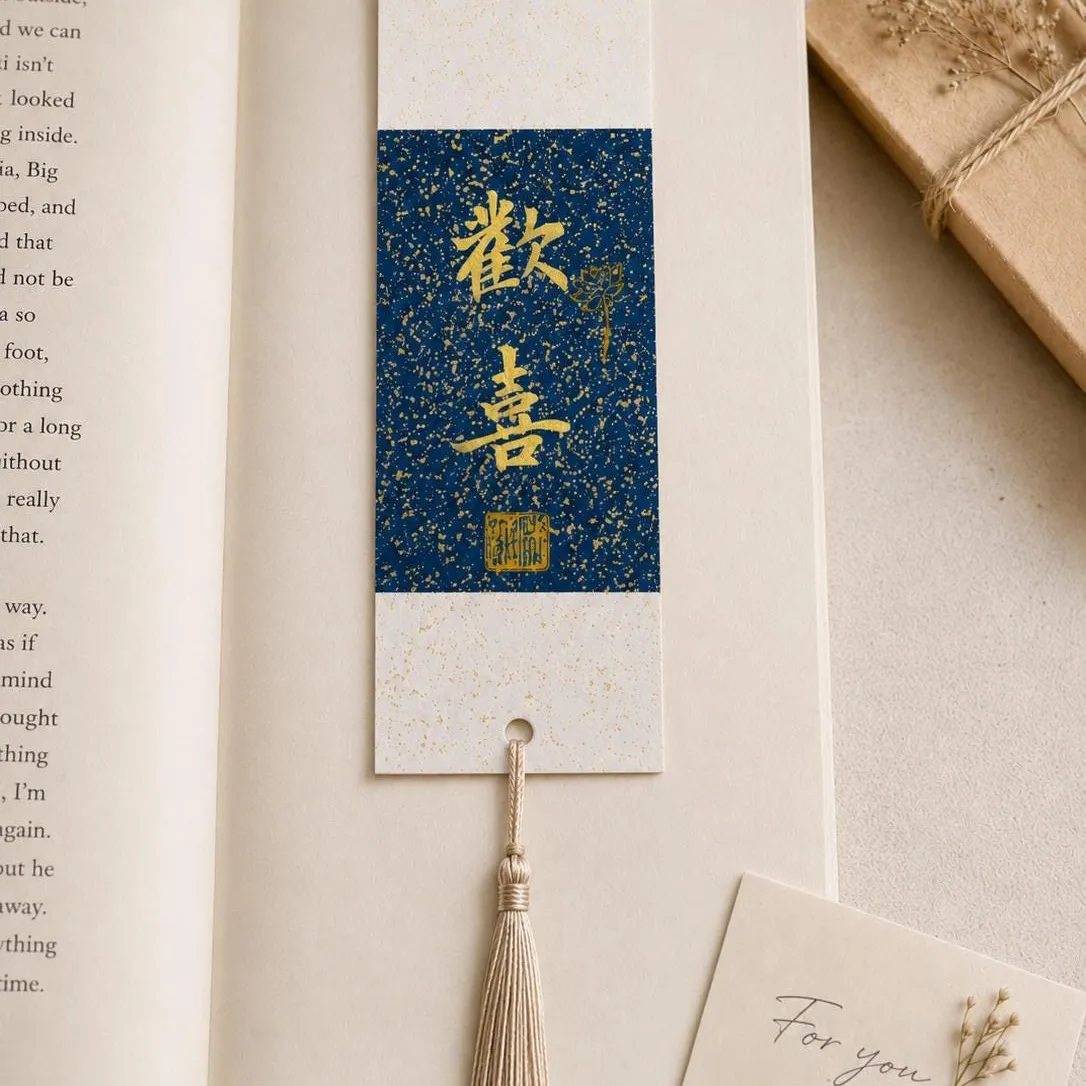
Photo shows a sample — yours will be brushed with the character you choose.
Bookmark — for readers & small thank-yousfrom $17→