平和 (píng hé) — Level and In Tune · Steady by Range, Not by Temperature
Two characters, and the first is not an intensifier on the second — a reader who takes it that way gets a warm word. 平 is its own measurement: 律以平声, the pitch pipes were what kept any note from running past its size.
苏轼 was in his sixties, and on Hainan — the third place they had sent him — when he wrote a short piece in praise of a broth with almost nothing in it. In the middle of it stands 先生心平而气和,故虽老而体胖: the master’s heart is level, his breath in tune, and so, though old, he is easy in the body. That is not a claim about how he felt. Both halves of the word are measurements. 《国语·周语下》 fixes the first in four characters — 细大不逾, no note, thin or thick, overstepping its size — and gives the second as 声应相保, voices answering and holding each other up. See 和 → What 苏轼 is reporting from that island is an amplitude rather than a mood, which is the only reason a man in his circumstances could report it at all.
The order of the two characters is not a stylistic preference. 伶州鸠, arguing against King Jing of Zhou’s plan to cast an enormous bell, set government and music side by side and put the dependency in six characters: 乐从和,和从平 — music follows from being in tune, and being in tune follows from nothing overstepping its size. Level first; the answering comes after. Reverse the pair and you have 和平, which goes on treaties and names a condition between parties instead of a level inside one. 《中庸》 closes off the lazy reading of the second half: 喜怒哀乐之未发,谓之中;发而皆中节,谓之和 — the feelings arrive, and 和 is the name for their arriving within measure. In living use the word attaches mostly to a temper or a tone, 性情平和 and 语气平和, and both are read the way 伶州鸠 read the king’s bell: not how warm it sounds, but whether anything in it overshoots.
A hand-brushed “平和” by Artist Lina Sun goes to the mother whose range was hers to hold and who held it, or to the friend coming out of twelve months they would rather not add up. What it puts on a wall is a quantity rather than a compliment. It does not say the year was good, and it does not say she was never angry. It says the range held, and that everybody inside it could stop checking — which is worth more, in most households, than the things that are easier to say out loud.
- level — nothing in it running far from the middle
- even-tempered in the sense of range, not of warmth
- mild — said of a herb, a temper, a voice
- composed while something is actually happening
- peace That is 和平, the same two characters the other way round, and the two are not synonyms. 和平 is a condition between parties — states, factions, a household at war with itself. 平和 is a level taken inside one person or one substance, and it makes no claim about whether anyone is in conflict.
- calm 静 is measured against movement, including the movement of one's own attention — 安静 is a room, 静心 is something a person practices. 平和 is measured against extremes, which is why it can hold of someone in the middle of a loud conversation.
- gentle 温 is read off how a person feels to be near — a temperature. 柔 is read off what happens when something pushes — the give. 平和 is read off neither: it reports how far the reading moved, mechanism unspecified. Someone can be entirely 平和 and not warm at all, which is why the word is also usable of a drug.
- easygoing 好说话 and 随和 describe a person who does not hold a line. 平和 says nothing about the line, only about how loudly it is held. A 平和 person can refuse you flatly and at the same volume as everything else they say.
The short arms are the point: these readings don’t reach it.
- 平 level — nothing running past its own size许慎 glosses it 语平舒也, speech level and unhurried — the first gloss on record is about a voice. The 八 in the graph is read as 分, to divide: share a thing out evenly and it comes level.
- 和 in tune — answering rather than overriding说文 keeps two headwords apart here: 相应也, answering one another, under 口, and 龢,调也,读与和同 under 龠, the pipes — same sound, different sense. 平和 draws on the second. 《国语》 makes it a criterion rather than a feeling: 声应相保曰和.
characters
- 心平气和 xīn píng qì hé heart level, breath in tune — the living idiom, in 苏轼's wording rather than 晏子's
- 药性平和 yào xìng píng hé mild in action — said of a herb safe to take for months because it tilts the body neither way
- 和平 hé píng peace — the same two characters reversed, and a different word entirely
- 恬淡 tián dàn tranquil and unattached — related by sense and sharing no character, from 庄子's 平易恬淡,则忧患不能入
- 偏颇 piān pō tilted, off to one side — the paired opposite of 平和质 in the constitution standard, which calls the other eight 偏颇体质; again sharing no character
Cinnabar marks the characters 平和 actually contains. The dark row is a relative by meaning or by sound, not one shared stroke.
The Story Behind the Character
In 522 BCE the Duke of Qi came back from a hunt and remarked to 晏子, standing beside him on the terrace, that his favorite courtier was the one man who was truly 和 with him. 晏子 said the man was 同, identical, and asked how that could be 和 at all. His reply is the locus classicus for the difference between the two words, and after a short detour through a cook's broth it settles on music: ten pairs of opposites — clear and muddy, small and large, short and long, fast and slow — which complete one another rather than agreeing. Then comes the clause that matters here. 君子听之,以平其心。心平德和 — the listener's heart is brought level by it, and the heart level, the character comes into tune. Both characters are already present in this order, with only 德 between them, and the order is an argument: one is the condition for the other.
Neither half began as a feeling. Whatever the graph for 平 was originally drawing, the first gloss anyone wrote for the word is about a voice: 许慎 gives it as 语平舒也, speech level and unhurried, and takes the graph apart as 从亏从八 with 八,分也 — an analysis the 说文 entry closes by crediting to 爰礼 rather than to 许慎 himself. 段玉裁 draws out the consequence: 分之而匀适则平舒矣, share a thing out evenly and it comes level. 和 he files under 口 as 相应也 in most printings, answering one another, which is the 应和 sense; the sense that carries into 平和 is the one 说文 keeps in 龠部 under a different headword, 龢,调也,读与和同, to bring into tune. The technical definitions belong to 《国语·周语下》, where the court musician 伶州鸠 explains government to King Jing of Zhou by way of a bell: 声应相保曰和,细大不逾曰平 — voices answering and holding each other up is called 和, and no note, thin or thick, overstepping its size is called 平. He also gives the dependency in six characters, 乐从和,和从平, which is why the compound runs in this direction and not the other.
What the pair permits is set out in 《中庸》. 喜怒哀乐之未发,谓之中;发而皆中节,谓之和 — before delight, anger, grief and joy arise, that is called 中; when they arise and every one of them lands within measure, that is called 和. The feelings are not excluded. They are expected, and 和 is the name for the bound they stay inside. Medicine borrowed the other half on the same logic: 《黄帝内经》 has 阴平阳秘,精神乃治, yin level and yang held close, and then the spirit is in order — 平 as a reading taken on a body, with no suggestion that anything has stopped happening in it.
Classical lines
- roughly 1,600 years
- 522 BCE 《左传·昭公二十年》
- c. 300 BCE 《礼记·中庸》首章
- c. 1097 CE 苏轼《菜羹赋》
君子听之,以平其心。心平德和。 The listener's heart is brought level by it; the heart level, the character comes into tune.
The earliest form of the phrase, and it arrives as two clauses rather than one word: 心平, then 德和. 晏子 is describing what music does to a person who hears ten kinds of opposite held together, and he puts the levelling first. Sixteen centuries of usage kept his order and swapped one of his nouns.
喜怒哀乐之未发,谓之中;发而皆中节,谓之和。 Before delight, anger, grief and joy arise
that is called the center. When they arise and each lands within measure, that is called being in tune. — The sentence that keeps 和 from meaning numbness. The feelings are not prevented and not disapproved of; what is asked is that none of them overshoot. It is the clearest classical statement of what 平和 is actually claiming about a person, which is a bound on amplitude, and nothing directly about warmth.
先生心平而气和,故虽老而体胖。 The master's heart is level and his breath in tune, and so, though old, he is easy in the body.
Su Shi wrote this in his sixties, in the Hainan exile, about a dish of turnip, radish and a bitter wild green; the preface notes what it goes without, 不用醯酱, no vinegar and no sauce, then adds 而有自然之味, and it has a taste of its own. He put 气 where 晏子 had 德, and that is the substitution the living idiom kept — 成语 dictionaries cite him for it alongside 程颐's 心平气和. The line is worth reading as evidence rather than as serenity: it is a reading he took of himself at the worst point of his life.
Why This Character Matters
In 2009 the China Association of Chinese Medicine published 《中医体质分类与判定》, the profession's first standard for sorting human constitutions, and it names nine. Eight of them it groups as 偏颇体质 — tilted — and each is named for the thing that is off: qi depleted, yang depleted, yin depleted, phlegm-damp, damp-heat, blood stagnant, qi knotted, and 特禀, allergic or otherwise out of the ordinary from birth. The ninth is 平和质, and it is the only one in the list named for nothing being off. A national standard under the same title followed in 2025. The same logic governs the phrase 药性平和, said of a herb mild enough to be given over a long course because it pushes the body neither hot nor cold — 甘草, licorice root, is the stock example: filed in the pharmacopoeia as 性平, and turning up in more prescriptions than any other herb, most often as the one holding the rest in line.
That crossover is the whole argument for the word. 平和 turns up in a doctor's notes, in a materia medica, and in a eulogy, and means the same thing in all three. 温 does that too — 温 and 平 are neighboring grades in the same pharmacopoeia. 慈 and 贤 do not. It works wherever it works because it reports the same quantity every time, which is how far a thing moves from level — and that is also why 心平气和 is as often something a Chinese speaker asks for in a conversation as something they claim to have: 心平气和地谈, let us talk about this levelly. The language has always treated it as a state reached under effort.
A few characters live near "平和" but mean something quieter, sharper, or more specific. Here's how to tell them apart.
a bound on how far one person, or one substance, moves from level
different parts fitting together — and where 和 alone does describe one person, as in 和气, it names how they land on others rather than how far they swing
the level holds, and the feelings are still allowed to arrive
a trained settling of attention — 说文 glosses it 审也, to see clearly; what it is set against is a mind in motion, not a wide range
measured as amplitude: how far a person swings
measured as temperature: how a person feels to be near
the measurement, with the mechanism left unstated — and the answer may still be no
the mechanism itself: it gives, and nothing continues past it
A household that never had to establish what kind of day it was before speaking.
- The test a child actually applies is whether the house had to work out which version of her was coming through the door before it spoke to her. 平和 is the word for having passed it, and what it measures is amplitude rather than warmth: across a childhood the reading did not swing far. It does not say she was never angry, never frightened, never at the end of her patience — 《中庸》 is explicit that the feelings arrive, and asks only that each of them land within measure. That is a smaller claim than tenderness and a considerably harder one, and it is the claim that survives the bad years intact. Most apt for the mother whose steadiness you only recognized as a decision once you were running a household of your own.
- For the friend whose year was hard, and who does not want to be told that it was secretly fine. 平和 names a level rather than a mood, which is exactly what makes it sayable: it can be wished sincerely over twelve months that contained a diagnosis, a redundancy or a funeral, because it asks the recipient to feel no particular way about any of them. 苏轼 claimed it of himself in his sixties, on the island they had finally put him on, in a short piece about boiling turnip, radish and a bitter wild green. A birthday is the one day a person is asked to total up the year, and this is the character that declines to score it.
Looking for a name? See Western names written in Chinese →
-
What does 平和 (píng hé) mean?
平和 (píng hé) is a two-character Chinese word for level and in tune, steady by range, not by temperature. 苏轼 was in his sixties, and on Hainan — the third place they had sent him — when he wrote a short piece in praise of a broth with almost nothing in it. In the middle of it stands 先生心平而气和,故虽老而体胖: the master's heart is level, his breath in tune, and so, though old, he is easy in the body. That is not a claim about how he felt. Both halves of the word are measurements. 《国语·周语下》 fixes the first in four characters — 细大不逾, no note, thin or thick, overstepping its size — and gives the second as 声应相保, voices answering and holding each other up. See 和 → What 苏轼 is reporting from that island is an amplitude rather than a mood, which is the only reason a man in his circumstances could report it at all. In 2009 the China Association of Chinese Medicine published 《中医体质分类与判定》, the profession's first standard for sorting human constitutions, and it names nine. Eight of them it groups as 偏颇体质 — tilted — and each is named for the thing that is off: qi depleted, yang depleted, yin depleted, phlegm-damp, damp-heat, blood stagnant, qi knotted, and 特禀, allergic or otherwise out of the ordinary from birth. The ninth is 平和质, and it is the only one in the list named for nothing being off. A national standard under the same title followed in 2025. The same logic governs the phrase 药性平和, said of a herb mild enough to be given over a long course because it pushes the body neither hot nor cold — 甘草, licorice root, is the stock example: filed in the pharmacopoeia as 性平, and turning up in more prescriptions than any other herb, most often as the one holding the rest in line.
-
What occasions is 平和 given for?
平和 is traditionally given for Mother's Day, Birthday. The test a child actually applies is whether the house had to work out which version of her was coming through the door before it spoke to her. 平和 is the word for having passed it, and what it measures is amplitude rather than warmth: across a childhood the reading did not swing far. It does not say she was never angry, never frightened, never at the end of her patience — 《中庸》 is explicit that the feelings arrive, and asks only that each of them land within measure. That is a smaller claim than tenderness and a considerably harder one, and it is the claim that survives the bad years intact. Most apt for the mother whose steadiness you only recognized as a decision once you were running a household of your own. For the friend whose year was hard, and who does not want to be told that it was secretly fine. 平和 names a level rather than a mood, which is exactly what makes it sayable: it can be wished sincerely over twelve months that contained a diagnosis, a redundancy or a funeral, because it asks the recipient to feel no particular way about any of them. 苏轼 claimed it of himself in his sixties, on the island they had finally put him on, in a short piece about boiling turnip, radish and a bitter wild green. A birthday is the one day a person is asked to total up the year, and this is the character that declines to score it.
-
Who brushes the 平和 calligraphy?
Each 平和 (Píng Hé) is hand-brushed to order by Artist Lina Sun in ink on rice paper — never printed, never repeated.
Bring 平和 home — choose how you'd like it brushed.
-
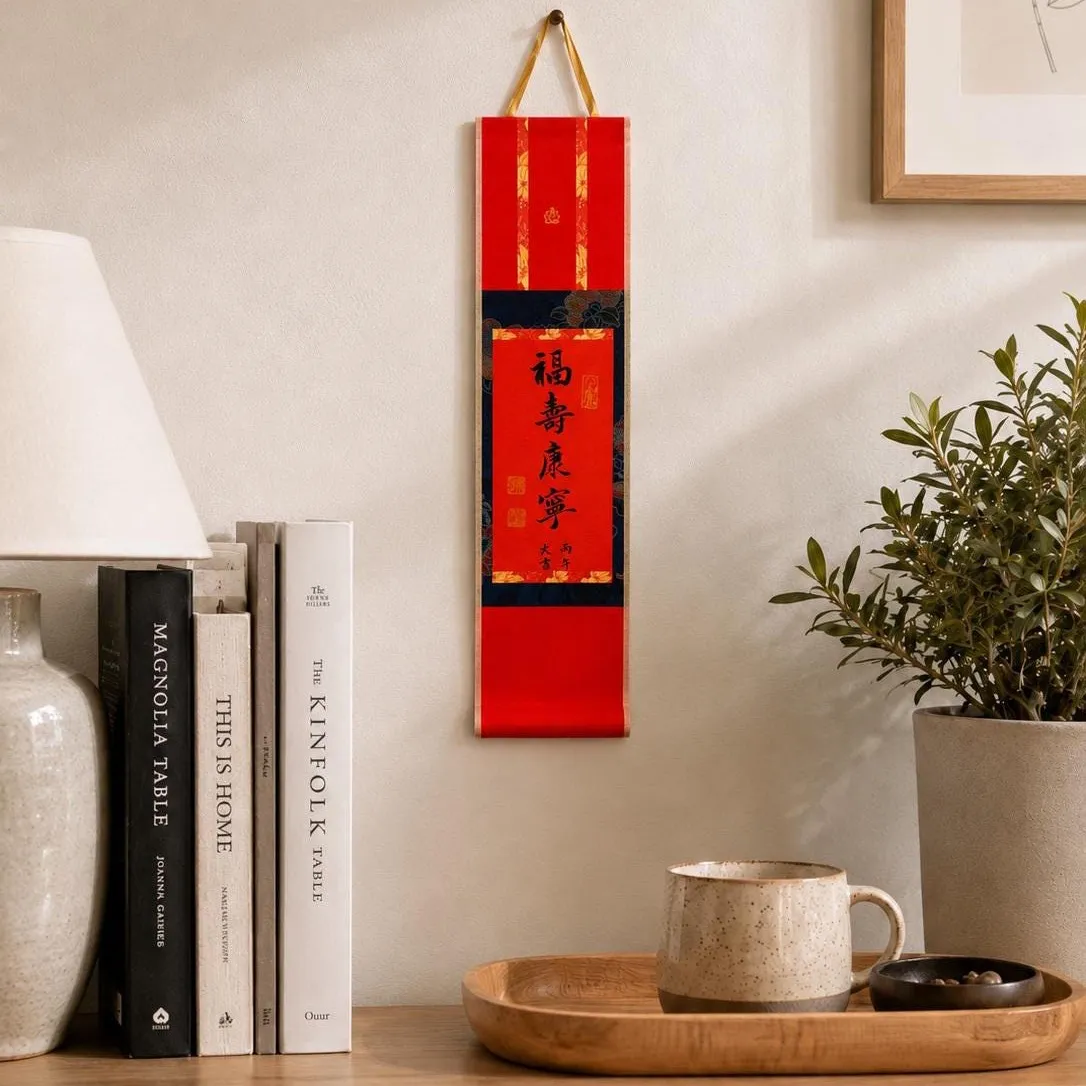
Photo shows a sample — yours will be brushed with 平和, or any character you choose.
Wall Scroll — for walls & housewarmingsfrom $38→ -
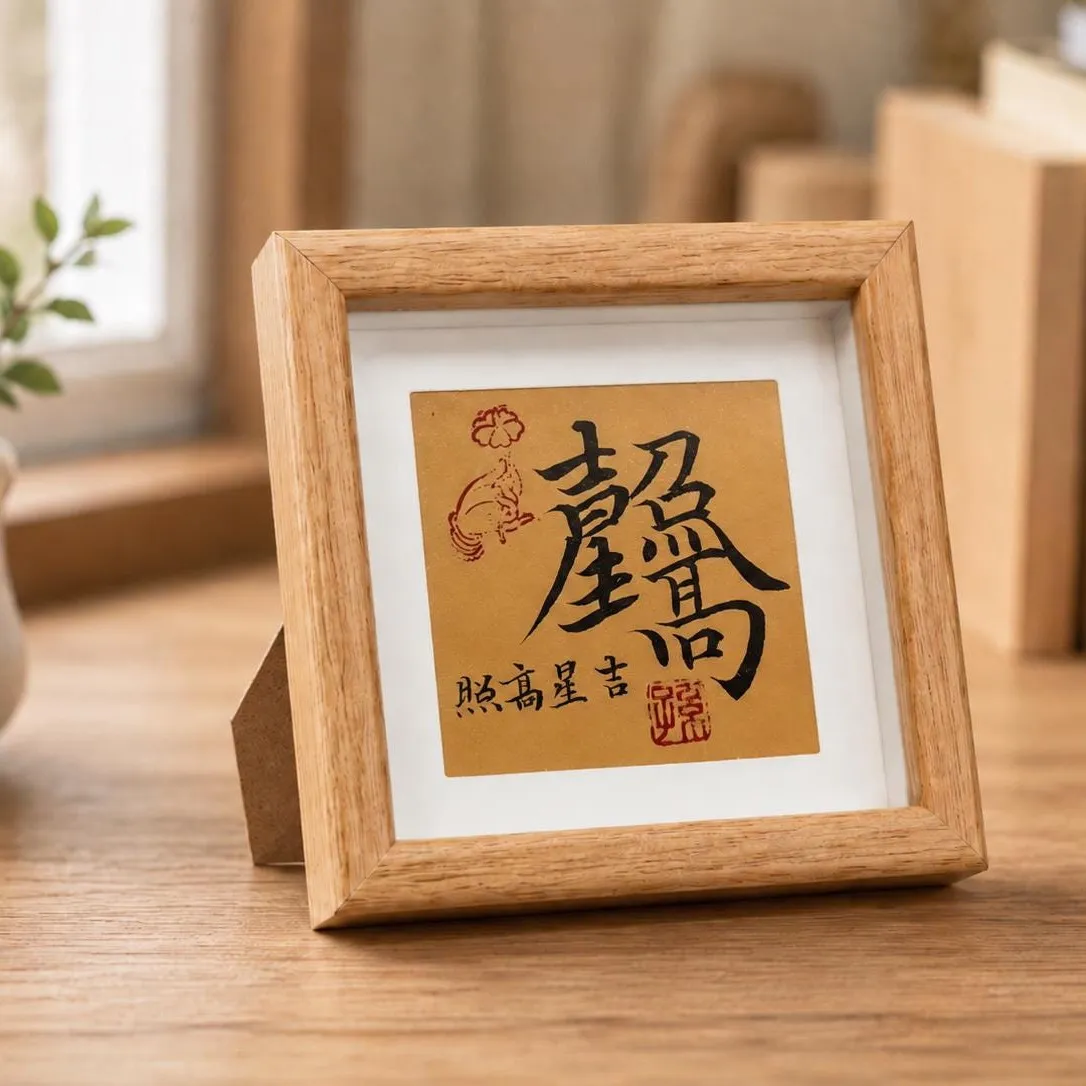
Photo shows a sample — yours will be brushed with 平和, or any character you choose.
Desk Frame — for desks, studies & studiosfrom $44→ -
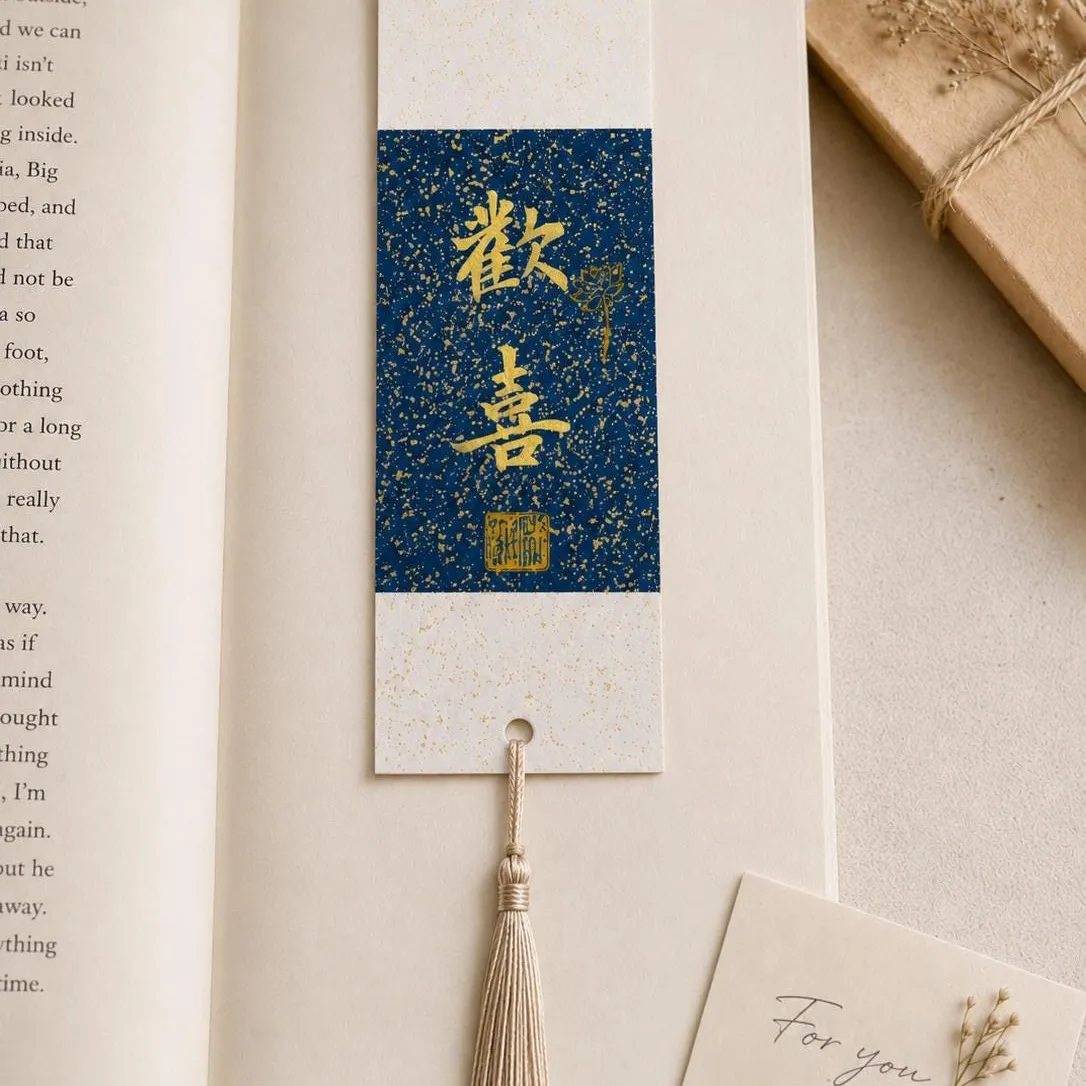
Photo shows a sample — yours will be brushed with 平和, or any character you choose.
Bookmark — for readers & small thank-yousfrom $17→
What people said after it arrived.
-
The item is fantastic. The customer service was genuine. Thanks!
— M.Verified purchase · from our Etsy shop reviews · -
They were great they gave me exactly what I asked for and then some. Thank you!!
— G.Verified purchase · from our Etsy shop reviews · -
It is well designed and customized. My daughter loves it. Amazing gift for family’s d friends
— S.Verified purchase · from our Etsy shop reviews ·
Each "平和" is hand-brushed by Artist Lina Sun on rice paper.
See 平和 (Píng Hé) on Etsy →