五谷丰登 (wǔ gǔ fēng dēng) — Five Grains in Bumper Harvest · Abundance Landing in the Granary
A 4-character phrase, not a single character.
When Mencius names the age of flood, the disaster is harvest grammar before it is weather: 五谷不登 — the five grains fail to 登, fail to come to maturity — and beasts press upon people. 登 in that line is not a climb. It is the agrarian verb for crops ripening and being brought in. 五谷丰登 reverses the failure. The four characters wish the livelihood set a bumper landing: grains full, year readable as a harvest that arrived. Against See 丰 →, which names overflowing measure as a single character, this phrase keeps the five-grains subject and the coming-in verb. Against See 年年有余 →, which turns on a surplus left over (and a fish left on the plate), this one names the crops themselves coming in.
Dictionaries are plain. Moedict and the Ministry’s revised lexicon gloss the idiom as a good year for the various grains — 指丰年 — and mark 五谷丰稔 as an also-form. The Six Strategies antecedent pairs seasonal wind and rain with 五谷丰熟 and a realm at peace; Han Yi Lin lines already run continuous 丰登 for the year’s agricultural outcome. That history is why a New Year couplet or a housewarming inscription can still carry the phrase without borrowing office language or treasure language: it names staple abundance landing, the floor under hall-of-gold pictures and fish-surplus puns alike.
A hand-brushed “五谷丰登” by Artist Lina Sun suits the grandparent whose Spring Festival gift should speak in the granary register, the friend whose year you want full in the household sense, and the new couple whose first kitchen you want provisioned as a harvest that came in. It does not toast a title. It names the five grains, in bumper harvest.
- a good year for the various grains — Moedict / Ministry gloss
- staple-harvest abundance landing in the household year
- the agrarian picture beside New Year's fish and gold-jade couplets
- provision as crops come in, not as coin arrives
- a surplus left on the plate That is 年年有余 — 余 / 鱼, the fish deliberately unfinished. 五谷丰登 names the grains coming in, not a remainder left over.
- gold and jade filling the hall 金玉满堂 pictures the 堂 furnished with treasure and refinement. This phrase stays in the granary and the field.
- a smooth rise to high office 平步青云 and 步步高升 own career elevation. 登 here is harvest maturity, not climbing a rank.
- bare abundance as a single character 丰 already names overflowing measure on its own page. This phrase specifies the five-grains harvest landing that 丰 sits inside at New Year.
The short arms are the point: these readings don’t reach it.
- 五 fiveThe conventional count of the staple-grain set. Lists vary by era; in the blessing, five means the livelihood grains as a whole, not a shopping list.
- 谷 grainsTraditional 穀. Grain / cereal crops — the food that must 登 before a household can call the year full.
- 丰 bumperTraditional 豐. The overflowing measure; already in the library as the single 丰. Here it intensifies the harvest as bumper, not as generic luck.
- 登 come-inCrops mature and are brought in. In 五谷不登 the same verb fails; in 丰登 it succeeds as a full landing.
characters
- 五谷 wǔ gǔ the staple-grain set — the subject the predicate 丰登 reports on
- 丰登 fēng dēng bumper harvest / crops come in full — the predicate half
- 五谷丰稔 wǔ gǔ fēng rěn dictionary-marked 也作 form with 稔 (ripened harvest)
- 风调雨顺 fēng tiáo yǔ shùn wind and rain in season — near weather condition for harvest; shares no character with 五谷丰登
Cinnabar marks the characters 五谷丰登 actually contains. The dark row is a relative by meaning or by sound, not one shared stroke.
The Story Behind the Character
Mencius names the age of flood by a failure of harvest grammar: 五谷不登 — the five grains do not 登 — and then beasts press upon people. 登 here is not climbing. In agrarian Chinese it is the verb for crops coming to maturity and being brought in; when they fail to 登, the livelihood set itself has not landed. That is the load-bearing half of the later blessing. The other half is 丰, the overflowing measure already argued on the library's single-character page: a year whose vessel rounds above the rim.
Dictionaries gloss 五谷丰登 as a good year for the various grains — 各种谷类作物收成好,指丰年 — and mark 五谷丰稔 as 也作. The classical antecedent most often cited is 《六韬·龙韬·立将》, where the received wording is 五谷丰熟,社稷安宁: when wind and rain keep their season, the grains ripen fully and the altars of soil and grain stay at peace. Later speech settled on 丰登 (and sometimes 丰稔) for the same harvest landing. Mencius's other line in the same chapter — 后稷教民稼穑,树艺五谷,五谷熟而民人育 — keeps 五谷 as the livelihood set that feeds people once it ripens, which is why the numeral five never needed updating when households left the fields.
By the Han, continuous 丰登 already appears in the Yi Lin oracle lines (年岁丰登). Ming and Qing fiction then treat 五谷丰登 as ordinary prosperity speech for a realm or a district whose crops have come in. The four characters are a subject and a predicate: the five grains, in bumper harvest. Nothing in the dictionaries licenses a career climb or a fortune effect; the picture is agricultural fullness becoming household provision.
Classical lines
- roughly 250 years
- c. 300 BCE 《孟子·滕文公上》
- c. 4th–3rd c. BCE 《六韬·龙韬·立将》
- c. 1st c. BCE 西汉·焦赣《易林·离之恒》
五谷不登,禽兽逼人。 The five grains failed to come to maturity, and birds and beasts pressed upon the people.
Mencius describing the age of flood: 登 is harvest grammar, not climbing. When the livelihood set does not land, the danger is immediate. The blessing later reverses this exact verb.
是故风雨时节,五谷丰熟,社稷安宁。 Thus when wind and rain keep their season, the five grains ripen fully, and the altars of soil and grain are at peace.
The military classic's picture of a realm at ease after harvest. Idiom books often print 丰登 here; the received text commonly has 丰熟. Same harvest landing, later fixed as 丰登 in living speech.
东风解冻,和气兆升,年岁丰登。 The east wind thaws the ice; mild air begins to rise; the year comes in with a bumper harvest.
An early continuous use of 丰登 for the year's agricultural outcome, already paired with seasonal weather rather than with office or treasure.
Why This Character Matters
On New Year walls the phrase sits next to 年年有余 and 金玉满堂 without doing their jobs. 年年有余 turns on the fish left over (余 / 鱼); 金玉满堂 fills the reception hall with metal and jade. 五谷丰登 keeps the older floor under both: staple food has come in. Urban households still say it because 五谷 long ago widened from named crops to life's necessities, and 丰登 stayed the word for a year that produced enough grain to call the season good.
Calligraphy gifts reach for it when the relationship is household-scale — a grandparent whose New Year should hear the granary register, a friend whose year you want full rather than spectacular, a new couple whose first kitchen you want provisioned. It names harvest abundance landing. It does not toast a promotion and does not leave a fish on the plate.
A few characters live near "五谷丰登" but mean something quieter, sharper, or more specific. Here's how to tell them apart.
Four-character harvest landing — the five grains come in full.
The single character for overflowing measure / bumper fullness in any dimension the year holds.
Abundance as staple crops maturing and arriving.
Abundance as a margin that renews — the surplus (and the fish) left over year after year.
The granary / field register of a good year.
The hall register — gold and jade filling the reception room.
At the lunar New Year the catalog already hangs a hall of gold and jade (金玉满堂) and leaves a fish uneaten for surplus (年年有余).
- At the lunar New Year the catalog already hangs a hall of gold and jade (金玉满堂) and leaves a fish uneaten for surplus (年年有余). 五谷丰登 names the older agrarian picture those two sit beside: the staple grains coming in full, the year read as a harvest that landed. Moedict's gloss is plain — a good year for the grains. For the household whose Spring Festival gift should speak of fullness in the granary register, not of treasure in the hall and not of a cushion left on the plate.
- A new address needs more than warm relations (家和) and a well-furnished hall (金玉满堂). 五谷丰登 wishes the home the harvest kind of provision — the five grains come in, the cupboards and the year are not thin. For a couple or family just starting to keep their own kitchen, it names material fullness as crops landing, not as coin arriving.
Grandparent · Friend · New Couple · or yourself
Looking for a name? See Western names written in Chinese →
-
What does 五谷丰登 (wǔ gǔ fēng dēng) mean?
五谷丰登 (wǔ gǔ fēng dēng) is a 4-character Chinese phrase for five grains in bumper harvest, abundance landing in the granary. When Mencius names the age of flood, the disaster is harvest grammar before it is weather: 五谷不登 — the five grains fail to 登, fail to come to maturity — and beasts press upon people. 登 in that line is not a climb. It is the agrarian verb for crops ripening and being brought in. 五谷丰登 reverses the failure. The four characters wish the livelihood set a bumper landing: grains full, year readable as a harvest that arrived. Against See 丰 →, which names overflowing measure as a single character, this phrase keeps the five-grains subject and the coming-in verb. Against See 年年有余 →, which turns on a surplus left over (and a fish left on the plate), this one names the crops themselves coming in. On New Year walls the phrase sits next to 年年有余 and 金玉满堂 without doing their jobs. 年年有余 turns on the fish left over (余 / 鱼); 金玉满堂 fills the reception hall with metal and jade. 五谷丰登 keeps the older floor under both: staple food has come in. Urban households still say it because 五谷 long ago widened from named crops to life's necessities, and 丰登 stayed the word for a year that produced enough grain to call the season good.
-
What occasions is 五谷丰登 given for?
五谷丰登 is traditionally given for Chinese New Year, Housewarming. At the lunar New Year the catalog already hangs a hall of gold and jade (金玉满堂) and leaves a fish uneaten for surplus (年年有余). 五谷丰登 names the older agrarian picture those two sit beside: the staple grains coming in full, the year read as a harvest that landed. Moedict's gloss is plain — a good year for the grains. For the household whose Spring Festival gift should speak of fullness in the granary register, not of treasure in the hall and not of a cushion left on the plate. A new address needs more than warm relations (家和) and a well-furnished hall (金玉满堂). 五谷丰登 wishes the home the harvest kind of provision — the five grains come in, the cupboards and the year are not thin. For a couple or family just starting to keep their own kitchen, it names material fullness as crops landing, not as coin arriving.
-
Who brushes the 五谷丰登 calligraphy?
Each 五谷丰登 (Wǔ Gǔ Fēng Dēng) is hand-brushed to order by Artist Lina Sun in ink on rice paper — never printed, never repeated.
Bring 五谷丰登 home — choose how you'd like it brushed.
-
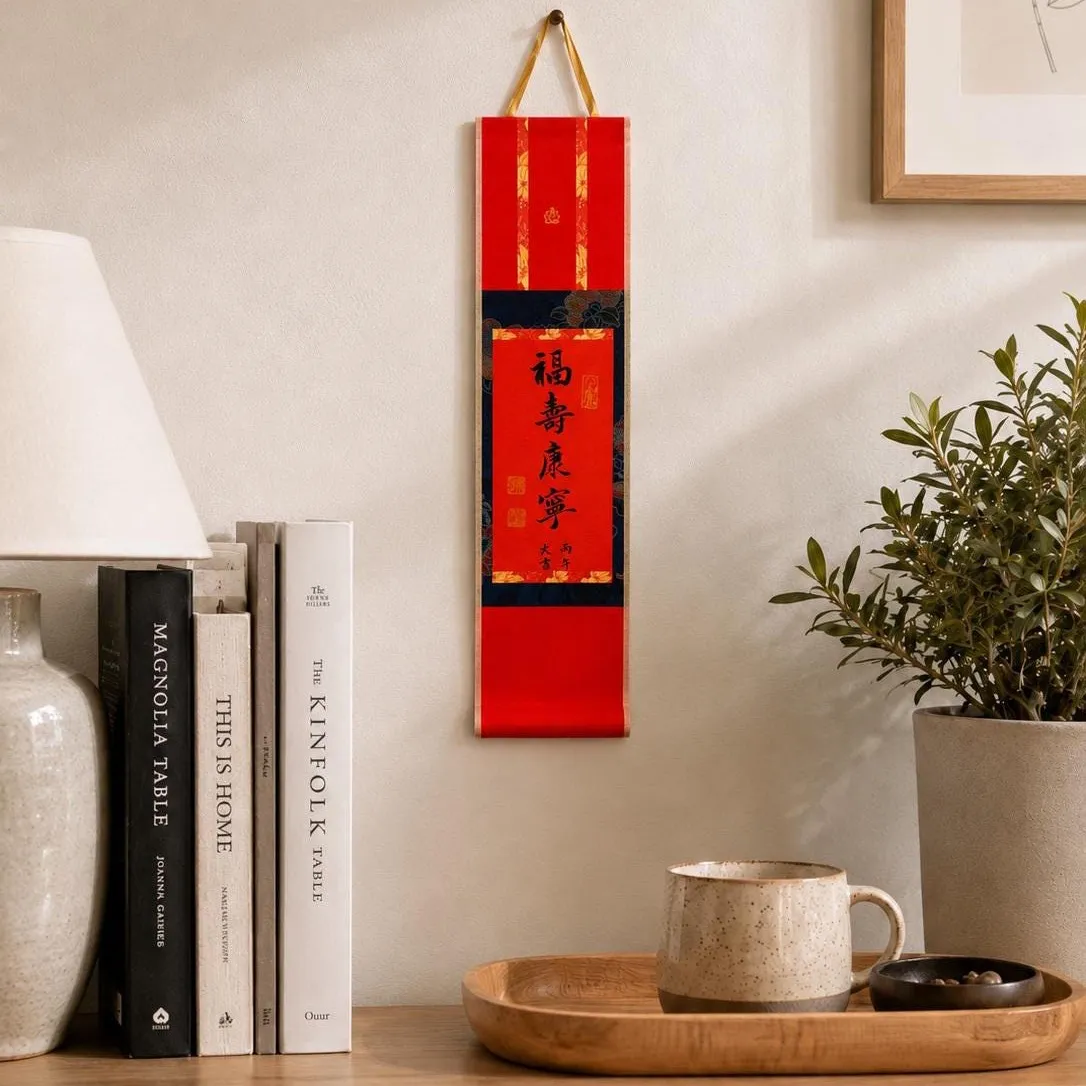
Photo shows a sample — yours will be brushed with 五谷丰登, or any character you choose.
Wall Scroll — for walls & housewarmingsfrom $38→ -
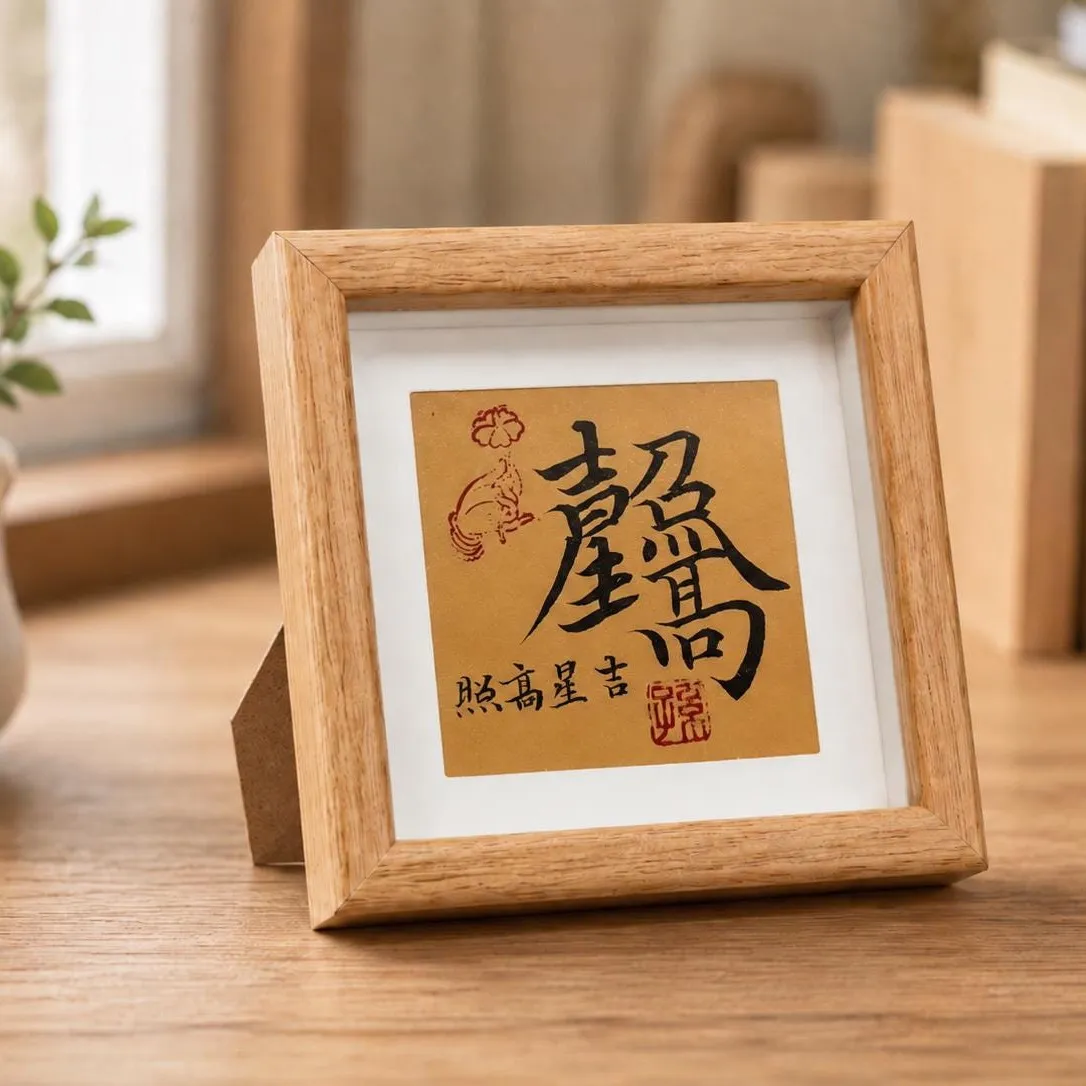
Photo shows a sample — yours will be brushed with 五谷丰登, or any character you choose.
Desk Frame — for desks, studies & studiosfrom $44→ -
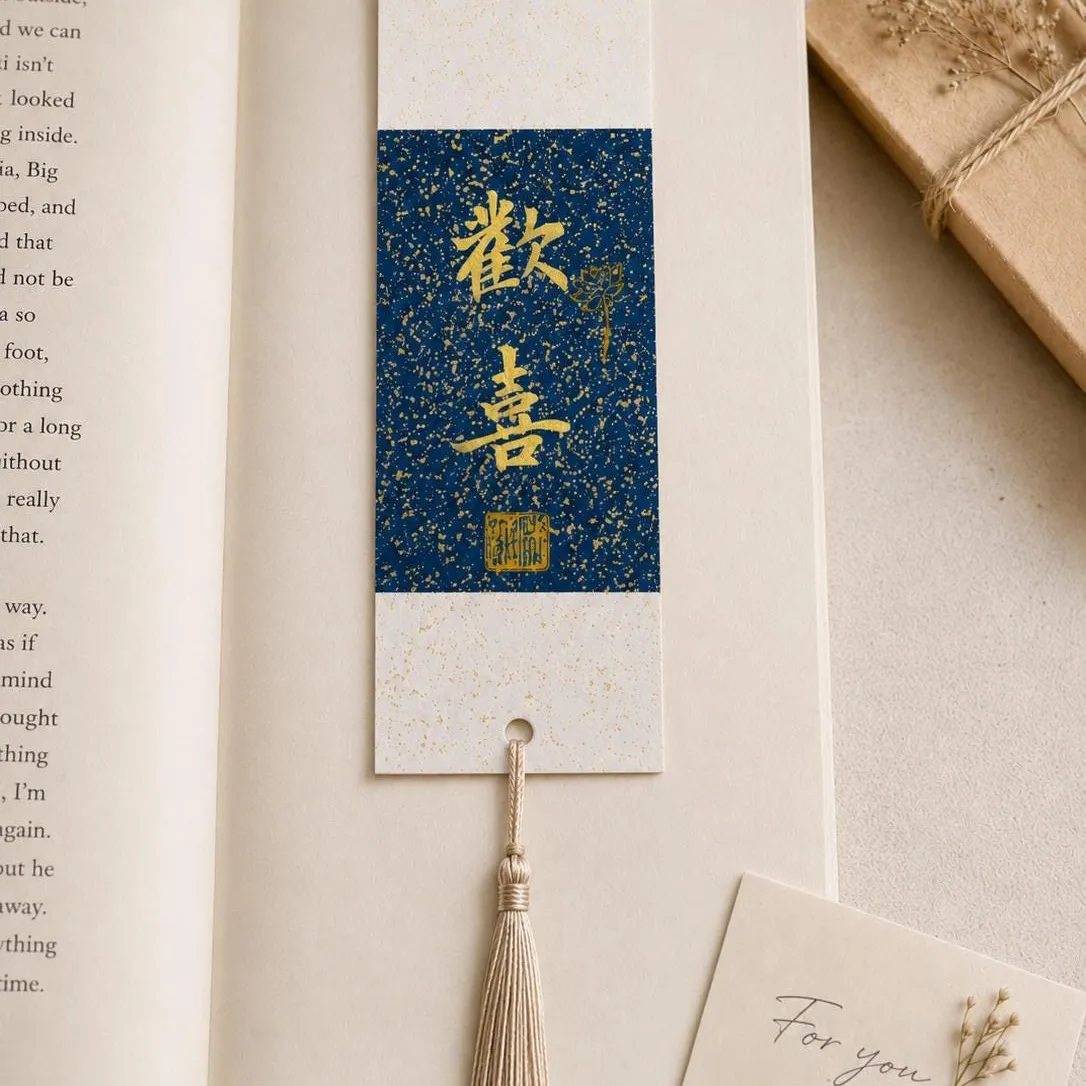
Photo shows a sample — yours will be brushed with 五谷丰登, or any character you choose.
Bookmark — for readers & small thank-yousfrom $17→
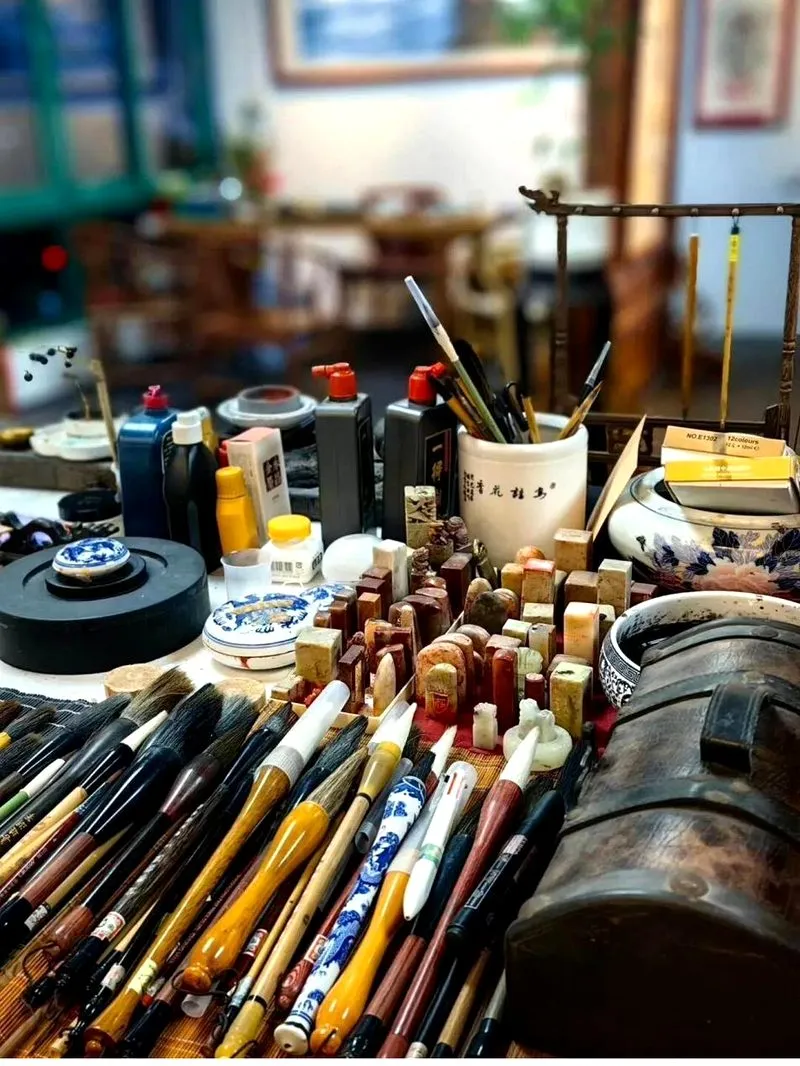
What people said after it arrived.
-
The item is fantastic. The customer service was genuine. Thanks!
— M.Verified purchase · from our Etsy shop reviews · -
They were great they gave me exactly what I asked for and then some. Thank you!!
— G.Verified purchase · from our Etsy shop reviews · -
It is well designed and customized. My daughter loves it. Amazing gift for family’s d friends
— S.Verified purchase · from our Etsy shop reviews ·
Each "五谷丰登" is hand-brushed by Artist Lina Sun on rice paper.
See 五谷丰登 (Wǔ Gǔ Fēng Dēng) on Etsy →