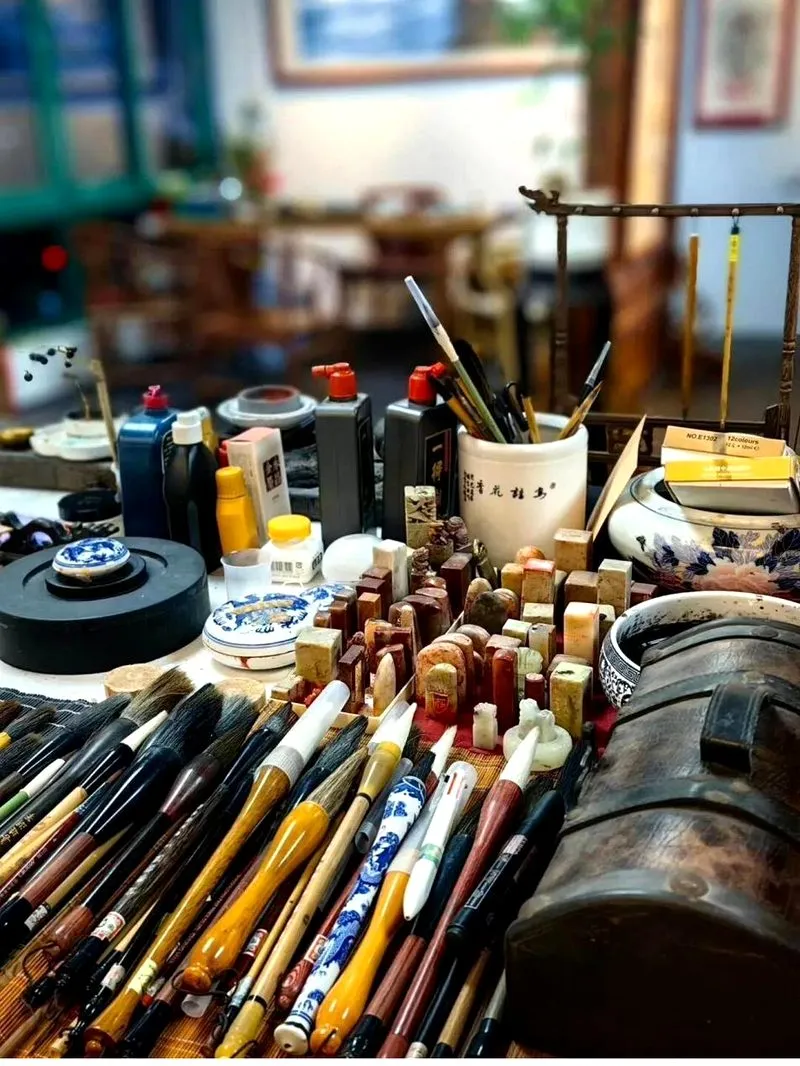
Valentine's Day Gifts
Chinese characters for the kind of love that doesn't need flowers to prove itself.
Recommended characters
美 (Měi) — Beauty
For the partner you have known long enough to see clearly. 美 says something 爱 does not — not the feeling but the observation: that the person opposite has a quality, accumulated and specific, that this occasion is the right moment to name.
花好月圆 (Huā Hǎo Yuè Yuán) — Flowers in Full Bloom · Moon Full and Round
For Valentine’s Day when the gift should place the occasion in a larger frame — not the feeling between two people but the condition of the world around them. 花好月圆 says: the flowers are at their best and the moon is full, which is the Chinese way of saying this moment is exactly right. Unlike 美, which names a quality of the person, 花好月圆 recognizes the occasion itself as a moment of natural completeness: both what grows from the earth and what hangs in the sky are fully themselves, and the relationship exists inside that fullness.
温 (Wēn) — Warmth
For Valentine’s Day when the gift should name the warmth that outlasts heat — not the intensity of new romance but the steady temperature a long love settles into. 温 is the quality the Classic of Poetry compared to jade: 温其如玉, gentle as jade, warm to the touch and smooth to be near. Unlike 美, which names a quality you observe in your partner, 温 names how it feels to be with them — the warmth you have stopped noticing only because it never goes out.
圆满 (Yuán Mǎn) — Completeness · Perfect Wholeness
For Valentine’s Day when the gift should name what love hopes finally to become rather than the warmth or beauty of the present — not a spark but a completed whole, two lives brought all the way round with no gap where something should be. Where 温 names the steady warmth of a long love and 美 names a quality you observe, 圆满 names its rounded destination: the satisfying shape of a love that lasts until the circle is full, the moon at the fifteenth rather than the first. For the partner with whom you want the whole of a life to come round.
温润 (Wēn Rùn) — Warm and Smooth as Jade
For Valentine’s Day when the gift should name not the spark but what warmth becomes once it has had years to wear smooth. 温润 binds the warmth of 温 to the smooth, nourishing luster of 润, and names the texture jade is loved for — warm to the touch, smooth to live with, a glow that comes from within. Where 温 names the steady warmth of a long love and 美 names a quality you observe, 温润 names the feel of being loved by someone for years: 温润如玉, warm and smooth as jade, the highest thing Chinese says of a tender character. For the partner whose affection long ago stopped running hot or cold and settled into something even.
淳 (Chún) — Genuine and Unadorned
For Valentine’s Day when the gift should name not the warmth or the spark but the honesty underneath — the love that was never performed, that needed no grand gesture because it was exactly what it appeared to be. Where 温 names the steady warmth of a long love and 美 names a quality you observe, 淳 names the plainest and rarest thing: affection with nothing added, 淳朴, genuine to the grain. The character for the partner whose love you trust precisely because it never once ran on show — the truest fit for a day about the love that doesn’t need flowers to prove itself.
美满 (Měi Mǎn) — Happy and Full
For Valentine’s Day when the gift should name the far shore love hopes to reach rather than the spark of the present — not romance but the settled, brimming happiness of a shared life that turned out well: 幸福美满. Where 圆满 names love’s rounded destination and 温 the steady warmth of a long love, 美满 names its fullness — 美, good and fine, joined to 满, filled to the brim, love grown into a home and a good one. For the partner with whom you want not the thrill of the first night but the fullness of a life built together, happy and complete.
永恒 (Yǒng Héng) — Eternal · Everlasting
For Valentine’s Day when the gift should reach past the warmth of the present and name the one thing the day is secretly asking: will this last? The Valentine’s page is full of words for the present — 温 (the steady heat of a long love), 美 (a quality you observe), 淳 (honesty underneath) — and 永恒 reaches past all of them to the promise of foreverness. It is the word behind every oath in the tradition, from the Han folk singer who swore to love 长命无绝衰 — without end, without fading — until the rivers run dry and summer thunders with snow. For the partner you want to promise not the feeling of tonight but a love placed beyond the reach of time.
幸福美满 (Xìng Fú Měi Mǎn) — Happy and Complete
For Valentine’s Day when the gift should name not the spark but the far shore love hopes to reach. The Valentine’s page holds words for the present — 温 (steady heat), 美 (a quality observed), 淳 (honesty underneath) — and 幸福美满 reaches past them to the whole life those are meant to become: a home built together, happy and full, and kept from harm. It doubles the wish — 幸福, well-being with calamity stayed away; 美满, a household good and brimming — and it is domestic and long, love grown into a fortunate life rather than the thrill of one night. For the partner you want to promise not tonight but a shared life that turns out both blessed and complete.
婉 (Wǎn) — Gentle in the Turn
For the Valentine’s gift that names how your partner says things rather than what they are. Most of this page faces the feeling head-on: 美 observes a quality, 温 names the steady heat, 永恒 promises the duration. 婉 makes the opposite case. Song 词 has an entire school named for this character — 婉约 — whose working method was to write about the weather in order to write about a person, and which produced a large share of the love poetry Chinese still has by heart. The argument underneath it is that the oblique route carries further than the direct one. For the partner whose particular way of putting things is the part you would have the most trouble explaining to anyone else.
同心 (Tóng Xīn) — Of One Heart
For the Valentine’s gift given by someone who distrusts the holiday. This page runs almost entirely on feeling and on the beloved: 美 the quality you observe, 温 the steady heat, 婉 her way of putting things, 淳 the realness, 永恒 the promise that it lasts. 同心 says nothing about how anyone feels or what anyone is like. It says the two of you are building the same thing — the least flattering claim available on February 14th, and the hardest to fake. The tradition even supplies an object for it: the 同心结, the knot of one heart, which Chinese love poetry hands over precisely when the thing itself cannot be said out loud. For the partner who would be more moved by being called a partner than by being called beautiful.
相濡以沫 (Xiāng Rú Yǐ Mò) — Two Fish, and Very Little Water
Two entries on this page decline to be romantic, and they decline in different directions. 同心, just above, talks about where the two of you are headed instead of how anyone feels. 相濡以沫 talks about a particular bad year — the layoff, the illness, the stretch when one of you was not fine and the other did not leave. Its picture is not a rose: it is two fish stranded after the water ran out, keeping each other from drying out with what little is left in them, and the reason 《庄子》‘s image has held for twenty-three centuries is the cost built into it — what one gives is the last moisture it has itself. Chinese reaches for these four characters exactly when the romance vocabulary would be embarrassing, which is why they survive in toasts where 甜蜜 would not. 美 observes a quality, 温 names the steady heat, 永恒 promises the duration. This one says there was a bad year and you were what I had. For the couple who came through something, and would rather have that named than be told they are lovely.
岁月静好 (Suì Yuè Jìng Hǎo) — What the Flowers Are Standing In For
February gifts are mostly perishable, and the language that comes with them mostly declares something. 岁月静好 makes no claim about the two of you at all. It describes the time you have been spending — that it has been quiet, and that the quiet has been good — which is the condition the rest of the day’s vocabulary is standing in for. 永恒, further up this page, promises duration; this one promises nothing and reports on what is already there. It also solves the practical problem with 情人节 gifts, which is that most of them are gone inside a week: four characters on a small framed piece outlast the flowers by decades and say the more accurate thing. Best for couples long past needing to prove anything, and genuinely wrong for a new one, which has not yet accumulated any 岁月 to describe.
柔 (Róu) — Yielding, Understood as the Winning Move
以柔克刚 — beat force by giving way to it — is this character’s most famous four characters in Chinese, the organizing principle of 太极拳 and, transplanted into Japanese, the name of both 柔道 and 柔术. It is a claim about technique rather than about temperament, and that is what makes it usable on a February gift. 温润, above, names the texture a long marriage wears into two people; 柔 names what one of them does when the force actually lands — takes it, and does not send it back. Read it as an admission as much as a compliment. It says you know which of you has been doing that, and roughly how often.
缘 (Yuán) — Before Anyone Is Ready to Say 永恒
What this day asks for is a declaration, and most of the characters here supply one — a bond placed past the clock, a dry season already survived together. Each needs either a future to promise or a long enough past to draw on. 缘 needs neither. It says only that the two of you meeting was arranged by neither of you, which is one of the things couples say most readily about their own beginning (我们真有缘) and one of the few that is as true on the first Valentine’s Day as on the fortieth. The word will not overreach, because the language keeps 有缘无分 for the case where a meeting led nowhere. For the early years, when a promise would be premature and the accident of meeting is still the most remarkable thing either of you can point to.
天长地久 (Tiān Cháng Dì Jiǔ) — For When 永恒 Is No Longer Too Big
缘, directly above, belongs to a couple who cannot yet make a claim about duration without overreaching. These four characters sit at the far end of that same shelf, and they are easier to say honestly than 永恒 is. 永恒 places a bond outside time, which is a claim about a category and takes a certain nerve to make out loud. 天长地久 stays inside the world: it sets a term against the sky and the ground, and 白居易 could write that even those come to an end without anybody objecting. What it offers is a comparison rather than an absolute — which is why it survives being said on an ordinary evening, in a small flat, by somebody who would feel ridiculous saying 永恒.
长情 (Cháng Qíng) — The Fifteen Februaries Behind This One
天长地久, directly above, asks the sky and the ground for a span nobody has yet had. This reports one that has already been had, by one of you. The distinction matters in February more than it does on any other day, because everything the evening sells can be obtained on the evening — bought, booked, or meant hard enough — and of the words the evening reaches for, this is the one that cannot be hurried by wanting it. 痴情 and 深情 name the feeling at full volume and are available on a fourth date. This names it at low volume and will not be available to anyone for another decade. For the couple who are already holding the only currency it accepts.
琴瑟 (Qín Sè) — Not the Evening, the Music
Valentine’s Day is designed to make tonight carry everything. 花好月圆 blesses the moment; 长情 hands the weight back to the years behind one person. 琴瑟 names the couple’s ongoing music — the revised dictionary’s marital sense — instead of the florist’s single night. For the February when what you want on the wall is the shared playing, not a claim about how dramatic this evening was.
悦 (Yuè) — The Pleasure Already in the Room
February is stocked with declarations. 美 observes a quality you have had time to see. 琴瑟 names the shared playing, past a florist’s single night. 花好月圆 sets flowers and a full moon around the two of you, and that moon is yuè, the same Mandarin syllable as this character and a different word. 悦 is the heart’s report that one person is pleased by the other. 敬请悦纳 is how a formal note asks someone to accept a gift with that pleasure. A card in the single character says the pleasure is already the case. It leaves the wedding drum unused, and it leaves the moon in the other phrase.
爱 (Ài) — Love · Affection · Devotion
Beyond flowers and chocolates — a meaningful gesture for the one who holds your heart.
See 爱 →和 (Hé) — Harmony · Balance · Togetherness
For the partner whose presence makes ordinary days feel whole. 和 names the harmony between two people — the balance that holds when the celebration is over.
See 和 →喜 (Xǐ) — Joy · Happiness · Celebration
For the person whose presence is itself a celebration. 喜 names the joy that comes from being together — the warmth that spills over and must be shared.
See 喜 →青青子衿 (Qīng Qīng Zǐ Jīn) — Your Blue-Green Collar · Longing for a Cherished One
The original poem is a love poem — a woman waiting by the city gate, pacing, unable to eat, thinking of nothing but the blue-green collar of the man she longs for. As a gift, 青青子衿 carries nearly three thousand years of that ache.
See 青青子衿 →Bring a hand-brushed piece home — choose how you'd like it brushed.
-
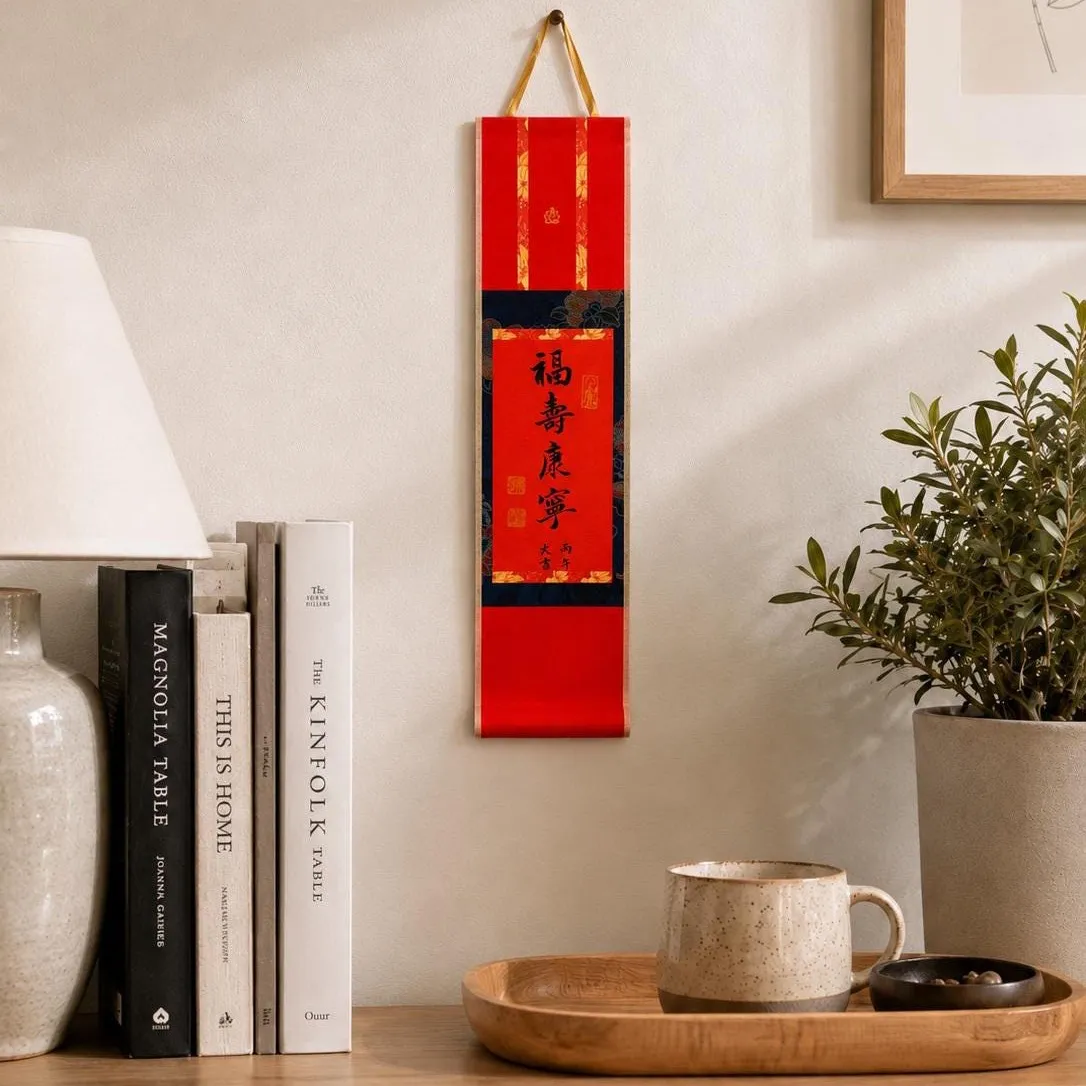
Photo shows a sample — yours will be brushed with the character you choose.
Wall Scroll — for walls & housewarmingsfrom $38→ -
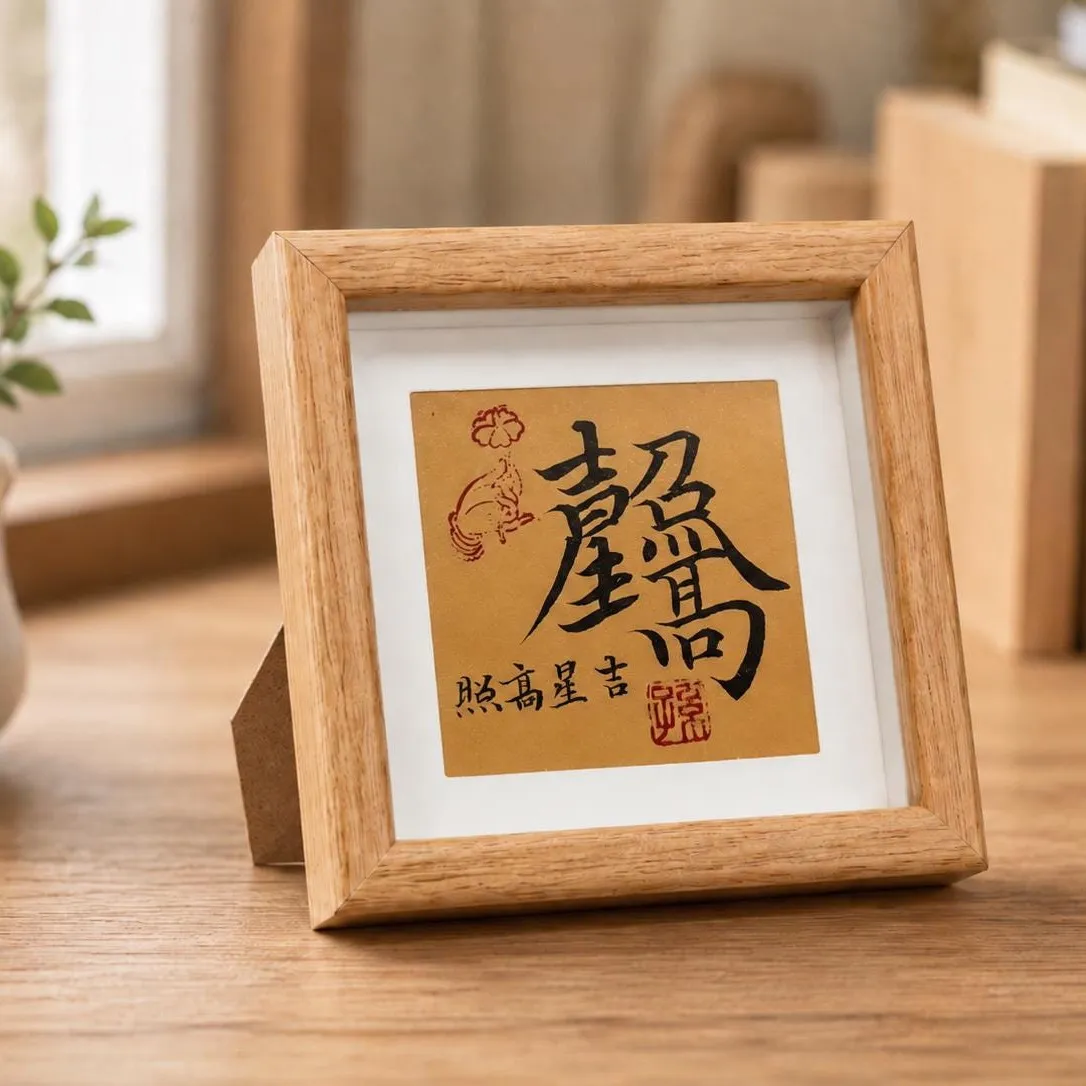
Photo shows a sample — yours will be brushed with the character you choose.
Desk Frame — for desks, studies & studiosfrom $44→ -
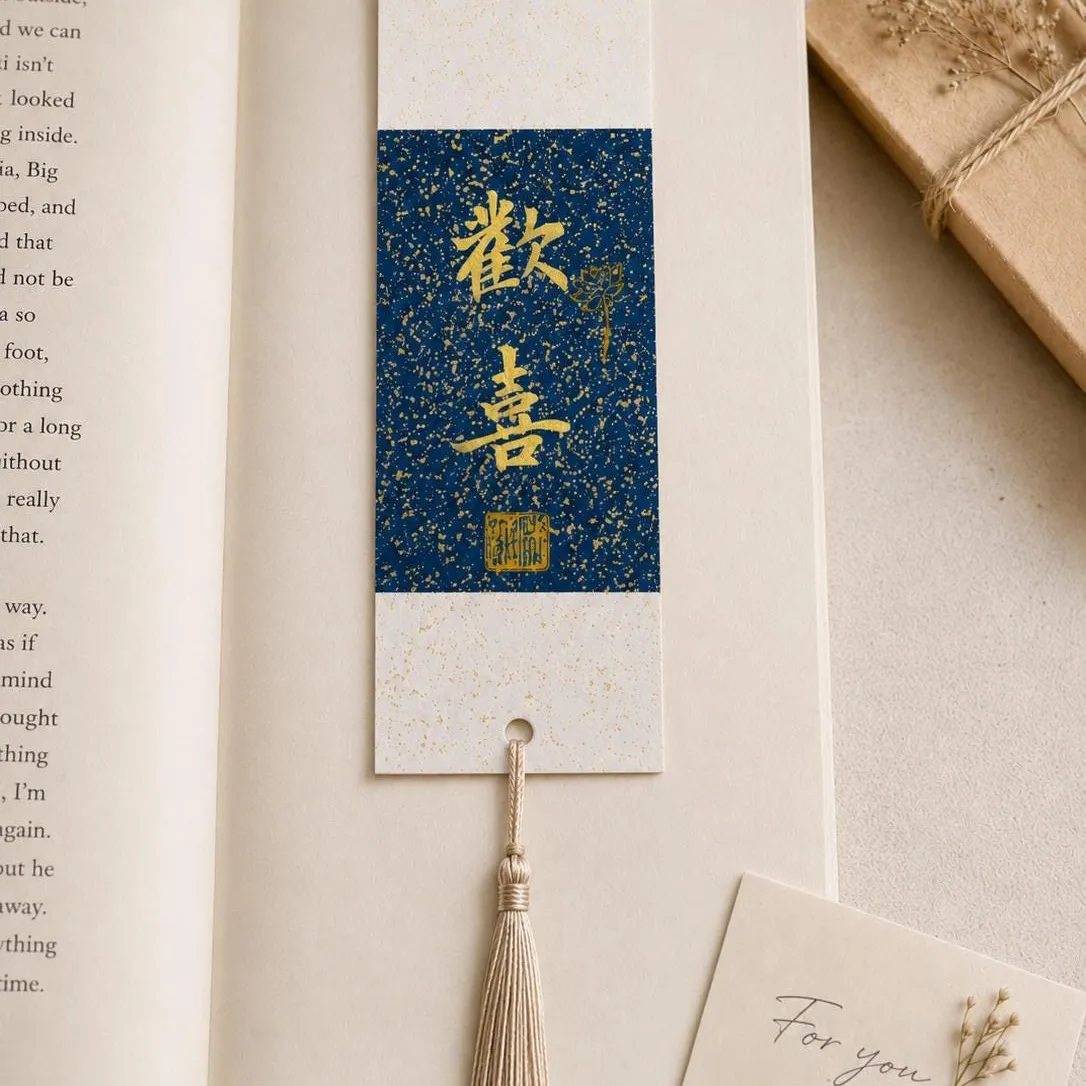
Photo shows a sample — yours will be brushed with the character you choose.
Bookmark — for readers & small thank-yousfrom $17→