善缘 (shàn yuán) — Good Affinity · A Connection Formed Well · The Tie You Can Go Out and Make
Two characters, and the first is not a mood. 善 grades competence here, the way it does in 善战 — good at fighting, said of a general. How the tie feels is not what is being said.
The word comes with a verb, and the verb comes first. 结善缘 — tie one; 广结善缘 — tie them widely. Both are things a person can be told to do on a Tuesday afternoon, which is not true of 缘 on its own — nobody can be instructed to have met the right person. See 缘 → 善 is what makes the instruction possible, and it is not describing how the connection feels. It grades how it was made, and workmanship is settled at the time. See 善 → What the compound names is the half of a connection that is actually yours: you decide how you leave things, and then you hand the rest over.
It shows up wherever the leaving-things-well is visible and the return is not. Temples still put out beans at 浴佛节 for passers-by who will never be identified. 拜年 sends people to the second and third rings of doors in the week after New Year, the ones nobody would notice being skipped. An older relative tells someone starting a first job 广结善缘, and means something plainer than it sounds: treat no dealing as the last one. In every case the instruction stops at the conditions. None of these phrases claims that anything will come back, and the person who takes the advice for forty years usually cannot say which of the ties mattered.
A hand-brushed “善缘” by Artist Lina Sun suits the friend whose circle is the honest record of how they have spent their life, the person who keeps up with people long after the reason for it has gone, or the grandparent who gave this advice to someone before it made any sense to them. It makes no promise about what the connections will return. It says the making was done well.
- a connection formed well — the making graded, not the feeling
- goodwill put in place before there is anything to collect on
- 广结善缘 — the instruction to form them widely, given to someone starting out
- the acquaintance who turns out, years on, to have been the hinge
- a wholesome condition: 善 for skilful, 缘 for what stands alongside
- networking Networking keeps a ledger and knows roughly what it is owed. 善缘 hands the ledger over — you settle how the tie is made and then have no access to what it comes to. The word 孽缘 exists precisely because a connection can be worked at with full attention and still turn out badly.
- good karma 业 is the act and what it leaves on the person who did it. 缘 is the condition standing beside a cause, belonging to nobody in particular. 善缘 grades that condition, not an account in your name, which is why it is something two people are said to have rather than something one person has earned.
- a good relationship 关系好 reports the current temperature between two people. 善缘 makes no claim about today at all — it says how the thing was made, which is a statement about the past and survives a year of not speaking.
- soulmate That is 有缘人, and it is singular and load-bearing. 善缘 is plural and mostly minor: a hundred small ones, most of which never become anything, described in the same words as the one that did.
The short arms are the point: these readings don’t reach it.
- 善 well made — the grade, applied to the forming说文解字 defines 善 as 吉也 and builds it from 誩 with 羊, and its working range in classical Chinese is wider than good: 善 is also what you say of someone skilled at a thing. That is the sense operating here. The compound grades the workmanship of the connection, not how it feels to be in it.
- 缘 the condition running alongside — not the outcome说文 gives it as 衣純也, the band along a garment's edge, and the Buddhist translators took it for pratyaya, the condition that has to stand nearby before anything can come of a cause. Both senses are the same shape: something held alongside something else, for a while.
characters
- 广结善缘 guǎng jié shàn yuán to form good connections widely — the four-character instruction, and the only compound here that lights both characters
- 结缘 jié yuán to tie a connection — the bare verb, neutral about what kind
- 随缘 suí yuán to take the conditions as they fall — the word for stopping, and the only member of this list that asks nothing of you
- 孽缘 niè yuán a tie formed badly and hard to cut — the word that proves 善 is grading something
- 善举 shàn jǔ a well-made act — 善 doing the same work of grading, on a deed instead of a tie
- 积德 jī dé to put virtue away — the same habit of acting well and letting someone else do the counting; related by sense, and sharing no character with 善缘
- 人脉 rén mài the veins of people running through a career — the modern ledger-keeping cousin, related by sense only and sharing no character, which is the whole distance between them
Cinnabar marks the characters 善缘 actually contains. The dark row is a relative by meaning or by sound, not one shared stroke.
The Story Behind the Character
On the eighth day of the fourth month, in the Beijing of the 1630s, people boiled beans and gave them away on the street. 刘侗 and 于奕正 wrote the custom down in 《帝京景物略》 in 1635: a handful of beans, one recitation of the Buddha's name over each bean, then the beans cooked and offered to whoever was passing. Eating one made a connection. Nearly three centuries later 富察敦崇 recorded the same practice still running in 《燕京岁时记》 (1906), and he is careful about who was doing it: 都人之好善者, the charitable people of the capital, handing out what he calls 舍缘豆 — beans of given connection. Nobody in that transaction knows who anyone is, and nobody finds out what came of it. What the custom demonstrates is the grammatical fact underneath this word: a 缘 can be handed over. You can do it before lunch.
That is not true of 缘 by itself, which is the difficulty the compound had to solve. Left alone the character reports rather than acts: it is a finding entered once the meeting is over and its consequences are in, and a finding is not something anyone can be told to go and produce. What 善 does to it is change the tense. 善 attaches to the making, and the making happens at a moment somebody is present for — which is how a word whose whole grammar points backward ends up with an imperative in front of it.
善 is the grade, and the grade lands on the forming rather than on the feeling. In the same translation workshops 善 was taking on kuśala, which is closer to skilful than to morally nice — competent, wholesome, done in a way that works. So 善缘 does not mean a connection that is pleasant. It means one that was made well, which is why the compound survives in ordinary speech attached to a verb: 结善缘, to tie one, and 广结善缘, to tie them widely. 缘 keeps the accounting, and the accounting stays out of your hands. 善 is the part you are responsible for, and it is settled at the moment of the making, long before anyone can say what the tie was worth.
Classical lines
- roughly 1,000 years
- c. 4th–3rd c. BCE 《周易·系辞下》
- c. 410 CE 陶渊明《移居二首·其一》
- c. 8th c. CE 王维《终南别业》
善不积不足以成名,恶不积不足以灭身。 Good that is not accumulated is not enough to make a name; bad that is not accumulated is not enough to destroy a man.
The sentence is about arithmetic, not about morality, and the clause after it is blunter still: the small man leaves a small good undone because he judges it of no benefit. What the line establishes is that 善 is a running total rather than an event, which is the premise 善缘 is built on — no single one of them is supposed to be worth anything on its own.
闻多素心人,乐与数晨夕。 I had heard there were many plain-hearted people there, and I wanted to count out mornings and evenings with them.
陶渊明 explains in the two lines before this one that he had long wanted to live in 南村, and not because he had consulted anyone about the site — 昔欲居南村,非为卜其宅. He moved for the neighbours. It is the most practical account of good company in Chinese poetry: you find out where such people are, and then you go and live near them.
偶然值林叟,谈笑无还期。 By chance I meet an old man of the woods; we talk and laugh, and no hour is set for going back.
The poem has just walked to the end of a stream and sat down to watch the clouds come up, and this is what the walk produces. Nothing is arranged and nothing is exchanged. The couplet is the picture the language keeps returning to for an encounter that turns into something: two people who were not looking for each other, and an afternoon nobody decided to end.
Why This Character Matters
There is a standard word for a tie that was formed badly and will not come apart: 孽缘. It is not obscure or literary — it is what people say about the relationship everyone around it could see was wrong and nobody in it could leave. 恶缘 covers the same ground in a more scriptural register, where the word came from. The verb works identically across all of them; 结 ties a 善缘 and a 孽缘 with equal ease, and grammar offers no hint about which is being made at the time. This is what keeps 善 in 善缘 from being ornamental. If every connection counted as good, the word would be saying nothing, and Chinese would not have needed the other two.
In ordinary speech 广结善缘 is advice, usually given by someone older to someone starting out, and it is more practical than it sounds. What it warns against is 把路走窄 — narrowing the road — by treating each dealing as though it were the last one you would have with that person. The instruction does not ask for warmth and does not promise a return; it asks that the conditions be left in good order. 惜缘, to hold a connection carefully once it exists, and 随缘, to stop forcing one that does not, cover the two cases after the fact. 结善缘 is the only one of the three you can act on this afternoon, and it is the only one that never tells you whether it worked. People who have been given the advice and taken it generally cannot point to which of the ties paid off, which is the ordinary experience the word is built to describe rather than a shortcoming in it.
A few characters live near "善缘" but mean something quieter, sharper, or more specific. Here's how to tell them apart.
a grade on how the tie was made, available at the time of making
the tie itself, and a reading nobody can return until afterwards
the workmanship of a connection between two people
a quality resting on one person, with nobody else required for it to be true
what you left in good order between yourself and someone else
what has accumulated in you, whether or not anyone was there to receive it
the particular ties, countable, each with a name attached
the disposition toward people in general, which needs no particular person to be in the room
The room is the record, and the room was built.
- Most birthday words are about the person — their patience, their years, the luck they have had. 善缘 is about the room. It names the people who are standing in it because at some point this person answered a message they could have left, drove somewhere they did not have to, or kept up with someone after the shared job ended. None of that showed up as an achievement in any year it happened. It shows up as who came. For the friend whose address book is the honest record of how they have spent thirty or sixty years, the word says the one thing a birthday rarely gets around to saying: that this was built, and that building it was work.
- 拜年 is a week of showing up at doors, and the doors are chosen. Nothing obliges anyone to make the second round of visits — the colleague from two jobs ago, the neighbour who moved across the city, the cousin nobody is close to — and those are exactly the ties that thin out if a year goes by without them. 善缘 is the word for what that week maintains. Hung at New Year it reads less as a wish for the twelve months than as a note on how the last twelve were spent, which suits a gift given at the one moment when the whole extended circle is physically in front of you and countable.
Best Friend · Friend · Grandparent · or yourself
Looking for a name? See Western names written in Chinese →
-
What does 善缘 (shàn yuán) mean?
善缘 (shàn yuán) is a two-character Chinese word for good affinity, a connection formed well, the tie you can go out and make. The word comes with a verb, and the verb comes first. 结善缘 — tie one; 广结善缘 — tie them widely. Both are things a person can be told to do on a Tuesday afternoon, which is not true of 缘 on its own — nobody can be instructed to have met the right person. See 缘 → 善 is what makes the instruction possible, and it is not describing how the connection feels. It grades how it was made, and workmanship is settled at the time. See 善 → What the compound names is the half of a connection that is actually yours: you decide how you leave things, and then you hand the rest over. There is a standard word for a tie that was formed badly and will not come apart: 孽缘. It is not obscure or literary — it is what people say about the relationship everyone around it could see was wrong and nobody in it could leave. 恶缘 covers the same ground in a more scriptural register, where the word came from. The verb works identically across all of them; 结 ties a 善缘 and a 孽缘 with equal ease, and grammar offers no hint about which is being made at the time. This is what keeps 善 in 善缘 from being ornamental. If every connection counted as good, the word would be saying nothing, and Chinese would not have needed the other two.
-
What occasions is 善缘 given for?
善缘 is traditionally given for Birthday, Chinese New Year. Most birthday words are about the person — their patience, their years, the luck they have had. 善缘 is about the room. It names the people who are standing in it because at some point this person answered a message they could have left, drove somewhere they did not have to, or kept up with someone after the shared job ended. None of that showed up as an achievement in any year it happened. It shows up as who came. For the friend whose address book is the honest record of how they have spent thirty or sixty years, the word says the one thing a birthday rarely gets around to saying: that this was built, and that building it was work. 拜年 is a week of showing up at doors, and the doors are chosen. Nothing obliges anyone to make the second round of visits — the colleague from two jobs ago, the neighbour who moved across the city, the cousin nobody is close to — and those are exactly the ties that thin out if a year goes by without them. 善缘 is the word for what that week maintains. Hung at New Year it reads less as a wish for the twelve months than as a note on how the last twelve were spent, which suits a gift given at the one moment when the whole extended circle is physically in front of you and countable.
-
Who brushes the 善缘 calligraphy?
Each 善缘 (Shàn Yuán) is hand-brushed to order by Artist Lina Sun in ink on rice paper — never printed, never repeated.
Bring 善缘 home — choose how you'd like it brushed.
-
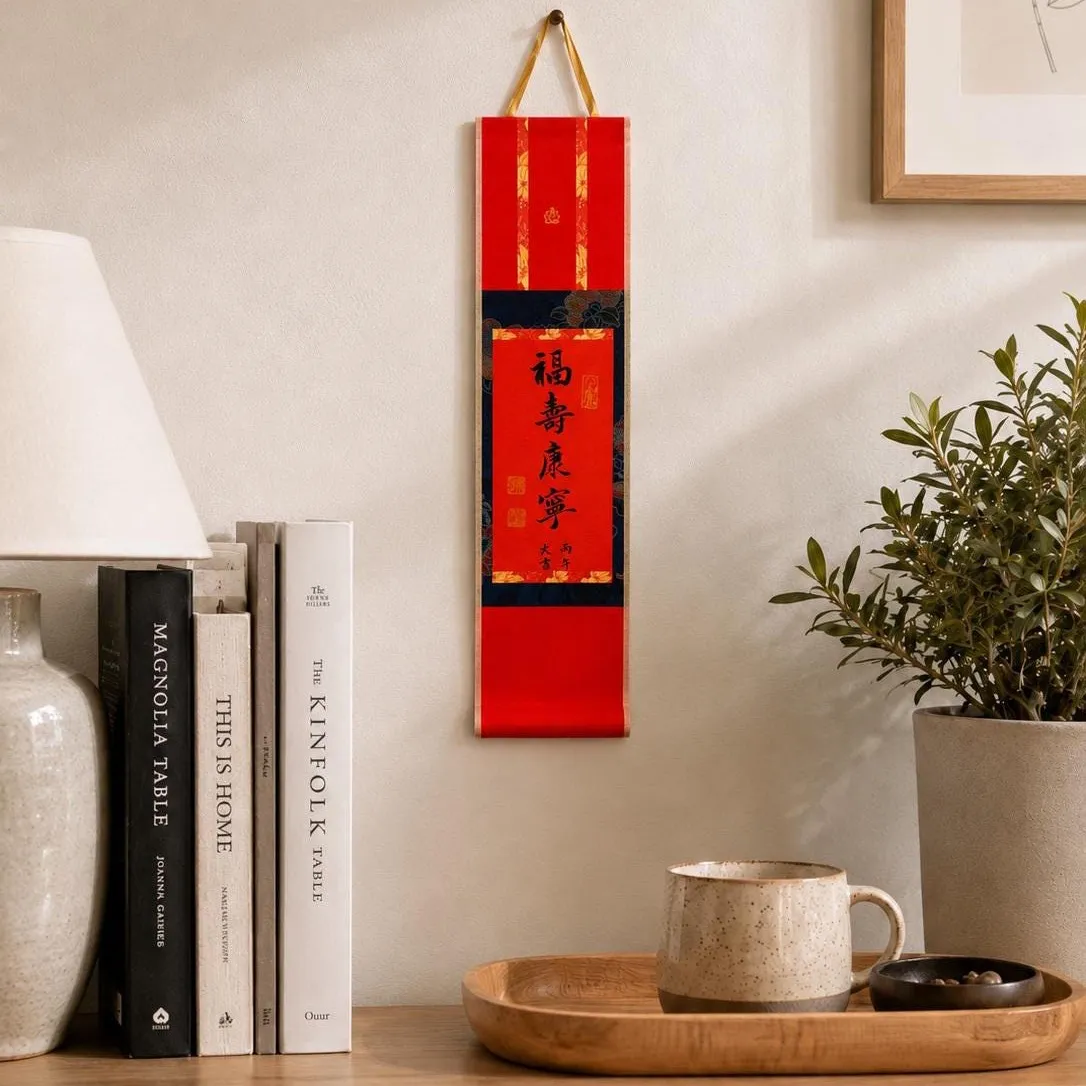
Photo shows a sample — yours will be brushed with 善缘, or any character you choose.
Wall Scroll — for walls & housewarmingsfrom $38→ -
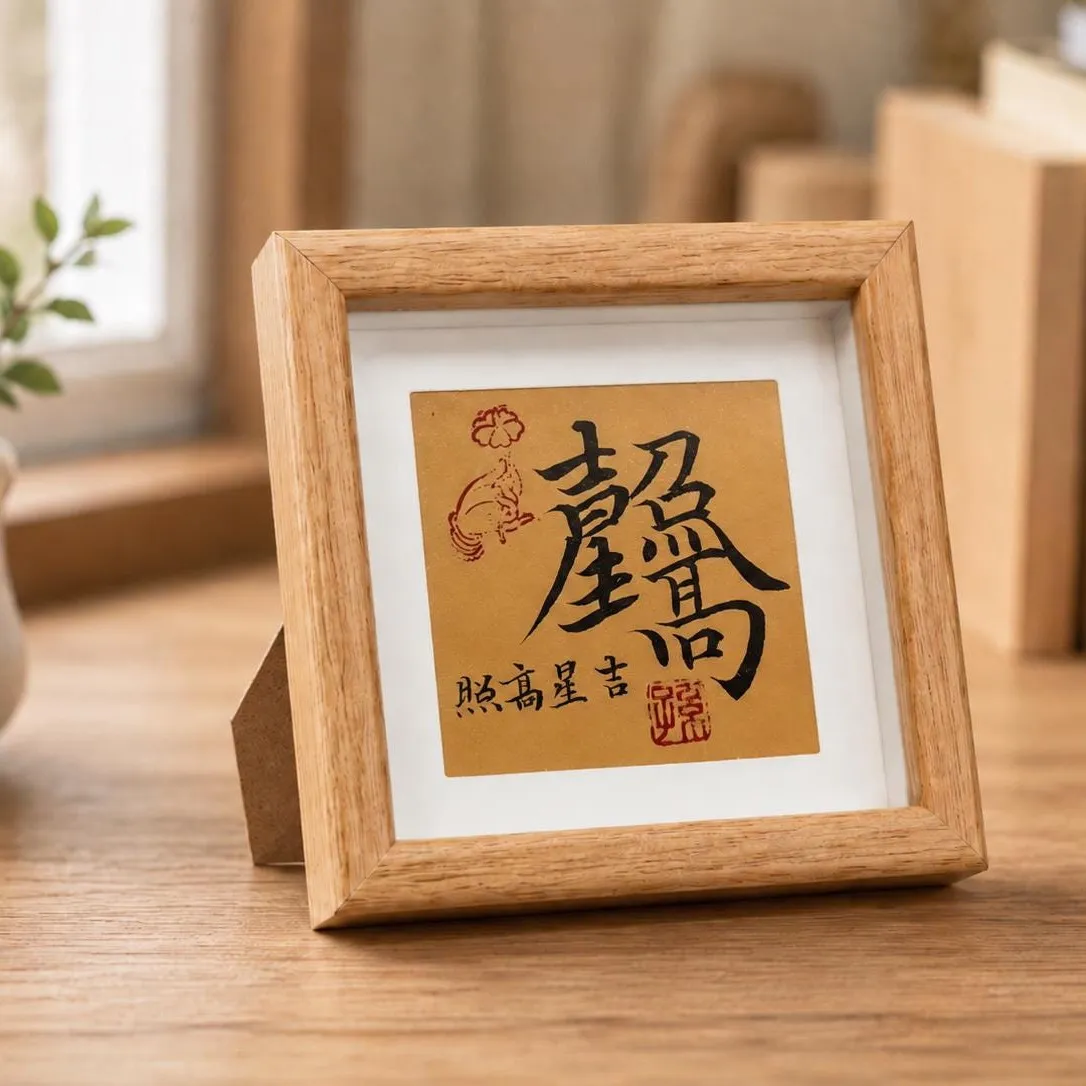
Photo shows a sample — yours will be brushed with 善缘, or any character you choose.
Desk Frame — for desks, studies & studiosfrom $44→ -
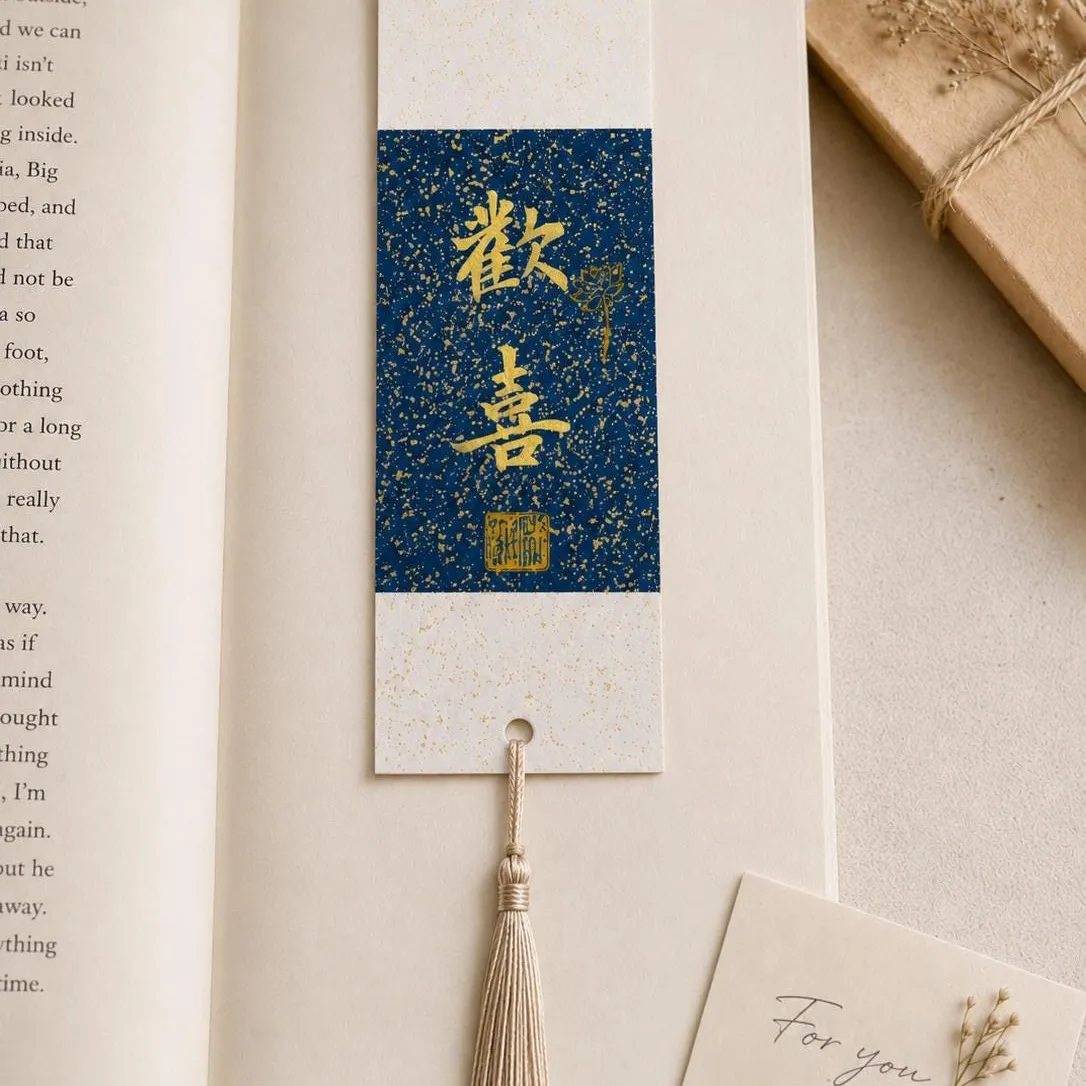
Photo shows a sample — yours will be brushed with 善缘, or any character you choose.
Bookmark — for readers & small thank-yousfrom $17→
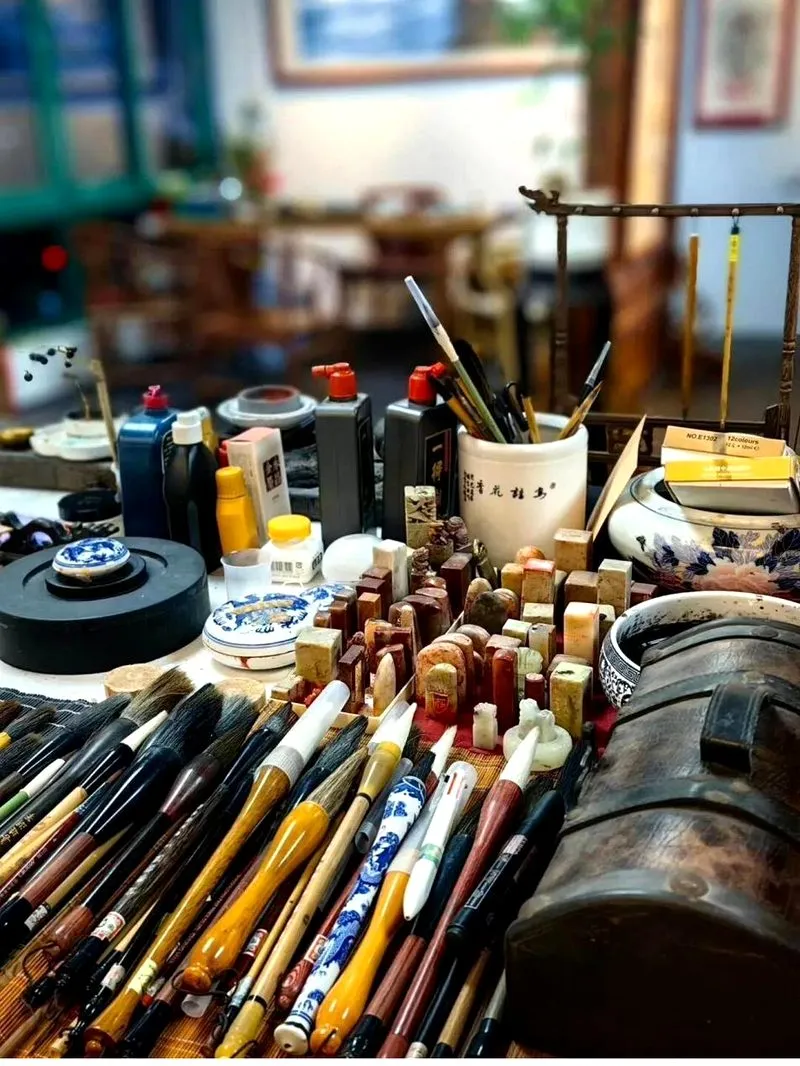
What people said after it arrived.
-
The item is fantastic. The customer service was genuine. Thanks!
— M.Verified purchase · from our Etsy shop reviews · -
They were great they gave me exactly what I asked for and then some. Thank you!!
— G.Verified purchase · from our Etsy shop reviews · -
It is well designed and customized. My daughter loves it. Amazing gift for family’s d friends
— S.Verified purchase · from our Etsy shop reviews ·
Each "善缘" is hand-brushed by Artist Lina Sun on rice paper.
See 善缘 (Shàn Yuán) on Etsy →